
Oil and filter service
AED 650 to 1,600
Approved oil within the agreed fill allowance, oil filter, routine labour and service checks. Extra filters, leaks and damaged drain threads are separate.
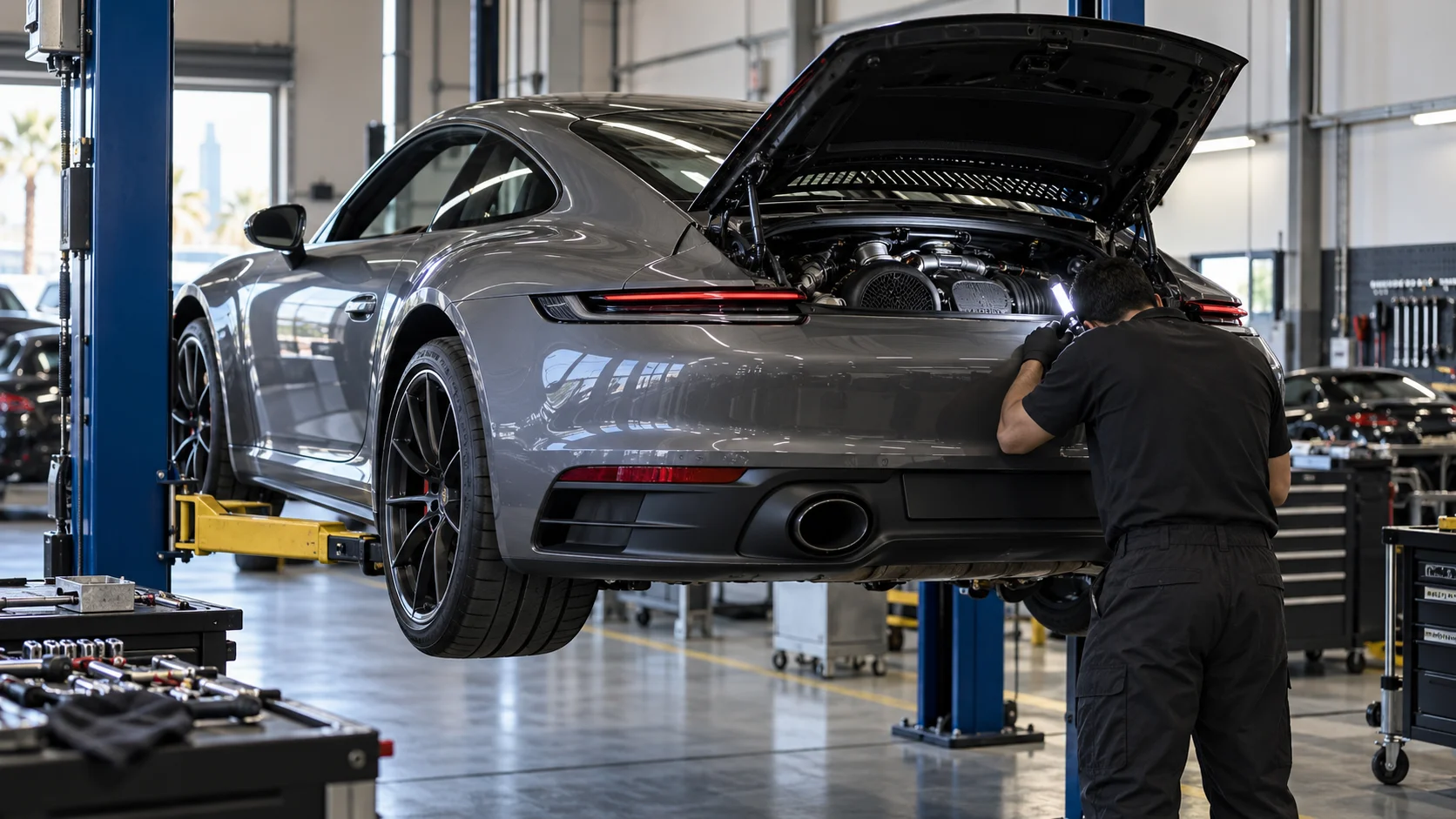
Book servicing, fault diagnosis, brakes, cooling or suspension work for your 911. Choose your generation below so we can match the engine, gearbox and fitted equipment before quoting. Oil and filter service estimates are AED 650 to 1,600 including 5% VAT, with the approved oil, fill allowance, filter and routine labour confirmed for your car.
Each tile tells you the engine family and what we look at first. Where a generation has its own page, the tile takes you there for the full detail.
For 991 and 992 Carrera variants, use our Porsche 991 and 992 Carrera repair page. Earlier Carreras are covered on the generation pages above. Not sure which 911 you have? Start with the model year and variant. We request the VIN privately when needed.
These workshop planning estimates include the work listed. The fitted specification, access and findings determine your written quote. They are not fixed offers for every 911.
AED 650 to 1,600
Approved oil within the agreed fill allowance, oil filter, routine labour and service checks. Extra filters, leaks and damaged drain threads are separate.
AED 200 to 500
Complaint review, accessible-module scan and agreed initial checks. Extended tracing, borescope testing, dismantling, programming and parts are separate.
AED 1,000 to 2,200
Compatible AGM unit, routine fitting, basic checks and required routine registration. Only for a confirmed AGM application. Lithium and high-voltage batteries are excluded.
AED 1,600 to 4,000
One compatible condenser, routine access and fitting, seals, specified recharge and leak check. Additional condensers, other faults and extensive dismantling are separate.
AED 1,155 example total including VAT
Approved engine oil within the quoted allowance, oil filter, routine labour, level check and service record. Additional leaks, damaged drain threads and other scheduled items are separate. This is a quotation example, not a completed customer job or a fixed offer.
Brake work needs an axle-specific quote identifying iron or PCCB discs, pads, sensors and hardware. Alignment, suspension, engine rebuilding, internal gearbox repair and restoration are quoted after the work is defined. Extra diagnosis or repairs need a separate agreement.
These symptoms can occur across several generations. The fitted engine, gearbox or chassis system determines the checks. None identifies a failed part on its own.
Stop safely if the car shows an oil-pressure warning, overheating instruction or serious loss of braking. Switch off when instructed and arrange recovery. Do not continue driving to test whether the warning clears.
The engine code tells us more than the badge. A Turbo from the same year as a Carrera can have a completely different engine, so this is where the diagnosis starts.
| Engine | Where it was used | Intermediate shaft bearing | What we check first |
|---|---|---|---|
| M96 | 996 Carrera and applicable early 997 Carrera 3.6, confirm code | Yes, a known risk | Bearing type, rear main seal, bore condition, air oil separator |
| M97 | 997.1 Carrera S and related variants, confirm engine code | Yes, a known risk | Bearing type by engine number, bore scoring check, cooling |
| Mezger | 996 Turbo and GT, 997.1 Turbo and 997 GT variants | Different design from the Carrera IMS bearing | Over rev history, coolant pipes, track use history |
| 9A1 | 997.2 Carrera and 991.1 Carrera | No Carrera-style IMS bearing service | Cooling health, direct injection, cold running habits |
| 9A2 | 991.2 and applicable 992 Carrera variants | No shaft | Turbo system, water pump and thermostat, PDK history |
| T Hybrid | 992 GTS from 2024 | No shaft | Hybrid work requires confirmed task-specific qualifications and equipment |
This is an identification guide, not a failure prediction. The 997.2 Turbo uses a different direct-injection engine from the earlier 997 Turbo. Turbo and GT cars must not inherit a Carrera checklist.
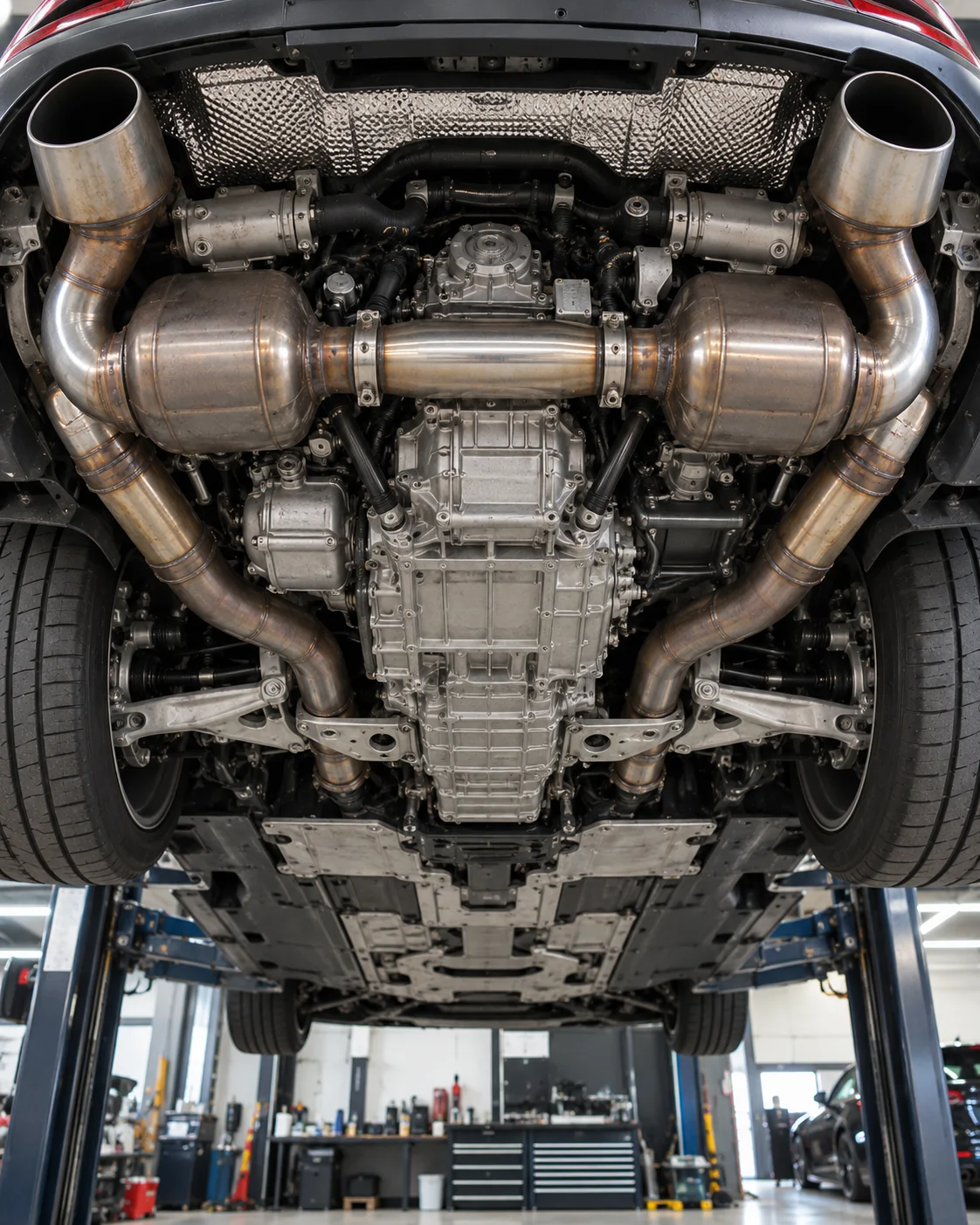
The 911 carries its engine behind the rear axle and its radiators at the front. Some jobs that are quick on a front engine car mean lowering parts or working from underneath on a 911.
Engine access, fasteners and previous repairs affect labour. On water-cooled cars, radiator airflow and coolant leaks may require separate front-end access. The quote should identify dismantling and any additional approval stage.
These notes help identify the right assessment. They do not predict a failure or replace the instructions for your vehicle.
Confirm the actual engine number. Early 997 Carrera 3.6 and Carrera S 3.8 engines must not be grouped under one engine code. IMS bearing design and replacement access vary, and a borescope checks visible cylinder surfaces rather than proving the whole engine healthy.
Direct-injection Carrera engines differ from earlier M96 and M97 cars. The later Turbo also changed engine design. Match fuel, cooling and gearbox checks to the exact variant and recorded fault, not the generation label alone.
991.1 Carrera engines are naturally aspirated. The 991.2 Carrera switched to 3.0-litre twin-turbo engines. Turbo and GT models have their own specifications. Assess oil or coolant loss, boost faults where applicable, fitted suspension and gearbox history.
Eight-speed PDK applies to relevant Carrera and Turbo variants, while 992 GT3 PDK has seven speeds. Manual availability is variant-specific. The 992.2 GTS T-Hybrid requires a separate assessment of task, personnel and equipment before any hybrid-related work is accepted.
Read the detailed 996 checks, 997 checks or 991 and 992 Carrera options.
The 996 Turbo and GT, 997.1 Turbo and 997 GT variants use the Mezger engine, not the Carrera engine. That changes the risk list, the service plan and how we judge a used car.
Porsche engine control units on 996 and 997 cars store over rev events in ranges. Where supported, interpret the records with operating hours, service history and physical tests. A counter alone does not establish engine condition.
Brake fluid, pads, tyres and alignment wear faster on track driven cars, so intervals shorten with use.
Confirm the GT model’s own time and mileage schedule. Track use also requires checks of brakes, tyres and fluids appropriate to the event and vehicle.
Use the Porsche schedule for the model year, engine and market, together with elapsed time, mileage and completed work. A registration year alone is not enough.
Confirm the required Porsche oil approval, viscosity and refill quantity. Identify which filters are due rather than assuming every service includes every filter.
Carrera, Turbo and GT schedules can differ. Separate scheduled plug replacement from misfire testing of coils, injectors and engine condition.
Identify manual, Tiptronic or PDK and the actual transmission code. The quote must specify the fluid circuit, quantity, filters and procedure included.
Check the applicable brake-fluid interval and measured wear. Iron discs and PCCB require different assessment and parts. Discuss extra checks for track use.
Compare oil service options or scheduled maintenance. The written job list should show what is due, what is optional and what is excluded.
Older cars need a plan before any spanner turns. We agree the goal with you first, then scope the work in stages.
Agree a condition survey and due maintenance first. Identify leaks and safety defects, then document parts that can be retained and work that affects originality.
Choose specific mechanical, interior or paint jobs from the findings. Quote each job, parts availability and any matching or refinishing work before starting.
Start with an agreed assessment fee and written staged plan. Identify in-house and specialist work, dismantling limits, parts lead times, approval points and the basis for each stage’s price.
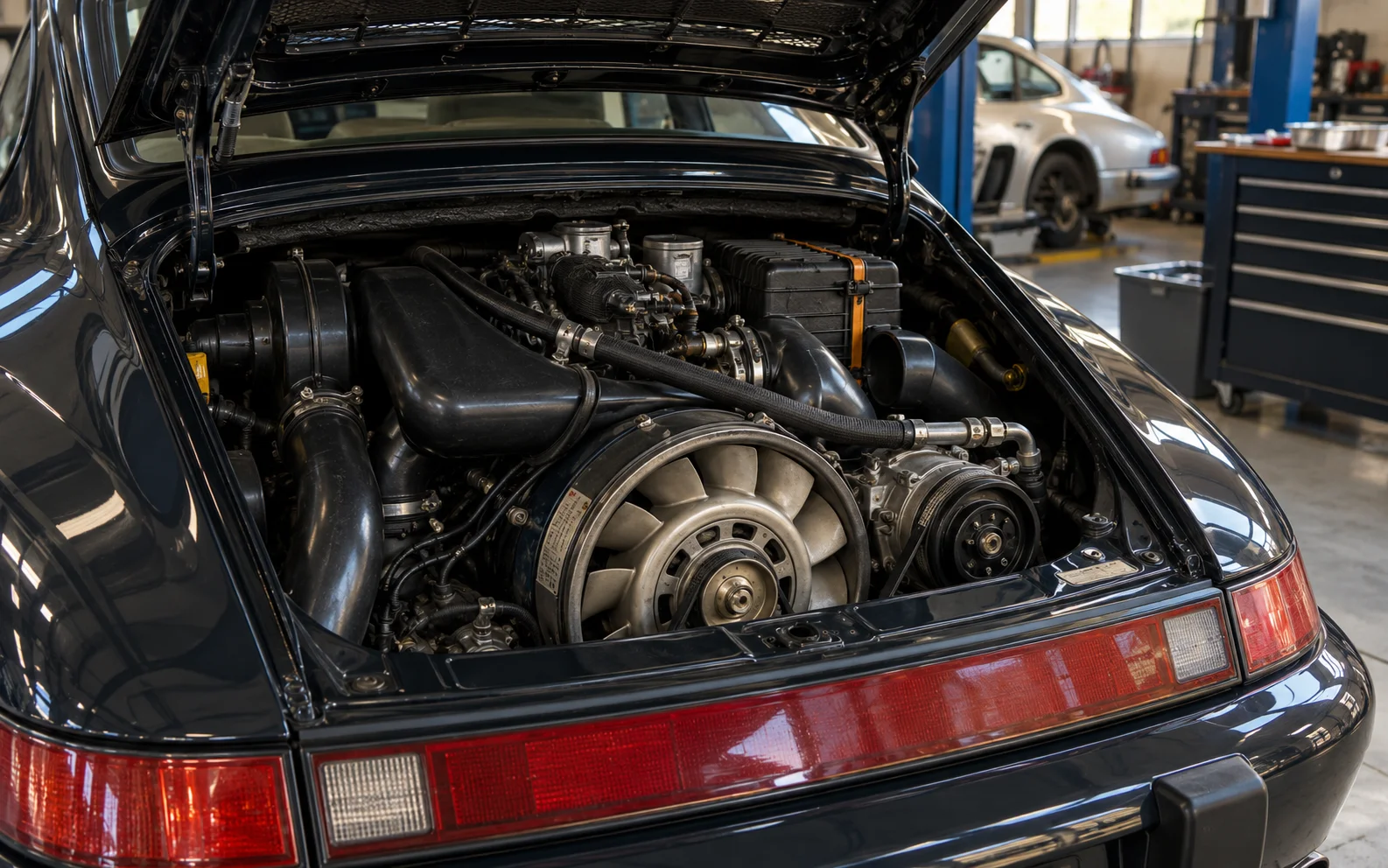
Porsche Classic supplies parts for older Porsches through Porsche Centres and reproduces some from original factory drawings. Availability and lead time must be checked for the exact part before the restoration plan is approved.
Where a genuine part is not available, we explain the options before ordering, including used or reproduction parts.
Check clutch operation, the fitted flywheel and the applicable gear-oil schedule. Hardware and manual availability vary by model.
Torque-converter automatic on applicable earlier cars, including 964, 993, 996 and early 997 variants. Use the fitted gearbox’s fluid and diagnostic procedure.
Dual clutch became available on the updated 997 Carrera. Relevant 992 Carrera and Turbo variants use eight-speed PDK, while 992 GT3 PDK has seven speeds. Identify the transmission before choosing fluids.
Gearbox faults and repair routes are on our transmission repair page.
Agree the reporting before booking. A fault code, photograph or single test result is not a complete diagnosis.
Record when the symptom occurs, warning messages, relevant history and the vehicle specification. Confirm the checks authorised and any access limitations.
Request relevant fault records, readings and photographs from your car. Cylinder imaging, compression and leak-down tests are separate procedures with different limitations.
Ask why the proposed work addresses the findings, which parts and fluids are included, and whether further investigation or specialist referral is needed.
Keep the itemised invoice, checks completed, items to monitor and written warranty terms. Request the available supporting records when arranging the work.
Photos and service history are optional follow-up details. Share the VIN privately when identification is needed.
Still unsure which 911 you have or what it needs? Tell us the model year and variant. We request the VIN privately when identification is needed.
The serviceable bearing concern relates to applicable M96 and M97 Carrera engines. Engine number and bearing design determine the options. Turbo and GT variants need their own engine identification, and later direct-injection engines do not use the same Carrera IMS design.
It depends on the bearing type, engine condition and plans for the car. We check the engine number and condition first, then explain the options without pushing a job.
Bore scoring means damage to the cylinder surface. A borescope can document visible areas, but access and image quality limit what it shows. Compression or leak-down tests may add information. No single test establishes the condition of every engine component.
A brief puff can have several causes. Repeated smoke, heavy smoke, rough running or increasing oil consumption needs assessment. Check the ventilation system and engine condition before blaming the air oil separator.
Yes. Use the exact engine, gearbox, brake equipment and model schedule. The later 997.2 Turbo differs from the earlier Turbo, and GT or track-driven cars need their own maintenance decisions.
Use the Porsche approval, viscosity and quantity specified for the fitted engine and model year. A40, C40 or a viscosity alone is not a universal answer for every 911. Confirm the current specification before filling.
Check the applicable time and mileage schedule for the transmission code and fluid circuit. Do not apply a single interval across all PDK generations. The quote should name the fluids, filters and procedure included.
Tell us the exact work needed before booking. Routine work must still follow the hybrid vehicle procedure. High-voltage diagnosis or repair is accepted only after task-specific personnel and equipment are confirmed, otherwise it is referred to an appropriately equipped specialist.
We agree the goal first, keep, refresh or rebuild, then confirm which stages are done in house and which by a named specialist.
The listed estimates include 5% VAT and the stated work. They are not fixed offers. The written quote confirms applicability, parts, labour, exclusions and any additional investigation before approval.
The rear engine layout can mean more access work, and parts differ between generations and variants. The quote lists labour and parts separately.
Agree the inspection list before booking. Accessible fault records, engine identification and chassis checks are distinct from optional borescope or compression tests. Over-rev data depends on the control unit and must be interpreted with other findings.
Ask an authorised Porsche Centre to confirm open campaigns and completed remedies against the VIN. We can identify when that referral is needed. Campaign eligibility and any covered remedy are confirmed by Porsche.
The 993, 996 and 997 have their own pages with more detail. For 991 and 992 cars, the notes on this page and our service pages cover the main points.
Use Porsche vehicle information to confirm the generation and equipment. Maintenance instructions must match the individual car.
Call 056 464 6081 for an appointment in Dubai. Confirm the workshop pin, arrival time and assessment charge before travelling. An enquiry does not confirm a booking.
Ask for the assessment time first. Repair and collection timing follows the findings, parts availability and workshop schedule. Confirm parts and labour coverage, time or mileage limits, exclusions and the claims process in writing before approval.
Chassis number checked, engine code confirmed, findings shown and a written quote before any work starts.
Porsche Repair Dubai is an independent workshop and is not part of the Porsche Centre dealer network or affiliated with Porsche AG.