
1
Belt drive
One long belt turns both camshaft banks and the water pump. The tensioner needs periodic manual adjustment with the correct gauge.
Unknown belt history, coolant loss, starting trouble or drivetrain vibration? Book an assessment for your 928, S, S4, GT or GTS. We identify the engine and gearbox, explain the findings and quote repairs or restoration stages before you approve the work.
Belt and water pump planning allowance AED 5,500 to 10,000 including 5% VATThis is a budgeting guide, not a confirmed workshop quote. See inclusions and other costs
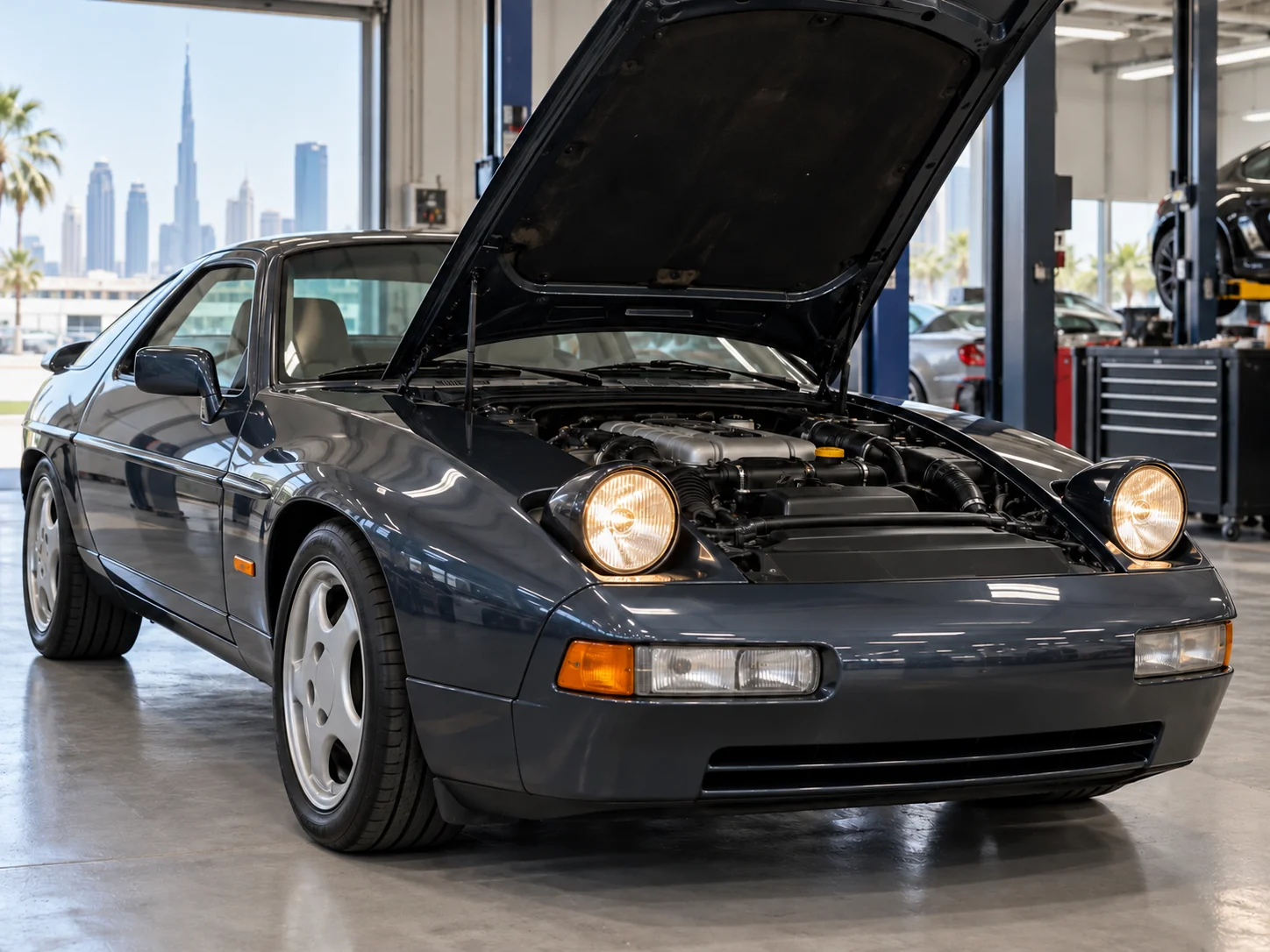
Start with dated timing belt records, coolant loss and electrical symptoms. These are initial priorities, not a complete roadworthiness check. Brakes, tyres, steering, fuel leaks and the drivetrain must also be assessed before returning a stored or unfamiliar car to use.
Dated invoice, mileage at fitting, tensioner condition and, on later cars, the tension warning light.
Radiator, hoses, expansion tank and cap, water pump and fan operation in Dubai traffic.
Ground points, fuses, relays and connectors in the central electrics, plus the engine control relay.
Agree the first diagnostic stage and a written repair quotation. The figures below have different purposes and are not fixed restoration packages.
| Work | Price direction | Included or to confirm |
|---|---|---|
| Initial fault assessment | 200 to 500 | The workshop’s general initial diagnostic range covers the complaint review and agreed initial checks. Confirm the tests suitable for your 928. Older systems may need dedicated testing rather than a modern scan. Extended tracing, dismantling and a full restoration survey are separate. |
| Oil and filter service | 650 to 1,600 | The workshop’s general oil-service range includes the agreed oil allowance, filter, routine labour and service checks. Confirm the correct oil and quantity for your engine. Leak repairs and other due items are separate. |
| Timing belt and water pump | 5,500 to 10,000 | Budgeting allowance for the belt, applicable rollers, water pump, coolant, fitting and timing/tension checks. Tensioner overhaul, oil seals, seized fasteners, engine damage and recovery are excluded unless quoted. |
| Manual or automatic transaxle work | After diagnosis | Identify the gearbox and separate servicing, external leaks, clutch work, torque tube work and internal repair. List removal/refitting, replacement parts, specialist work and final checks individually. |
| Engine, body or interior restoration | By approved stage | Condition report followed by a defined parts and labour estimate. Machining, paint preparation, trim materials, outside specialist work and hidden damage must be identified before approval. |
Initial assessment and oil-service figures are the general ranges on our workshop price guide, subject to the agreed 928 work. The belt range is the planning allowance on our timing belt service page, not a confirmed workshop quotation. Exact engine version, parts availability and access can move the final belt quotation outside that range.
Ask for parts, labour, VAT, exclusions, expected parts arrival and the next approval point. Confirm any assessment charge, deposit, storage charge, cancellation terms and warranty for the specific work in writing. Agree extra work before it starts.
The engine, original market and gearbox determine the parts and checks. Use the chassis and engine numbers alongside the model badge. Dates below identify model introductions, not a universal maintenance schedule.
4.5 litre V8, 16 valves, 240 PS in Europe.
4.7 litre, 16 valves, 300 PS, later 310 PS.
UK name for the 4.7 litre S with 310 PS.
5.0 litre four valve engine in the US market car.
5.0 litre, 32 valves, 320 PS.
5.0 litre, 32 valves, 330 PS.
5.4 litre, 32 valves, 350 PS, built to 1995.
Early 928 and S cars need their fitted fuel and ignition systems identified. On S4, GT and GTS cars, confirm the later engine controls and equipment. Manual cars need clutch and shift checks. Automatics need flex-plate and transmission checks. Imports and modified cars require particular care with parts identification.
Porsche built the 928 with the engine at the front, the gearbox at the rear and a shaft running through a rigid tube between them. It gives a near even weight split, and it also creates wear points that a mid or rear engine Porsche does not have.
One long belt turns both camshaft banks and the water pump. The tensioner needs periodic manual adjustment with the correct gauge.
Radiator, oil and transmission coolers, hoses and the expansion tank cap. Small leaks grow fast in summer heat.
On automatics, shaft migration or incorrect assembly can preload the flex plate and load the crankshaft thrust bearing. Manual cars have a clutch in this area.
Torque tube bearings are one possible source of vibration. Compare engine speed, road speed and load, then distinguish shaft noise from engine mounts, wheels and other drivetrain parts.
Five speed manual or automatic at the rear. Fluid condition, mounts and output seals are checked before any rebuild talk.
The fuse and relay panel, grounds and connectors age. Several faults at once often point to a poor ground.
The correct plan depends on the engine, model year, original market, belt installation date and service record. Match the maintenance document to your car before choosing a replacement interval. Record distance in kilometres or miles with the unit stated. Low mileage and a belt that looks clean do not establish its remaining life.
Later 32 valve engines can suffer valve contact if camshaft timing is lost. Do not use an early-car badge or valve count alone to assume that an engine is safe after belt failure. Confirm the engine code and any modifications, and do not keep cranking.
The full belt job, kit options and fitted estimates are on our Porsche timing belt replacement page.
A symptom points to an area, not a final diagnosis. We confirm the cause before quoting parts.
| What you notice | Likely area | Priority |
|---|---|---|
| Belt tension warning light on a 32 valve car | Belt, tensioner or warning switch | Stop and call |
| Engine cut out and now cranks unusually fast | Possible belt failure | Stop and call |
| Fuel smell in the engine bay | Aged fuel lines or injector hoses | Stop and call |
| Temperature rising in traffic, coolant loss | Cap, hoses, radiator, pump or fans | Stop and call |
| Automatic car with a new knock or crankshaft end movement | Flex plate clamp and thrust bearing | Stop and call |
| Drone or vibration that follows engine speed | Torque tube bearings or mounts | Book this week |
| Several gauges or lights acting up together | Grounds, connectors or central electrics | Book this week |
| Hard starting, rough idle after standing | Grounds, sensors, fuel supply or engine relay | Plan a visit |
| New clunks or a change in steering control | Steering joints, suspension or tyres need assessment | Call before driving |
| Air conditioning weak or not working | Refrigerant specification, documented conversion, leaks or controls | Plan a visit |
Do not keep cranking after suspected belt failure. Stop using a car with a fuel leak, overheating, a concerning engine knock, abnormal crankshaft movement or unsafe steering. Call to discuss recovery before moving it.
Each system is checked against what the car shows, recorded with photographs where access allows, and quoted separately so you can choose the order.
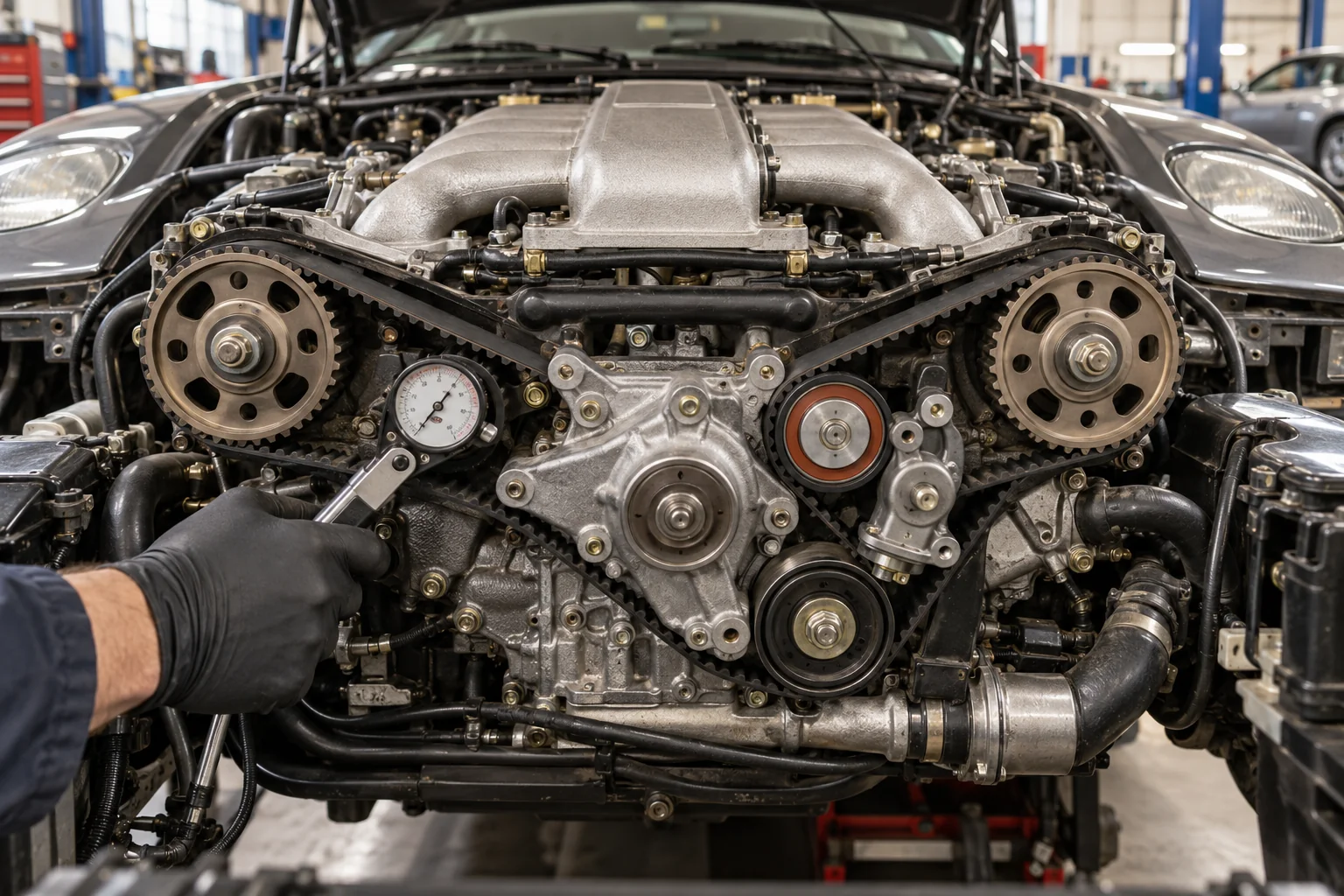
Belt condition and tension with the correct gauge, rollers, tensioner, water pump play and leaks, front seals and cam cover seals. Engine mounts are checked too, since worn mounts cause clear vibration.
Pressure test, radiator and cooler condition, hose age, expansion tank and cap, fan operation and coolant condition. A failing cap alone can cause coolant loss, so the cheap causes are ruled out first.
Fuel lines, injector hoses and the high pressure line between the heads harden and crack with age. Any fuel leak needs urgent attention before the engine is run.
Battery terminals, ground straps and ground points, fuses and relays in the central electrics, sensor connectors and the engine control unit supply. Brittle connectors are handled with care because some are hard to source.
Flex plate clamp and crankshaft end float on automatics, clutch operation on manuals, torque tube noise, transaxle fluid and mounts, and driveshaft joints.
Suspension bushes, alignment, steering rack and hoses for leaks, brake hydraulics, and on later cars the ABS hydraulic unit bleed requirements.
Seals, drains and jacking points for water damage, sunroof drains, tailgate seal, plus interior wear. Aluminium doors, wings and bonnet are inspected for corrosion and earlier repairs.
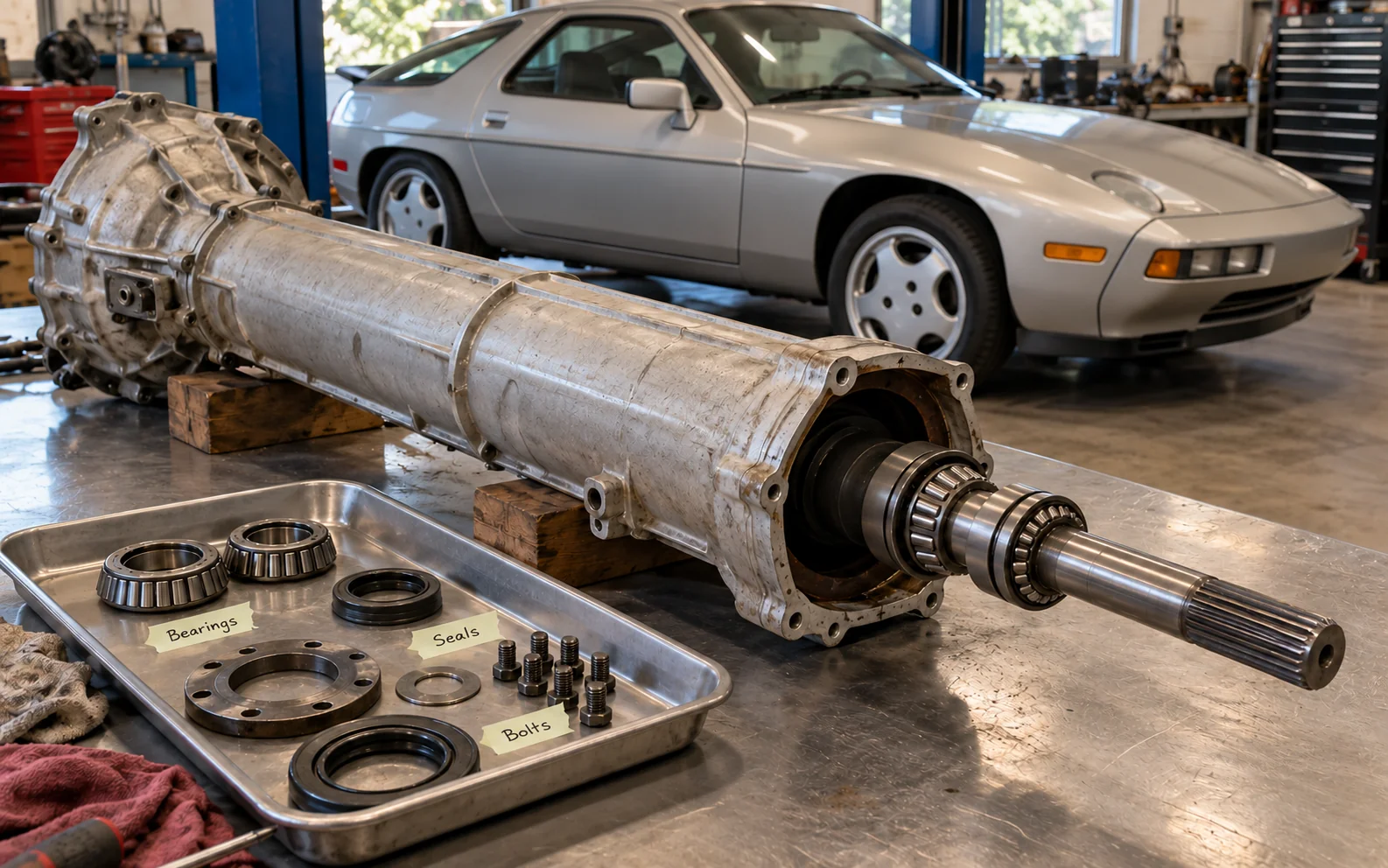
The central shaft runs in bearings inside the tube. Noise and vibration need to be assessed against engine speed, vehicle speed and load before removal is proposed. A quote must distinguish removal and refitting from bearing work, shaft damage, mounts and any transaxle repair.
Shaft migration and assembly errors can place axial load on the crankshaft through the flex plate. Check clamp condition and flex-plate preload separately from measured crankshaft end float. Tightening a clamp alone does not establish that the thrust bearing is undamaged. The applicable Porsche installation procedure matters.
Agree access and measurement work before dismantling. The report should record crankshaft end float in millimetres, the applicable specification and any further investigation required. A measurement outside specification needs investigation before continued use.
We do not promise a full restoration before the car has been assessed. Each stage has its own written quote, and you decide after each stage whether to continue, pause or stop.
Chassis and engine numbers, service records, photographs, road test where safe, lift inspection and a written condition report.
Timing belt and water pump if due, fuel lines, brake hydraulics, tyres by age and cooling leaks. Any urgent drivetrain fault moves into this stage. Road testing follows safety checks.
Grounds and central electrics, sensors, engine mounts, suspension bushes, steering leaks and air conditioning, each priced as its own line.
Flex plate clamp or clutch, torque tube bearings and transaxle work only where the readings and road test justify it.
Paint, seals and trim through our painting and upholstery services, planned once the mechanical base is sound.
Many 928 parts still exist, some are only available used or remanufactured, and a few proprietary connectors are hard to buy alone. The source is named on your quote so you can choose.
Search the Porsche Classic catalogue by model year and part number. Catalogue inclusion does not confirm stock or an arrival date for your car.
Independent suppliers carry service kits, hoses, refurbished units and remanufactured parts for the 928.
Specialist 928 suppliers such as 928sRUs state they ship new Porsche and OEM parts worldwide.
Part number, source, price and expected arrival listed per line.
Fluids, filters and common service items, usually confirmed when we quote.
Lead time stated by the supplier at order, plus freight and customs. We update you if it moves.
Used, refurbished or remanufactured options offered with their condition, only with your approval.
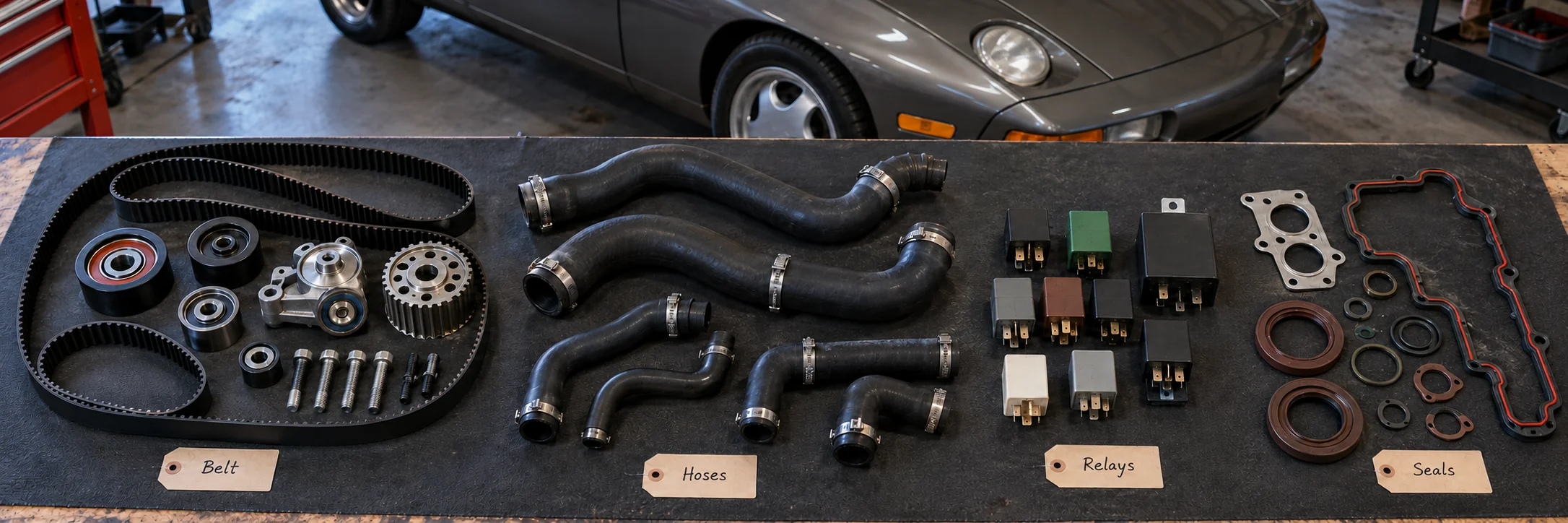
Ageing wiring, connectors, grounds and power supplies can cause intermittent faults. Start with the symptom and relevant wiring diagram, then test the circuit under appropriate conditions. Several simultaneous faults can share a supply or ground, but that must be demonstrated before parts are ruled in or out.
For cluster and control unit work see our instrument cluster repair and ECU repair pages.
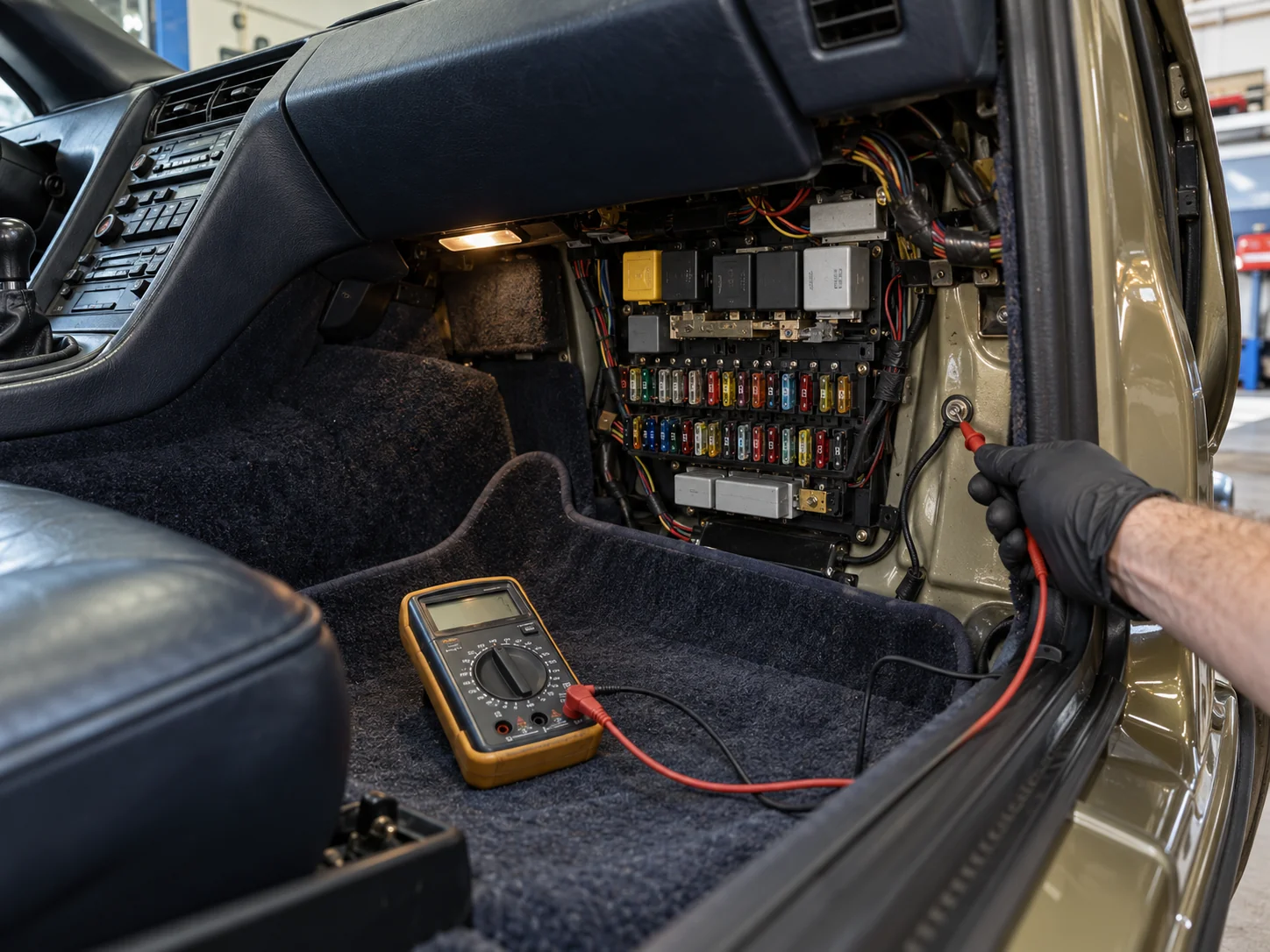
Agree the records you will receive before work starts. A useful repair file connects each reported fault with the inspection findings, approved work and final checks. Photographs support the findings but do not replace measurements or invoices.

Exterior, interior, engine bay and underside before any work.
Findings by system, with readings such as end float and pressure test results.
Each approved stage with parts, labour, VAT and any contingency used.
Old and new parts side by side where access allows.
Belt date and mileage, fluids used and the next recommended checks.
Send the year, model and any records on WhatsApp and we will tell you what the first visit should cover.
The assessment, parts supply and workshop time are separate. Confirm the first inspection appointment when booking. A completion estimate follows the findings and supplier availability. Do not plan a collection date for a rare-part repair until the required parts and work are confirmed.
Yes, start by describing its condition and storage history. Do not attempt repeated starts when belt history is unknown or a fuel leak is suspected. Discuss recovery, access and the agreed initial checks before transporting it. Confirm whether any machining, trim or other specialist work will be completed in-house or referred before authorising that stage.
Later 32 valve engines can suffer valve contact when timing is lost. Confirm the engine code, market specification and modifications before assessing any 928. Do not assume an earlier engine is undamaged or keep trying to start it after suspected belt failure.
Use the maintenance information for the identified engine, model year and market. Record the installation date and distance with its unit. Replacement and tension-check requirements are different. If the history is missing, arrange an assessment rather than assuming low mileage makes the belt safe.
A drone or vibration can suggest torque tube bearings, but is not enough to diagnose them. Compare engine speed, road speed and load, and check mounts and other drivetrain components before proposing removal.
Shaft migration or incorrect assembly can preload the flex plate and load the thrust bearing. Clamp condition, preload and crankshaft end float are separate checks. An end-float measurement helps assess the condition, but does not guarantee that all internal damage has been excluded.
We can only say what is realistic after the assessment. We plan the work in stages with a quote for each, so you see the cost and findings before deciding on the next step. Some parts may take time to source or only be available used or remanufactured.
Many are, through the Porsche Classic range and specialist suppliers in Europe and the US. Some items are discontinued, so the quote names each part source and the expected arrival.
Heat ages rubber hoses, seals and plastic parts and puts more load on the cooling system and air conditioning. That is why cooling and fuel lines sit in the first stage of our plan.
Yes, through our pre purchase inspection. Belt records, cooling, electrics and the drivetrain are the main points, subject to the seller allowing access.
The applicable workshop procedure and maintenance booklet take priority over generic intervals. These references help identify the information to request with your repair.
Call or send the year, model, chassis number and any belt invoice on WhatsApp. We will tell you what the first visit covers, what it costs and what we need from you before the car arrives.
Porsche Repair Dubai is an independent workshop. We are not affiliated with, authorised by or connected to Porsche AG or its official dealers. Porsche and 928 are used only to describe the cars we work on.