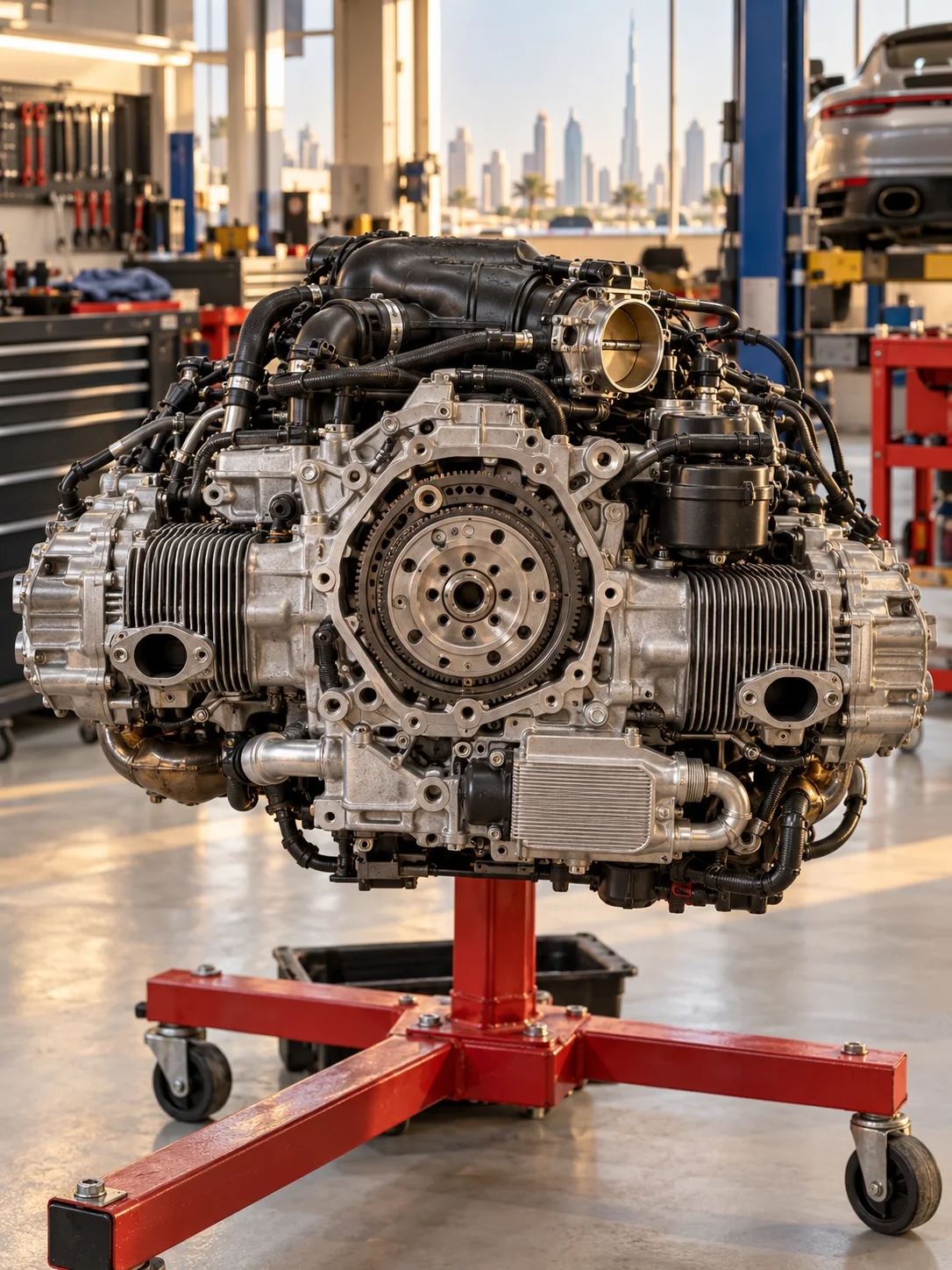
Porsche Engine Diagnosis and Repair in Dubai
Facing an engine rebuild quote, persistent oil use or a recurring misfire? Start with the exact engine and the evidence behind the proposed work. We agree relevant tests, explain their limits and compare targeted repair, rebuild and replacement before you approve major spending.
Porsche engine repair planning estimates
These indicative budgeting allowances include 5% VAT and are not a published market survey, dealer tariff or fixed workshop offer. Confirm the exact engine, tests, parts and labour in a written quote. Repair, rebuild and replacement are alternatives, not compulsory steps.
Initial diagnosis
AED 420 to 1,260Agree the initial inspection, scan and reporting scope. Compression, leak-down, borescope access and laboratory work are included only if expressly listed.
Component repair
AED 1,575 to 12,600A broad allowance for smaller through labour-intensive repairs. Price the identified leak, cooling component or timing repair separately. This is not a package covering all three.
Internal engine work
AED 15,750 to 52,500+A preliminary allowance only. Cylinder-head repair, full rebuild and replacement need separate quotations. Engine family, damage, machining and supply can put the total above this range.
Cylinder-head repair
Identify the fault and include removal, pressure or crack assessment where appropriate, machining, valves or guides, gaskets, fasteners, timing setup and fluids as required.
Measured rebuild
Agree dismantling first. The final scope follows block, bore, crankshaft and head assessment. State machining, liners, pistons, rings, bearings and retained parts individually.
Replacement engine
State new, remanufactured, rebuilt or used. Confirm engine identity, compatibility, supplied ancillaries, history or test evidence, installation, setup and core-return terms.
Request separate parts, labour, machining, consumables, recovery and VAT lines. No free inspection, stock availability or warranty duration is assumed. Planning information updated 27 October 2026.
What evidence should support your engine repair?
Bring any existing fault report, oil-use record and repair estimate. We review what has already been established and agree which unanswered question needs testing. A second assessment can confirm a proposal or identify a different next step. It does not promise that every engine can be repaired without dismantling.
- 1Listen and scanRecord your symptoms and fault information. Establish whether the engine can safely run before any running test or road test.
- 2External checksLeaks, oil level and condition, coolant, belts and mounts.
- 3Measured testsCompression, leak down, oil pressure and cooling pressure as needed.
- 4Look insideInspect accessible cylinder surfaces, the filter or an oil sample where relevant. Access can require component removal and must be agreed first.
- 5Decision and quoteRepair, rebuild or replace, with the evidence in front of you.
What your symptom usually leads to
These symptoms guide investigation, not an automatic parts order. The appropriate tests depend on the fitted engine and whether it is safe to run. Repairability and the confirmed cause determine the final scope.
What shortens engine life here
Heat, usage, maintenance history and unresolved faults can affect engine condition. Discuss these factors alongside the vehicle-specific maintenance requirements rather than assuming one failure pattern or service interval fits every Porsche.
- 01Heat and trafficLong idling in summer traffic pushes oil and coolant temperatures up. Healthy cooling parts and fresh oil protect the engine.
- 02Stretched oil changesOil that runs too long loses protection, which matters most on engines with known cylinder wall concerns.
- 03Short trips and cold startsEngines that rarely reach full temperature collect fuel and moisture in the oil.
- 04Ignoring small warningsA low oil level, a coolant top up or a single misfire is cheap to check and expensive to ignore.
What engine tests can and cannot establish
No single test proves an engine is healthy or finished. Together they show where the problem is and how serious it is, and the results are recorded so you can see them. Tests are chosen to suit your symptom, so you are not charged for checks that will not change the decision.
Compression test
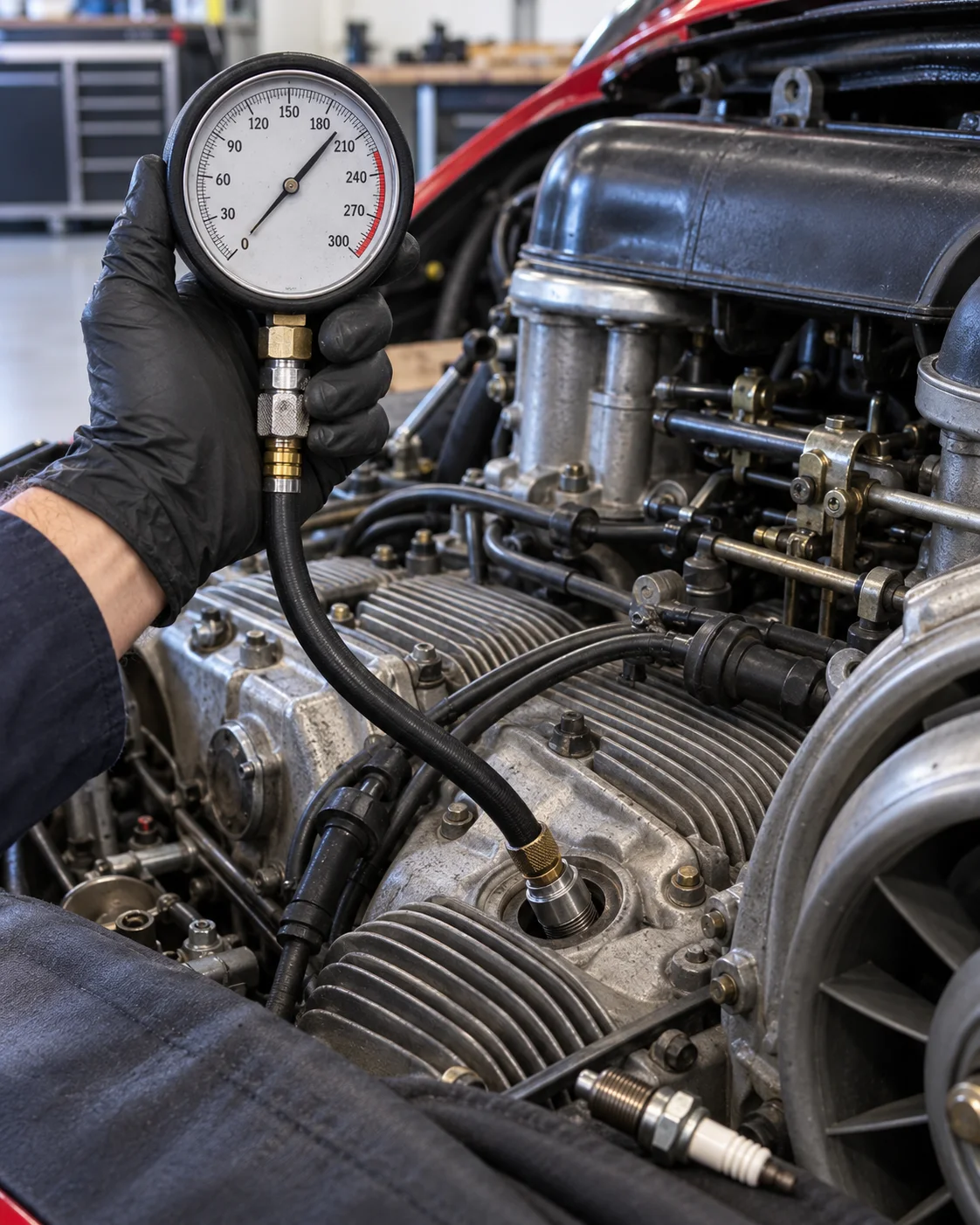
Records cylinder pressure under specified test conditions. Compare readings and the applicable engine limits, with temperature, cranking conditions and method recorded.
Leak down test
Measures leakage with the cylinder correctly positioned and valves closed. Record the percentage, test pressure and conditions. Leakage paths guide further checks rather than identify every failed part alone.
Borescope inspection
Provides visible evidence of accessible cylinder surfaces. Record cylinder identity, areas examined and access limitations. Acceptable compression or leak-down readings do not necessarily exclude early scoring.
Oil and filter analysis
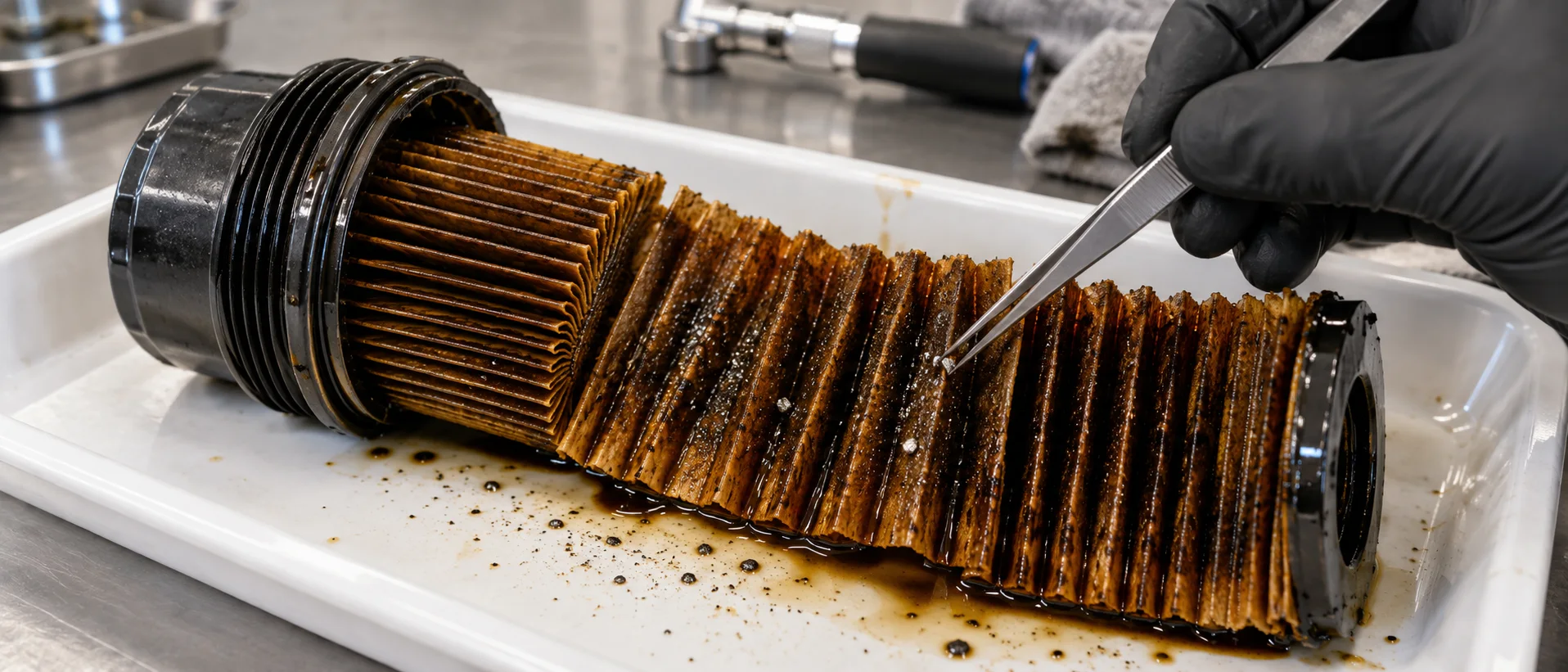
Filter findings and laboratory trends can support an investigation. Sampling conditions, service history and other tests matter. One metal reading does not identify a failed component or prove a rebuild is needed.
What leakage paths can indicate
Leakage location is one part of the diagnosis. Correct positioning, test conditions, measured loss and supporting checks are needed before deciding between a valve, head, ring or cylinder repair.
Engine code matters more than the badge
Confirm VIN, model year, engine code and any replacement or modification. This page covers combustion-engine work, including the engine in a hybrid. Battery-electric drive units and high-voltage repairs need a separate scope.
Family and bearing versions overlap. Engine serial and actual equipment determine IMS access. Check cylinder condition, oil leakage and the reported fault without assuming every engine has the same weakness.
The revised architecture removed the earlier IMS arrangement. Injection specification and testing still depend on the exact variant. Do not infer cylinder condition from the family name.
Distinguish turbocharged and naturally aspirated engines, including 718 six-cylinder and GT variants. Confirm engine-specific intake, fuel, cooling and mechanical tests.
Separate four-cylinder, V6, V8, petrol, diesel and hybrid applications where fitted. A spark-ignition misfire checklist does not cover every diesel combustion fault.
Classic air-cooled engines do not share water-cooled diagnostic procedures. Confirm workshop capability, parts and machining route before agreeing a specialist rebuild.
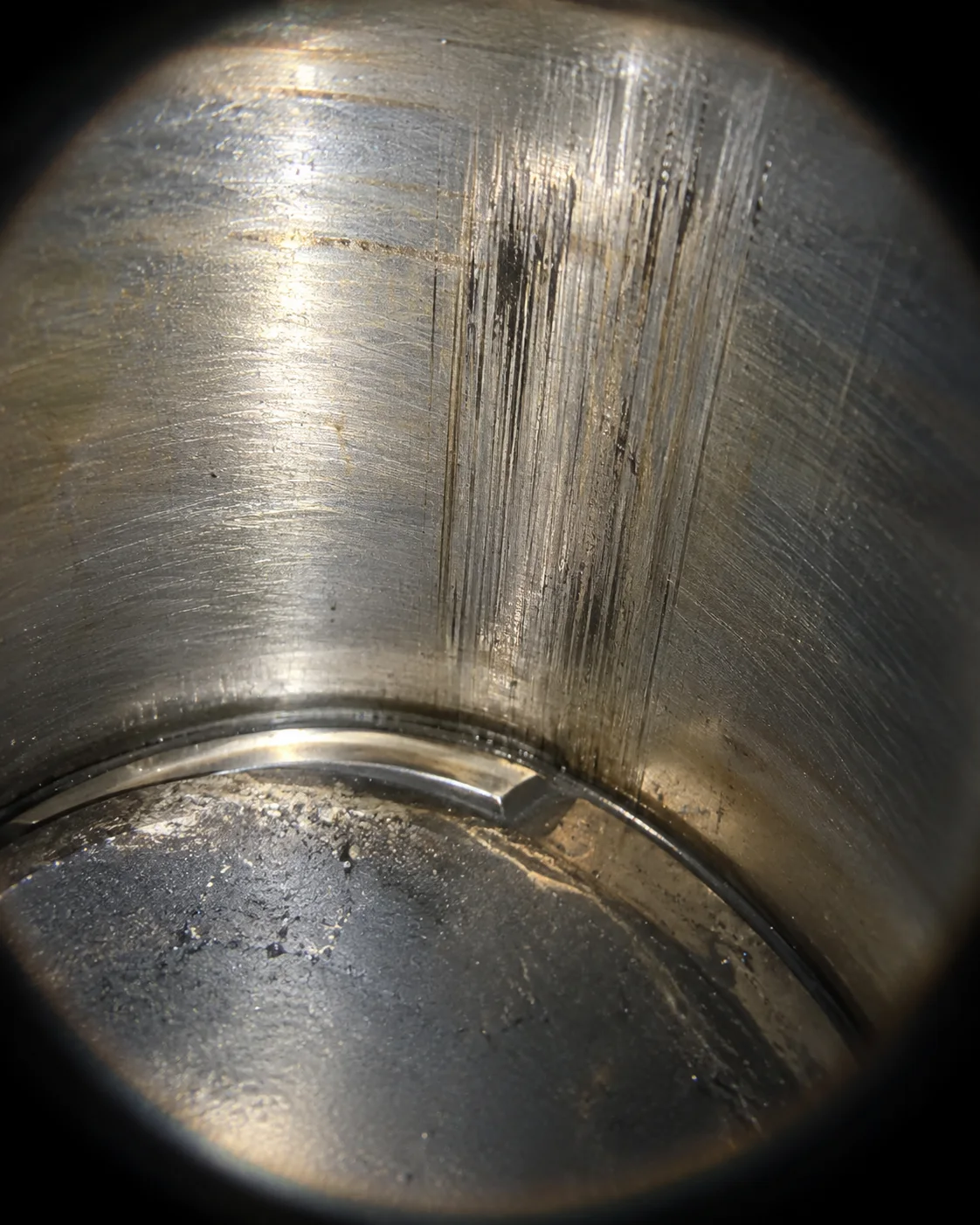
Bore scoring and IMS bearings, explained plainly
- Scratches in the cylinder walls let oil past the piston and compression escape.
- Signs include rising oil use, a ticking noise and one tailpipe darker than the other.
- Reported on M96, M97 and 9A1 flat six engines and some V8 engines.
- Assess visible scoring with a suitable borescope procedure and supporting findings. The extent and location of damage, symptoms and repairability determine whether engine removal and internal repair are required.
- The intermediate shaft drives the camshafts on M96 and M97 engines.
- Its bearing can fail, and the single row bearing of the early 2000s is the highest concern.
- The MA1 or 9A1 family introduced in relevant 2009 applications eliminated that intermediate-shaft arrangement. Do not apply a model-year rule to every Porsche engine.
- Some earlier bearings can be serviced with gearbox removal. Larger later M96/M97 bearing versions require engine disassembly. Identify the engine and bearing before quoting access.
Three paths, chosen by the evidence
Once the tests are done, the choice is between three paths. Each one is shown below with what it covers and when it is the right call. The value of the car, how long you plan to keep it and how important originality is to you all matter, and we talk them through with you.
Targeted repair
Engine rebuild
Replacement engine
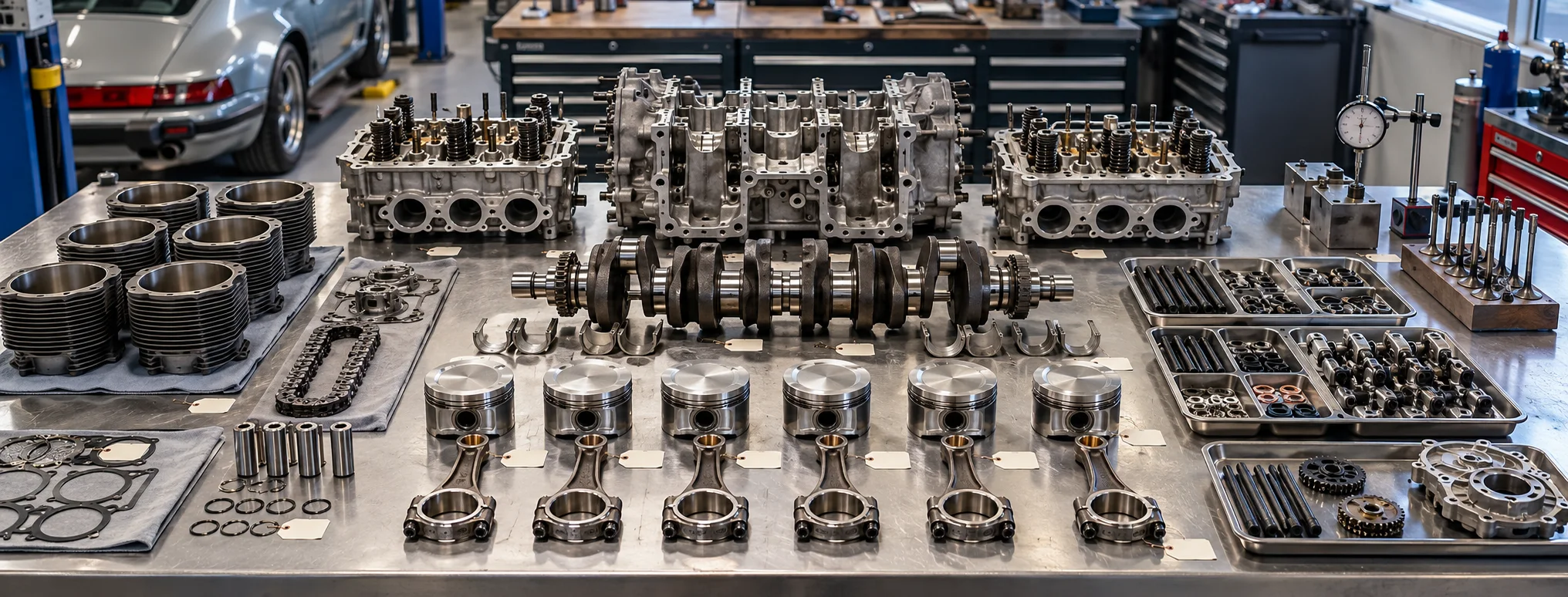
Three illustrative engine job budgets
These hypothetical examples show what must be agreed. They are not completed customer jobs, measured outcomes or offers. Each total assumes the listed scope is confirmed and includes 5% VAT.
Confirmed cooling component fault
AED 3,150 exampleIllustrative total for diagnosis, an identified component repair, agreed coolant work, labour and checks. The actual component and part number must be named. Head-gasket damage, cylinder-head work and recovery are excluded.
Oil leak with a separate running fault
AED 7,875 exampleIllustrative combined allowance for locating and repairing an external leak and a separately confirmed running fault. Require two diagnostic findings and itemised parts. Turbocharger or internal-engine work is excluded.
Compatible used engine installation
AED 31,500 exampleIllustrative total only if a compatible used unit and normal fitting can be sourced within that budget. Confirm included ancillaries, fluids, setup and tests. New or remanufactured units, core charges and additional failed components are excluded.
What an engine quote must show
Engine work is too expensive for a single line total. Your quote is split into parts and labour, so every item can be checked and compared, whether you compare it with another workshop or with a replacement engine option.
- Engine sourceNew, remanufactured, rebuilt or used, stated clearly
- Part brandsGenuine or named supplier parts for each item
- Gaskets and sealsFull sets where the engine is opened
- FluidsOil and coolant of the specified type
- Machine shopMeasuring, machining or liners if needed
- DiagnosisTests already done and their results
- Removal and refitRemoval and refitting required for the actual engine and repair
- Strip and buildHours for dismantling and assembly
- Setup and codingTiming, adaptations and software where needed
- Road testLeak, pressure, temperature and fault checks, with road testing only when safe
Evidence to request before approving engine work
Request a dated report linking findings to the recommended work. The photographs on this page explain inspection activities and are not a completed customer case record. Your own readings and images should identify the actual engine and tested cylinders.
Fields to include in your inspection report
This is a report checklist, not a completed inspection. Record the vehicle and engine code, date, mileage, complaint, assessor and any areas not tested.
- Compression in bar or psi for each tested cylinder, test conditions and the relevant limits.
- Leak-down percentage with pressure, positioning and observed leakage paths.
- Borescope views labelled by cylinder and surface, with access limitations.
- Oil-pressure or cooling-test results where indicated, with units and conditions.
- For dismantled engines, measured dimensions, tolerances, machining decisions and parts retained or replaced.
- After repair, recorded leak, pressure, temperature and fault checks, plus follow-up instructions.
Technical references include IMS identification by engine serial, bore scoring assessment and Porsche’s naturally aspirated 718 variants. Use current vehicle-specific service information for repair limits and procedures.
Timing follows the confirmed scope
- Initial assessment and additional testing have separate approval points. Confirm the booking slot and diagnostic allowance first.
- For internal work, agree removal, dismantling and machine-shop assessment before a final parts list or completion estimate.
- Parts availability, machining and replacement-engine supply determine the build schedule. Request an updated estimate when the scope changes.
- Allow for assembly, setup and validation before collection. A road test takes place only when safe.
Warranty and dismantling approval
- Request the duration or mileage limit, covered parts and workmanship, exclusions and claim process for the selected repair or engine source.
- Confirm who handles supplier or machine-shop claims and whether removal and refitting labour is covered.
- Agree diagnostic, dismantling, reassembly, storage and recovery charges, including costs if you decline the repair.
- For an exchange engine, confirm the core deposit, return deadline and unacceptable-core charges before ordering.
- Keep the specific run-in and first-service instructions with your quote and invoice. Warranty terms must be confirmed for your job.
Check the engine before you buy
Agree a pre-purchase inspection suited to the engine, symptoms and seller permission. Scanning, history checks and selected mechanical tests can reduce uncertainty, but no inspection guarantees future reliability.
Porsche engine questions
Straight answers to what owners ask before an engine decision. If your question is not here, send it on WhatsApp with your model and year.
How much does a Porsche engine rebuild cost in Dubai?
The indicative allowance on this page is AED 15,750 to 52,500 and above including 5% VAT for internal engine work. It is not a fixed rebuild price. Obtain separate scoped quotes for a rebuild and any replacement option after engine identification and damage assessment.
Can my engine be repaired without removing it?
Often yes. Leaks, ignition faults, cooling problems and many sensor issues are repaired with the engine in the car. Engine removal may be needed when the confirmed internal damage and repair procedure require it.
How do I know if my engine has bore scoring?
Those symptoms justify investigation but do not prove bore scoring. A suitable borescope inspection can document visible damage. Coverage, cylinder identification, severity and supporting findings matter. Normal compression alone does not exclude early scoring.
Does my Porsche have an IMS bearing?
Relevant M96 and M97 applications use an intermediate shaft, but bearing type and service access vary by engine and serial number. The later MA1 or 9A1 family uses a different design without that arrangement. GT, Turbo and replacement engines need their own identification.
Is a rebuild better than a used engine?
A rebuild keeps your original engine and lets worn parts be measured and replaced. A used engine can be quicker and cheaper, but its history is less certain. Your quote can show both options side by side.
What is the difference between compression and leak down tests?
Compression shows how much pressure each cylinder builds. Leak down shows how well each cylinder holds pressure and where it escapes, which points to rings, valves or a gasket.
Can I keep driving with an engine warning light?
A flashing engine light, low oil pressure warning, knocking or overheating means stop and arrange recovery. A steady light with normal running should still be scanned soon.
Do you offer pickup for engine jobs?
If your car should not be driven, tell us when you call and we will arrange recovery to the workshop. Any recovery cost is confirmed before it is booked.
Will I get my old parts back?
Ask before work starts. Exchange-engine core returns, supplier warranty returns or disposal requirements can affect which parts may be retained. Agree photographs and any return conditions in writing.
How much oil use is normal on a Porsche?
Some oil use between changes is normal on any sports engine. A clear increase over time, or blue smoke and a sooty tailpipe, is a reason to test compression and look at the cylinder walls.
Can a timing chain problem damage the engine?
Yes. Worn chains, guides or tensioners can affect timing and, in the worst cases, cause valve damage. A rattle on start up or timing related fault codes should be checked early.
Do you use genuine Porsche parts?
We use genuine parts specified for your car. Where a quality supplier part is suitable, it is shown on the quote as an option so you can choose.
Know what your engine needs before you spend
Book an initial assessment and agree the tests needed for your engine. Request documented findings and a written quote before approving repair, rebuild or replacement.
An enquiry is not a booking. The appointment is confirmed with you directly. Porsche Repair Dubai is an independent workshop and is not part of the Porsche Centre dealer network.