Porsche IMS Bearing Applicability and Replacement Choices
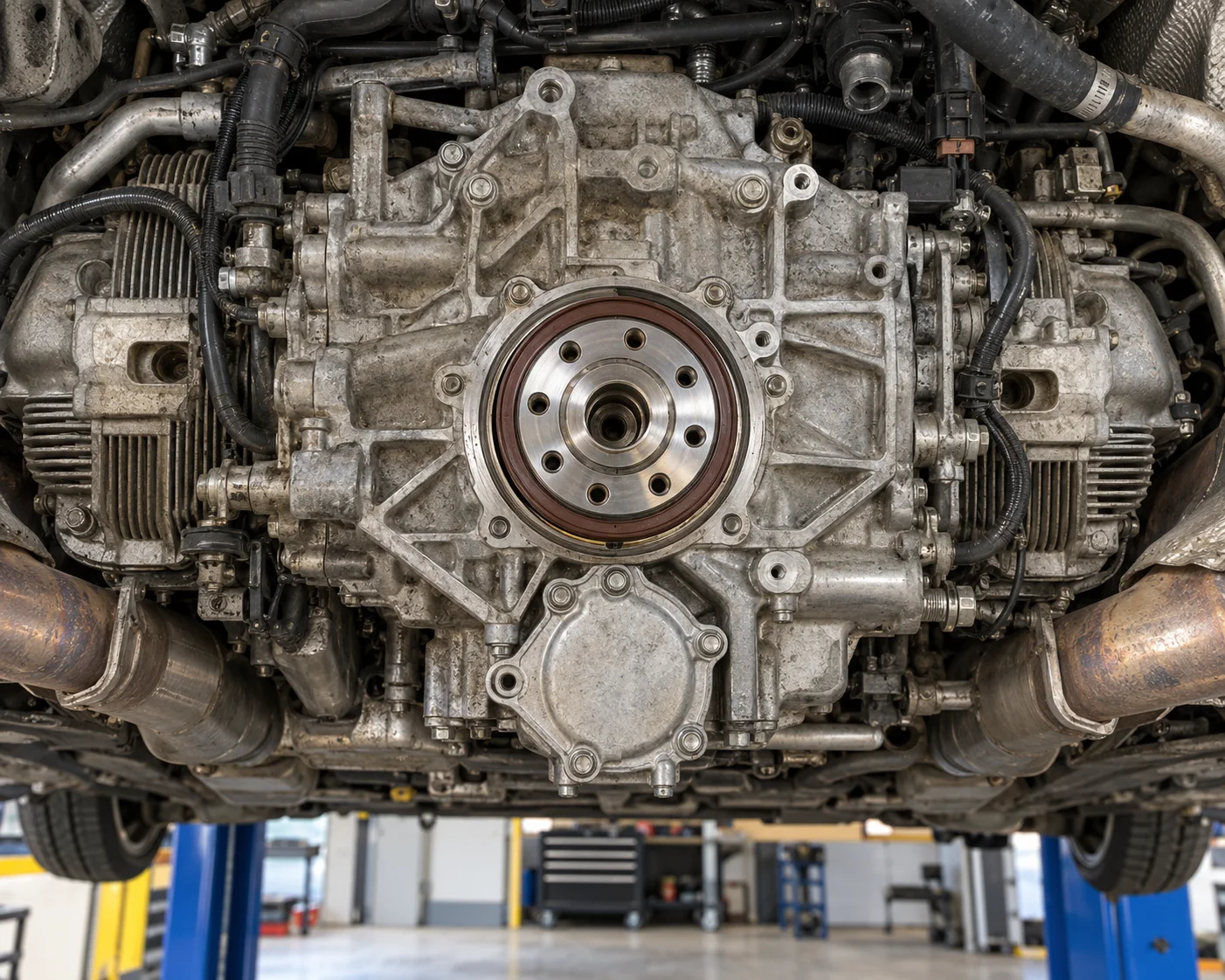
The Porsche IMS bearing concern discussed here affects the serviceable or enclosed ball-bearing support used in certain water-cooled Carrera, Boxster and Cayman engines. It does not apply to every Porsche or every engine carrying a similar code. Identify the installed engine and bearing before choosing preventive work.
An IMS retrofit is a preventive choice for an eligible engine in suitable condition. It is not a repair for an engine already damaged by bearing failure. The useful starting records are the model year, engine number, replacement-engine history and any previous bearing invoice.
When to stop and have the engine assessed
Metal debris changes the decision
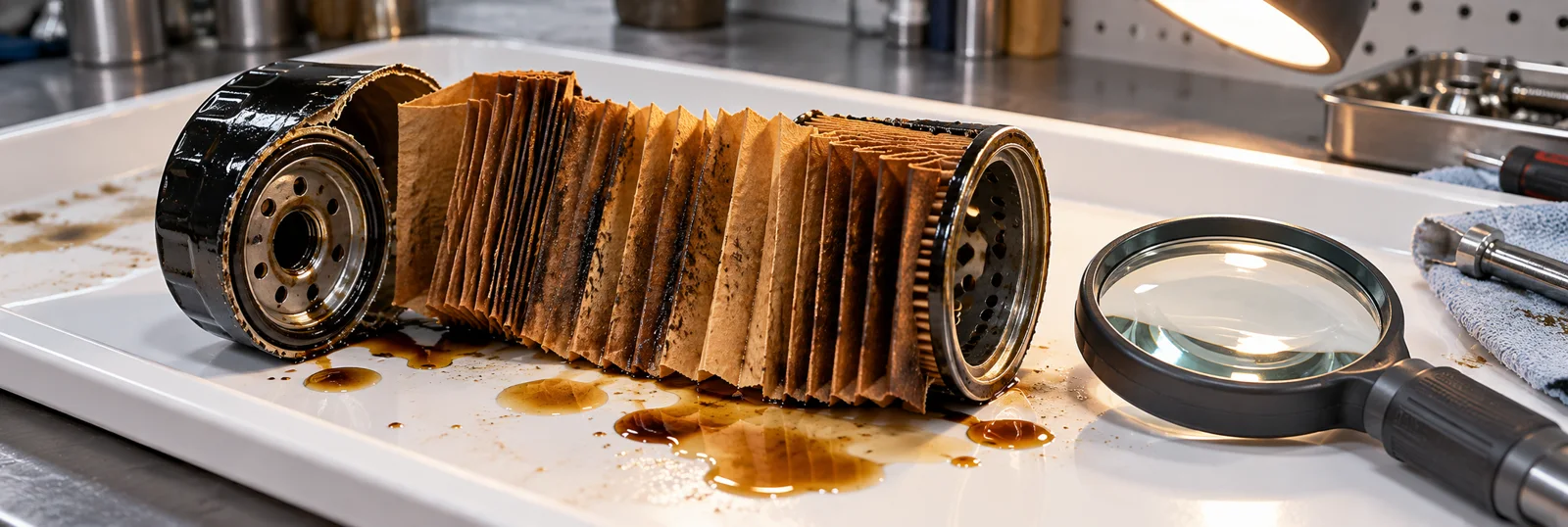
If an inspection finds significant ferrous debris, or the engine develops abnormal mechanical noise, an oil-pressure warning or a serious running problem, stop safely and arrange professional assessment. Do not keep running the engine to create a recording or drive it to test whether the noise disappears.
Metal in a filter does not identify its source by itself. A clean filter also cannot prove that a bearing is healthy. Filter inspection, fault information and engine-condition checks contribute evidence, with limits. A magnetic drain plug cannot collect every type of debris.
LN Engineering describes its retrofit and IMS Solution as preventive products and requires engine evaluation where significant debris is found. Its current replacement guidance should be read alongside the instructions for the actual kit. Do not fit a new bearing into a damaged engine without resolving the underlying condition.
Which Porsche engines need this check
Use this table to select the next identification step. It is not a parts catalogue. Model year is different from registration year, and an exchange engine can change the answer.
| Vehicle or engine group | How to approach IMS applicability |
|---|---|
| 996 Carrera and early 997 Carrera | Identify the original or replacement engine and actual bearing arrangement. These Carrera applications are part of the M96/M97 ball-bearing discussion. |
| Boxster 986 and 987.1 | Identify engine build and bearing type. Transition years and replacement engines prevent a year-only guarantee. |
| Cayman 987.1 | Identify the engine and larger-bearing arrangement. Do not assume that an externally removable early kit fits. |
| Later Carrera, Boxster and Cayman with 9A1 or successor engines | These engine families do not use the earlier intermediate-shaft arrangement. Verify the actual engine rather than relying on a registration date. |
| Mezger-derived 996/997 Turbo, GT2 and relevant GT3 engines | Their intermediate-shaft support differs from the Carrera sealed ball-bearing design. Do not apply this retrofit selection table. |
| Later Turbo and GT models | Do not describe all of them as Mezger engines. Identify the generation and engine family separately. |
| Other Porsche ranges | Do not transfer Carrera IMS claims to Cayenne, Macan, Panamera, Taycan or classic air-cooled engines. |
The familiar M96 or M97 label is not enough on its own. The relevant construction, full engine identification and installed parts determine applicability. For broader generation-specific work, see 996 repair or Boxster repair and maintenance.
Confirm the bearing before ordering a kit
Early engines can use a dual-row bearing, later externally serviceable engines can use a single-row bearing, and later production introduced a larger bearing retained inside the engine. The 2000–2001 and 2005 transition periods deserve particular care. There is no safe universal rule that every 1997–2005 engine accepts the same external replacement procedure.
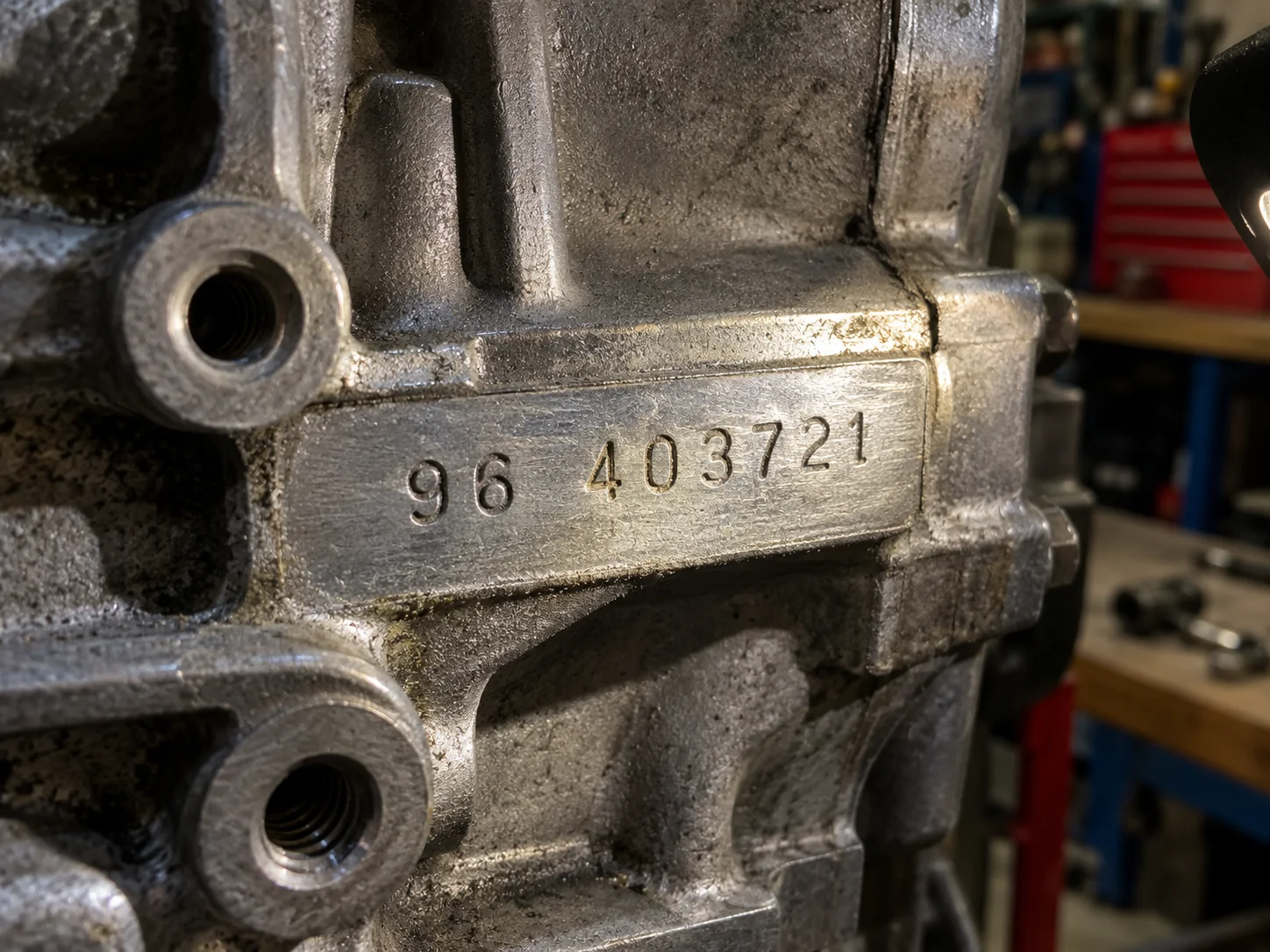
Start with the engine number and replacement history, then follow the identification procedure for the proposed kit. LN Engineering's bearing identification guidance gives engine-number information and requires visual confirmation. A flange reseal invoice does not establish that the bearing itself was replaced.
On the larger 2006–2008-style arrangement, the original bearing cannot be extracted externally in the same way as the earlier serviceable designs. Engine disassembly changes the available options, including product-specific conversion arrangements. That is a separate rebuild decision, not a routine gearbox-out retrofit.
Compare the preventive options by installed product
Factory bearing type and aftermarket product name are different things. In particular, Single Row Pro replaces an applicable single-row installation but uses a dual-row ceramic hybrid bearing. Its name must not be used to describe its internal row count.
| Option | What it means | Decision and records |
|---|---|---|
| Retain the installed bearing | No preventive replacement has been performed | Discuss engine condition, access costs and uncertainty. Inspection cannot certify future bearing life. |
| Classic Dual Row retrofit | Aftermarket ceramic hybrid dual-row bearing for applicable installations | Confirm fitment and the current product replacement interval. |
| Single Row Pro retrofit | Aftermarket dual-row ceramic hybrid design for applicable single-row installations | Confirm kit identification and the product-specific installation tools. |
| Older Classic Single Row retrofit | A different installed product from Single Row Pro | Do not apply the newer product's interval to it. |
| RND RS Roller retrofit | An aftermarket roller-bearing product | Use the exact kit's current instructions and recorded installation date. |
| IMS Solution | An aftermarket plain-bearing system with a dedicated oil supply | Assess engine eligibility and fitting requirements. A maker's no-scheduled-replacement claim is not a guarantee against every engine failure. |
These are aftermarket manufacturer descriptions, not Porsche factory endorsements. LN Engineering's product comparison explains construction differences. Choose using the installed engine, current kit documentation, workshop capability and written scope.
Use the interval for the bearing actually installed
The replacement clock begins with the recorded installation, not when the current owner bought the car. Use whichever limit is reached first when a product specifies both time and distance.
| Recorded retrofit | Manufacturer guidance | Distance in kilometres |
|---|---|---|
| Single Row Pro, Classic Dual Row and RND RS | 6 years or 75,000 miles in the cited current guidance | Approximately 121,000 km |
| Classic Single Row 106-08.2 | 4 years or 50,000 miles | Approximately 80,000 km |
| Pelican PEL-IMS-1 | 3 years or 36,000 miles in the cited guidance | Approximately 58,000 km |
| IMS Solution | No scheduled bearing replacement stated by its maker | Does not remove normal engine maintenance or condition checks |
These are aftermarket product intervals from the manufacturer's current guidance, not a universal Porsche factory schedule. Confirm the latest instructions for the exact part before booking. Where an old invoice and current instructions disagree, obtain clarification from the product supplier rather than selecting the longer interval.
If the product or installation mileage is unknown, treat the record as incomplete. A serial number, part number and itemised invoice are more useful than an advert saying that the IMS was done.
What a properly scoped IMS job involves
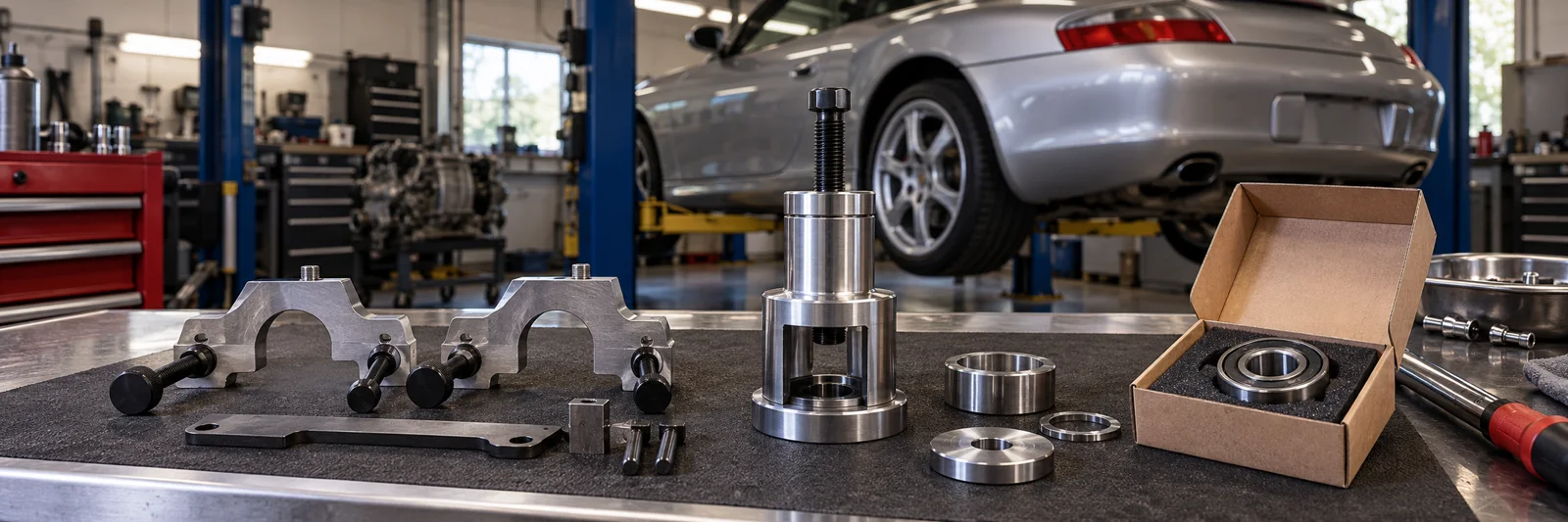
The quotation should separate engine-condition assessment, access labour, the chosen kit, required seals and fasteners, fluids, installation and completion checks. The bearing procedure requires application-specific crankshaft and camshaft positioning, locking and installation tools. It is not a general DIY bearing extraction job.
Engine removal is not a universal yes or no. Access differs between a rear-engine 911 and mid-engine Boxster or Cayman, and between manual and Tiptronic cars. The LN procedure specifically discusses removing the engine and transmission assembly for 996/997 Tiptronic access. Do not apply that statement to every Tiptronic Porsche.
Tooling also depends on the kit. The manufacturer's identification guidance specifies additional installation tooling for Single Row Pro. Correct tools support the procedure but do not establish that an engine with debris is a suitable preventive candidate.
Seal removal on a later bearing is sometimes discussed in aftermarket guidance. It should not be sold as an equivalent bearing replacement, a Porsche-approved cure or proof that the engine will not fail. Record exactly what was inspected, retained or changed.
What changes an IMS quotation in Dubai
Initial engine diagnosis has a published planning allowance of AED 420–1,260 including 5% VAT. Agree the inspection, scan and reporting scope first. Compression, leak-down, borescope access, filter disassembly and laboratory testing are included only when expressly listed. This is an assessment allowance, not the price of an IMS kit or fitted replacement.
An exact fitted estimate requires the engine identification, transmission type, bearing arrangement and intended kit. A kit-only price leaves out substantial access and installation work. Overseas dollar prices are not a useful substitute for a local fitted quotation.
| Quote item | What should be specified |
|---|---|
| Initial assessment | Inspection scope, filter examination if authorised, relevant fault checks and a stop point if internal damage is suspected. |
| Access labour | Vehicle and transmission, gearbox removal or drivetrain removal, and whether the engine needs splitting. |
| Bearing system | Manufacturer, part number, contents, replacement interval and supplier availability. |
| Related work | Rear main seal, clutch or flywheel only where justified. State shared labour rather than charging duplicate access. |
| Fluids and consumables | Named fluids, seals, fasteners and other required items. |
| Final total | Parts, labour, VAT, extra-work approval limit, expected parts lead time and written warranty exclusions. |
A manual clutch may be accessible during the job, but replacement depends on inspection and authorisation. Tiptronic cars do not receive the same manual-clutch package. Water pumps, air-oil separators and coolant tanks are separate condition or maintenance decisions, not automatic IMS extras.
For a car with suspected internal damage, use the engine repair assessment route before ordering a preventive kit. Ask for the fitted total before authorising access work and a separate approval point if additional damage is found.
Keep the engine and bearing records together
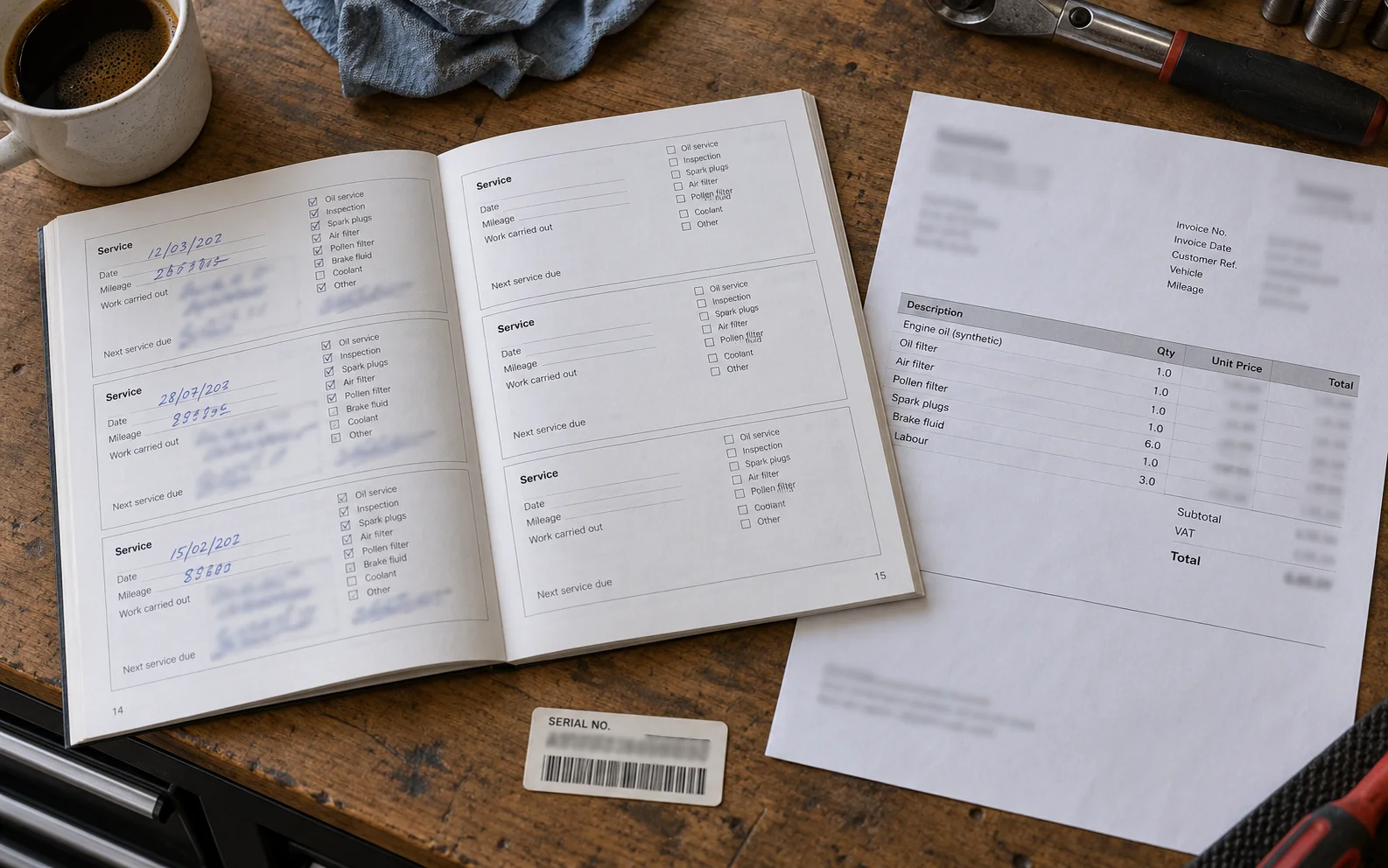
- VIN, model year, engine number and any exchange-engine documentation
- Before-work findings and photographs from the actual inspection
- Installed manufacturer, kit part number and serial or batch details where supplied
- Installation date and odometer reading with miles or kilometres clearly stated
- Related seals, clutch or flywheel work itemised separately
- Next product-specific replacement date or mileage where required
- Written warranty, exclusions and completion checks
For a used-car purchase, ask the seller for the original invoice and confirm what the wording means. A rear main seal replacement, gearbox removal or upgraded flange is not by itself proof of a bearing retrofit. Avoid treating a clean inspection as a guarantee of future reliability.
Porsche IMS bearing questions
Can a scan confirm that the IMS bearing is healthy?
No. Fault information can help assess engine behaviour, but a scan does not certify bearing condition. Test results must be interpreted with physical findings and engine history.
Does every 2005 Porsche accept an external IMS retrofit?
No. Production changes and replacement engines matter. Identify the installed arrangement before selecting a kit or quoting access.
Is the rear main seal the same as the IMS bearing?
No. The rear main seal controls oil leakage at the crankshaft. IMS work concerns the intermediate-shaft bearing support. Nearby access does not make them the same repair.
Does a preventive replacement eliminate every engine risk?
No. It addresses a particular component on an eligible engine. It does not prevent unrelated bore wear, lubrication faults or other engine damage.
What percentage of these bearings fail?
A historical warranty or settlement figure cannot predict an individual engine's risk. Construction, engine history and the limits of the underlying dataset matter. This guide does not assign a personal failure probability.
Should I change driving habits to protect the bearing?
Follow the correct maintenance and operating instructions for your car. Do not treat an unverified oil additive, rev limit, storage rule or driving routine as a proven IMS prevention method.