Skip to content
Four cylinder transaxle classic, 1982 to 1991

Porsche 944 Repair in Dubai

Unknown belt history, coolant loss, a no-start fault or clutch trouble? Get an inspection and a written repair plan for your 944. Both-belt service is estimated at AED 3,000 to 5,000 including VAT. Confirm your engine, records and required work before booking.

2
Toothed belts to plan
2.5 to 3.0
Litre four cylinder
VIN
Parts matched first
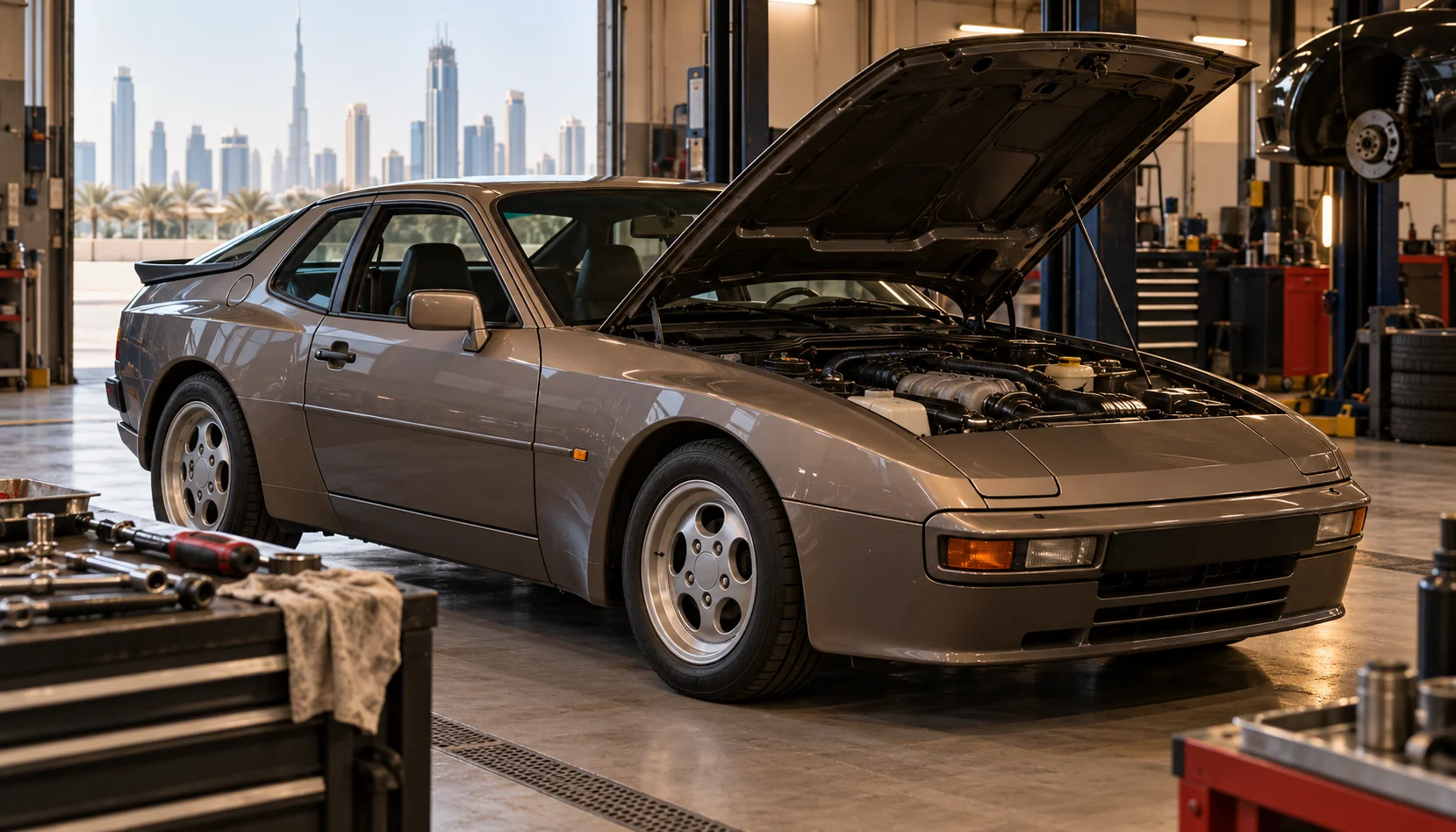
Porsche 944 in a Dubai workshop bay with the bonnet open, showing its flared front and rear wheel arches

Porsche 944 repair price guide

These planning budgets include 5% VAT. They are not fixed offers or stock confirmations. The engine, parts and inspection findings determine your written quote.

Camshaft and balance shaft belts

AED 3,000 to 5,000Both belts, applicable rollers, routine fitting, timing and tension checks. Water pump, leaking seals, tensioner repairs and engine damage are separate. Confirm whether any required follow-up tension check is included.

Both belts with a water pump

AED 4,500 to 7,500Both belts, applicable rollers, one compatible engine water pump, required coolant, routine fitting and final checks. Other cooling faults, seized fasteners and engine damage are separate.

Budgets match our timing belt service guide. Retaining a documented, serviceable pump can avoid unnecessary replacement. A confirmed leak or bearing fault may justify combining the work.

Inspection, clutch and other repairs

Request the initial investigation fee before booking. A clutch quote needs the transmission type, kit, release parts, access labour and any related work. Cooling repairs need the confirmed leaking component. Structural repairs need inspection before a meaningful estimate. The written estimate follows the agreed investigation.

Short answer

What does a 944 need first when it arrives?

Belts

Find the date and mileage of the last camshaft and balance shaft belt change. If records are missing, assess the car and discuss preventive replacement before regular use.

Cooling

Check the expansion tank for oil, test the system under pressure and look at the water pump, radiator and hoses.

Drivetrain

Identify manual or automatic transmission, assess noise and operation, and check fluid condition and mounts before road testing where safe.

Which Porsche 944 do you own?

Match the model year, engine and transmission to the VIN and build data. Introduction and registration dates can differ by market.

Selected road models and the checks that change with them
ModelYearsEngineWhat to confirm
944 2.51982 to 19882.5 litre, 8 valvePower varies by market and emissions specification. Confirm engine and fitted transmission.
944 Turbo1985 to 19912.5 litre turbo, 8 valve220 PS initially, with the Turbo S engine used from model year 1989. Check turbo and cooling equipment.
944 S1987 to 19882.5 litre, 16 valve190 PS. Inspect the camshaft chain, tensioner and guides as a separate operation from the belts.
944 Turbo S19882.5 litre turbo, 8 valve250 PS. Match parts to the build specification rather than the badge alone.
944 2.719892.7 litre, 8 valve165 PS. Identify the engine before ordering cooling or cylinder-head parts.
944 S21989 to 19913.0 litre, 16 valve211 PS. Belt drive and internal camshaft-chain work are different operations.
CabrioletS2 from 1989, Turbo in 1991Confirm exact variantInclude roof operation, seals, water ingress and body-specific parts in the assessment.

Selected naturally aspirated cars have a three-speed automatic. Manual clutch work and automatic-transmission diagnosis need different quotes. Porsche’s model reference explains the main naturally aspirated variants.

Two belts, one job

Two belts and a water pump condition check

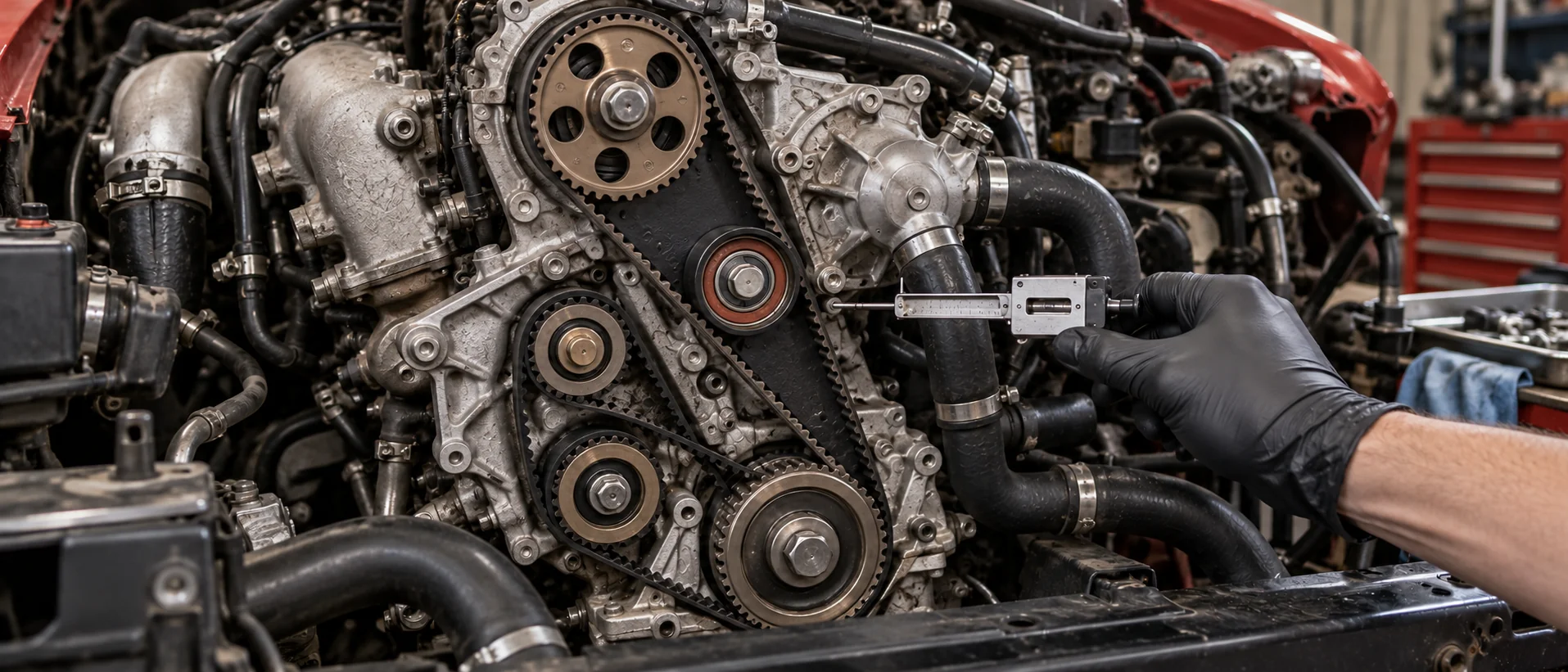
Every 944 runs a camshaft belt plus a second belt for its balance shafts. Porsche licensed the balance shaft idea from Mitsubishi to calm the vibration of a big four cylinder. The back of the camshaft belt also turns the water pump.

  1. 01

    Interference engine

    A failed camshaft belt can allow valve and piston contact. Do not keep cranking after suspected failure. Inspection determines the damage and whether cylinder-head removal is needed.

  2. 02

    Balance shaft belt

    Both belts share the front of the engine, so they are renewed, timed and tensioned together in one visit.

  3. 03

    Tension is measured

    Identify the engine, fitted tensioner and belt before selecting the setting procedure. Record any required follow-up check on the invoice.

Front of a Porsche 944 engine with belt covers removed, showing the camshaft belt, balance shaft belt and water pump

Build the belt plan from your car’s records

There is no single replacement or tension-check interval to apply to every 944. Use the maintenance information for the model year, engine and original market, together with the fitted parts and dated invoices.

Known replacement history

Record the belt date, mileage, kit, rollers, tensioner and whether the water pump was replaced. Match the next replacement and checking requirements to the applicable maintenance and workshop instructions.

Missing or uncertain history

A visual check cannot prove remaining belt life. Discuss preventive replacement before returning the car to regular use. Any conservative age-based recommendation must be identified separately from a factory requirement.

Pump, rollers and tensioner

Inspect condition and review records. Pump replacement is not automatically required at every second belt change. Itemise leaking seals, worn rollers, tensioner repairs and any applicable stud replacement.

After fitting

Record timing and tension checks and any follow-up distance or date required for the fitted system. Ask whether the recheck is included in the quoted price.

Start with the symptom and whether it is safe to run

A noise or warning cannot establish a safe number of days to keep driving. Describe when it occurs and follow the owner’s manual. Recovery may be needed before inspection.

Stop safely and switch off

Stop for overheating, a sudden oil-pressure loss, a persistent oil-pressure warning, serious braking or steering trouble, smoke or a strong fuel smell. Do not open a hot coolant system. Call for assistance before restarting.

New head or belt-area noise

A new mechanical rattle needs assessment before further running, particularly on S and S2 engines with an internal camshaft chain. Noise alone cannot confirm a failed tensioner or guide.

Severe vibration or suspension trouble

Strong vibration, tyre contact, a dropped corner or unstable handling needs advice before driving. Check mounts, wheels, suspension and drivetrain rather than assuming the torque tube is at fault.

No start or water ingress

Agree electrical and fuel-system checks for a no-start. Water inside needs prompt source tracing and inspection of affected wiring. Neither fault should be assigned an arbitrary waiting period.

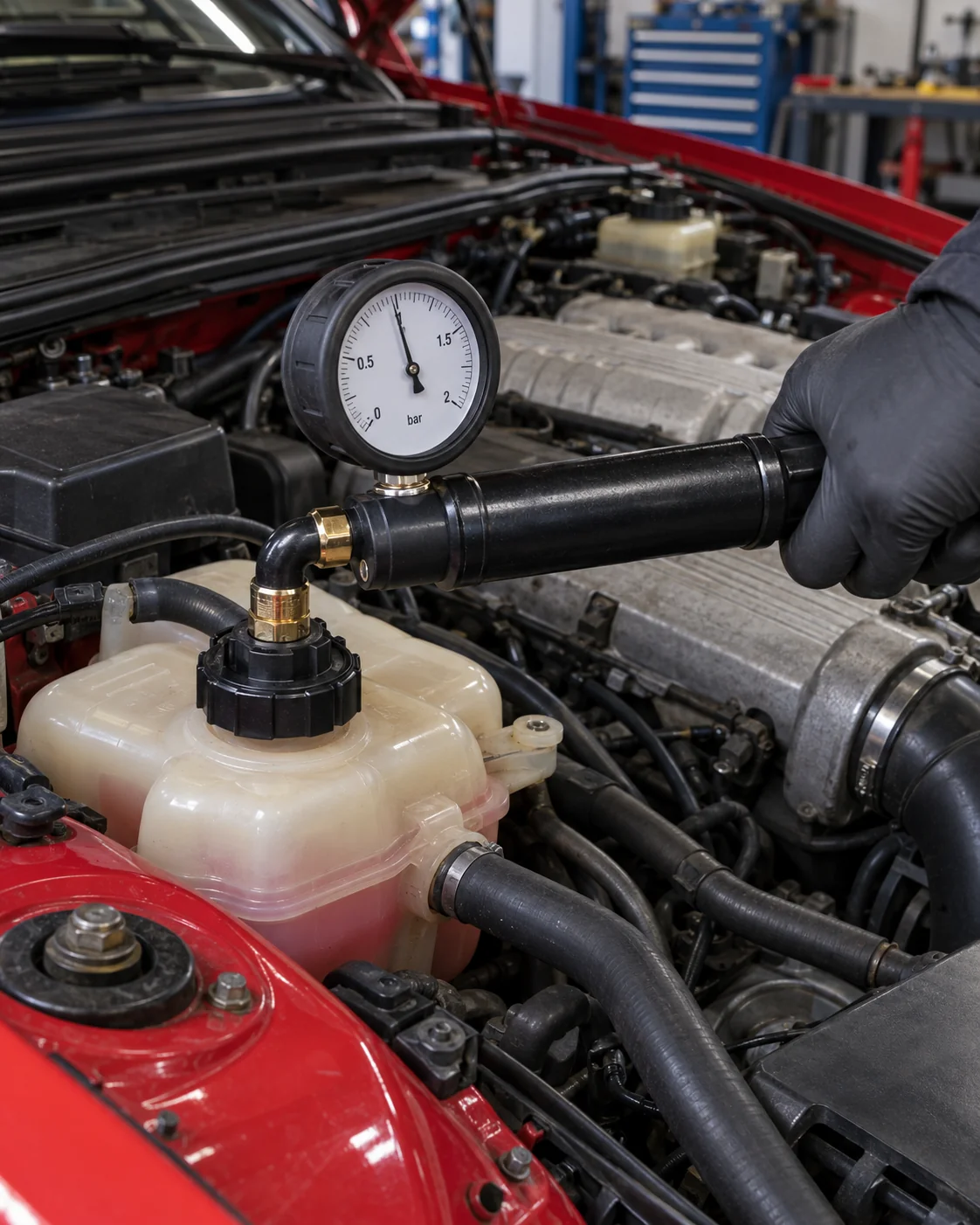
Cooling system pressure tester fitted to the expansion tank of a Porsche 944 engine bay
Cooling in Dubai heat

Confirm the source of coolant loss or overheating

The radiator sits low and is easy to damage. The water pump depends on the belt. On non turbo cars the oil cooler lives in the oil filter housing, sealed by a gasket and two rings. Failed seals can allow contamination, but residue alone does not establish the source.

Signs you may see

  • Brown or yellow film in the expansion tank
  • Milky residue that needs distinguishing from condensation
  • Coolant level dropping with no drip
  • Needle rising at idle in traffic
  • Sweet smell after a long drive

What we test

  • Pressure test of the whole system
  • Tests to distinguish cooler seals, head-gasket faults and other causes
  • Fan operation and switch
  • Radiator fins, hoses and clamps
  • Pump bearing play at belt time

On a 944 Turbo the housing holds an oil thermostat instead of a cooler, with external lines to check. Related work is on our radiator page and water pump page.

Clutch, torque tube and transaxle

Why 944 clutch work costs more than it looks

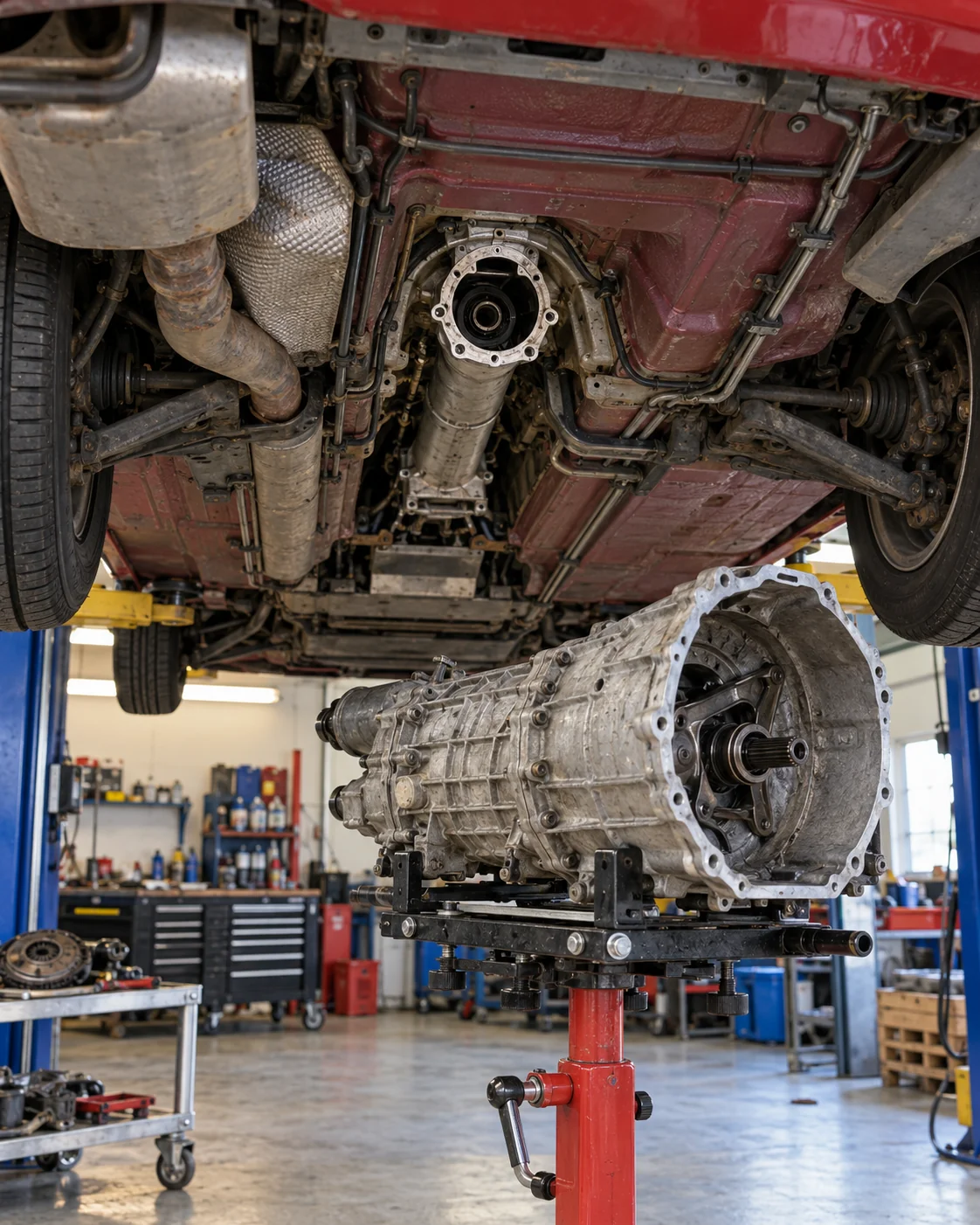
On manual cars, the clutch sits at the engine end, ahead of the torque tube. The transaxle is at the rear. Access and exhaust dismantling vary by version, so the quote must match the car. Automatic cars need a different investigation.

Gearbox oil change

Drain and refill from below. A quick job that is often skipped.

Shift linkage bushes

Check linkage wear and adjustment alongside clutch operation before diagnosing an internal gearbox fault.

Clutch and release parts

Disc, pressure plate, release bearing and fork pivot. Some discs use a rubber centre that wears before the friction face.

Torque tube bearings

Investigate noise and vibration before removal. Confirm rebuilding suitability, supplier availability and warranty before agreeing a refurbishment.

Porsche 944 on a lift with the rear transaxle lowered and the torque tube visible during clutch work

What a clutch quote should list

  • Clutch kit parts and brand
  • Release bearing, fork and pivot
  • Torque tube bearing condition after removal
  • Transaxle mounts and gearbox oil
  • Labour hours and VAT

The written estimate should distinguish the clutch fault from hydraulic, linkage or transaxle faults. Confirm additional access charges and approval before replacing related parts. More gearbox detail is on our transmission repair page.

Body and chassis

Where do we look for rust and chassis wear on a 944?

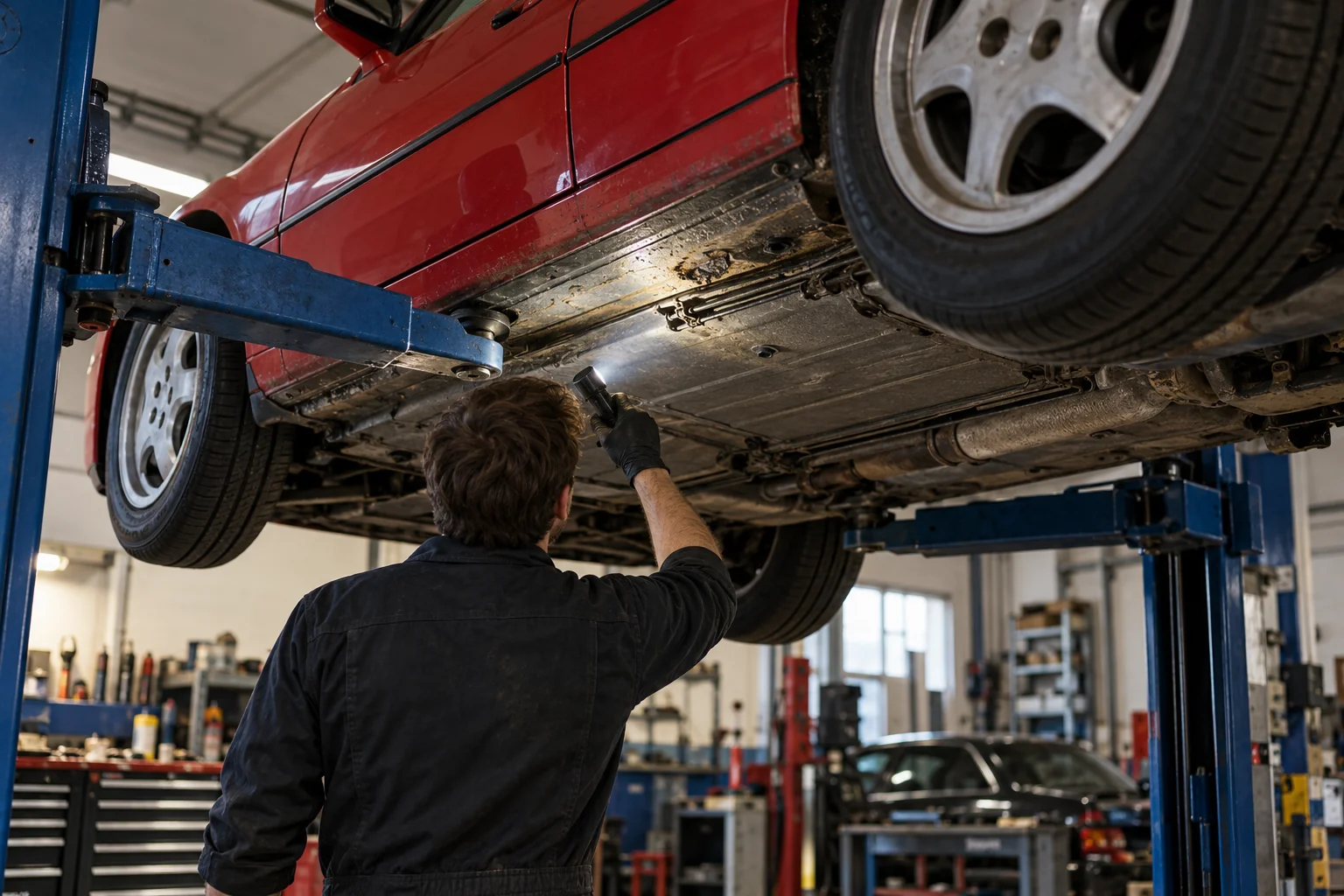
Age, past accident repairs and poor jacking leave weak spots on any 944. These are the places we photograph for your report.

Underside of a Porsche 944 on a lift with the sills and floor being inspected with a torch
A

Sills

The outer sill is a cover. We check the structure behind it.

B

Battery tray area

Acid and trapped water attack the tray and the metal below.

C

Floors and mounts

Suspension mounting points and jacking areas.

D

Rear torsion bars

Ride height, eccentric adjustment and bushes.

E

Front wishbones

Bushes, ball joints and steering rack boots.

F

Seals and drains

Hatch glass seal, rear lamps and sunroof drains.

Electrics

Is a 944 no start always the DME relay?

No. The DME relay is one possible cause. Check supply voltage, grounds, fuel delivery, ignition and the applicable speed or reference signals before condemning a relay or control unit.

  • DME relay supply and output tests
  • Crank and speed sensors
  • Battery, starter and main grounds
  • Fuse panel contacts and corrosion
  • Seat and window switches
  • Instrument gears on early dash cars

Start with our Porsche not starting page if the car is stranded now.

By engine

Which extra checks depend on your 944 engine?

The core plan is the same on every car. These are the additions we make for each engine family, so the quote matches the car in front of us.

EngineBelt drive notesCooling and oilExtra checks
2.5 and 2.7, 8 valveCamshaft and balance belts, with tensioner hardware and stud applicability checked against the engine.Oil cooler seals in the filter housing, water pump, radiator.Engine mounts, idle quality, fuel and vacuum hoses.
944 S, 2.5 16 valveSame two belts plus a chain between the camshafts.Confirm the engine-specific cooler, seals and cooling circuit.Camshaft-chain tensioner and guide condition, plus valve-cover leaks.
944 S2, 3.0 16 valveTwo belts plus camshaft chain and tensioner.Oil pressure checked warm, coolant hoses and fan.Clutch type, crankshaft and balance shaft seals.
Turbo and Turbo STwo belts, extra heat around the drive.Oil thermostat housing, external cooler lines, intercooler hoses.Boost leaks, turbo oil lines, exhaust heat shields.

Oil-pressure assessment needs the correct engine specification, measured oil temperature and RPM. A workshop test specification is different from a dashboard observation. Check the gauge or sender where appropriate. A sudden loss of pressure or persistent warning requires stopping safely and switching off.

Match maintenance to the year, engine and history

A driver’s manual and a maintenance booklet serve different purposes. Confirm the applicable schedule before assigning replacement intervals. Storage, previous repairs and use may justify additional checks.

Oil, filters and ignition

Confirm oil specification, fill quantity and level-check procedure for the engine. List oil service, air filter, spark plugs and fuel-system checks separately. Do not apply one historic mileage figure to every car.

Brakes, tyres and cooling

Review fluid history, leaks, hose condition, tyre age and brake operation. Use the correct fluid and coolant requirements and the applicable time-based schedule. Investigate contamination or overheating separately.

Manual or automatic transmission

Identify the fitted transmission before selecting oil, filter or adjustment work. A manual transaxle service does not describe the requirements of a three-speed automatic.

Returning a stored car to use

Assess belts, fuel lines, brakes, tyres, cooling and battery condition before routine driving. An occasional start alone is not a recommissioning plan.

Confirm parts availability before booking

Porsche Classic catalogues help identify parts. Catalogue inclusion does not establish current stock, compatibility with modifications or a delivery date.

Identify the exact part

Match VIN, engine and existing components. Any superseded reference needs a fitment check. Confirm genuine, compatible new, used or refurbished condition in writing.

Confirm supply and delivery

Request supplier stock confirmation and an estimated dispatch and delivery date. Shipping, customs, back orders and refurbishment can change collection timing.

Agree alternatives before ordering

Compare condition, fitment, supplier warranty and total fitted cost. Confirm deposits, special-order terms and any core return before committing.

Staged restoration

Can you restore my 944 in stages?

A staged plan can be discussed after inspection and confirmation of the work the workshop can accept. Each stage is quoted and approved on its own, starting with safety and condition.

1

Safe to drive

Belts, water pump, cooling, fuel lines, brake fluid and tyres. Inspection determines the work required before the car returns to use.

2

Reliability

Clutch, torque tube, mounts, suspension bushes, brakes and leaks.

3

Comfort and electrics

Air conditioning, switches, relays, instruments and seals.

4

Finish

Paint, trim and interior, after the car is mechanically sound. See our painting and upholstery pages.

Before any layer starts you get a written estimate built from the inspection findings, the parts list and labour. Hidden corrosion or seized parts found later are reported with photos before we continue.

Your repair record

Keep the findings and agreed work together

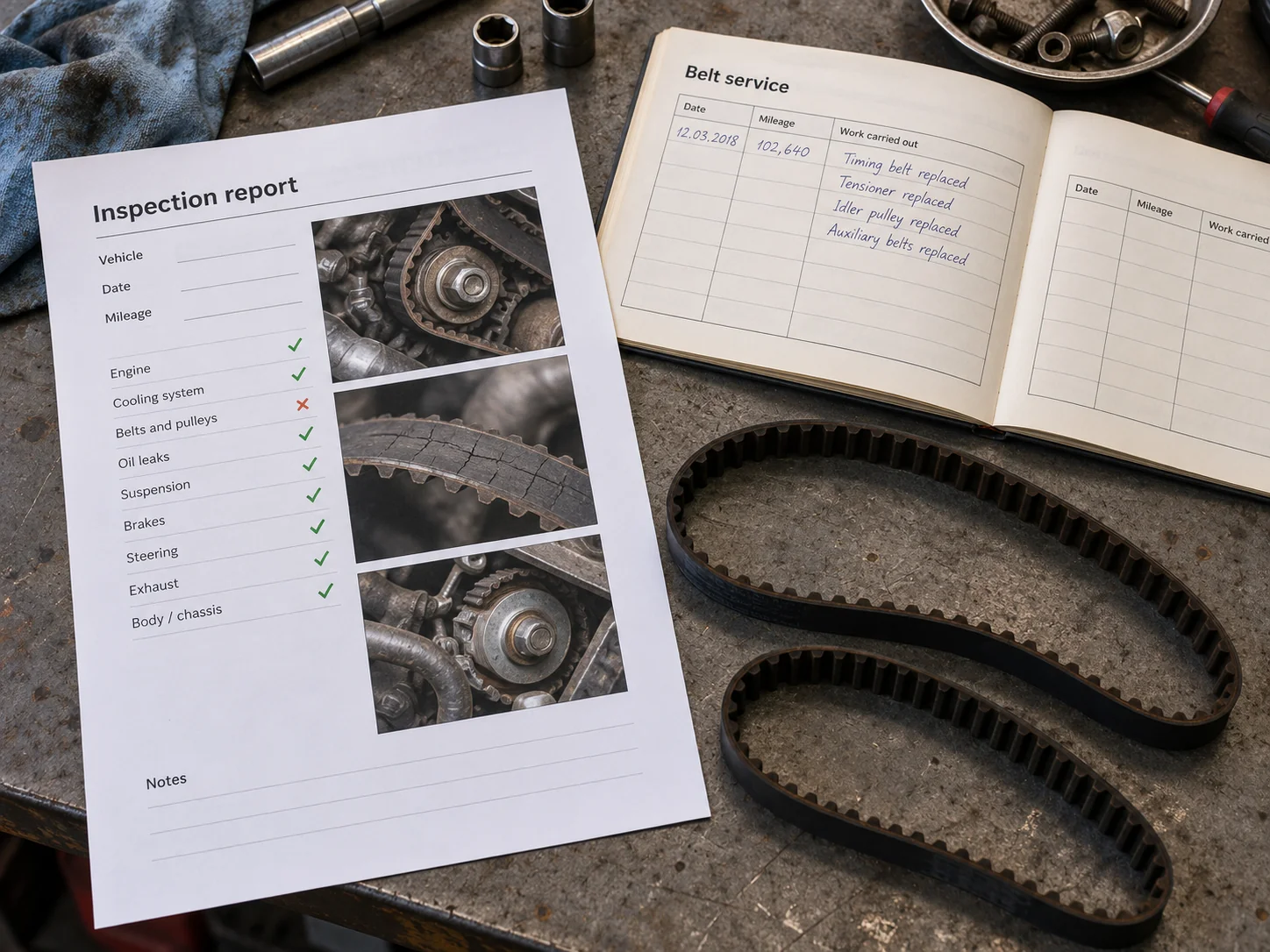
Ask for the following records with your repair. The sample layout is not a completed customer job or evidence of a particular repair.

  1. Chassis number and engine type confirmed
  2. Photos before, during and after
  3. Belt date, mileage and tension readings
  4. Parts list with part numbers and source
  5. Findings sorted by urgency
  6. Next due dates written in your book
Sample inspection report and service book beside two used toothed belts
Sample job-file layout

Agree the investigation, work and warranty

A request starts an enquiry. The appointment, accepted work and any parts order are confirmed separately.

Before investigation

Agree the initial fee, checks and reporting. Further dismantling or specialist testing needs a separate estimate and approval. Ask which work can be completed here and which needs an outside provider.

Before repair

Confirm parts source and condition, labour, fluids, VAT and exclusions. Keep photographs and findings with any additional estimate. Confirm the expected completion date after availability and access are assessed.

At collection

Request the final checks, invoice and any due follow-up. Warranty must state the covered parts and workmanship, duration or mileage limit, exclusions and claim process. No universal warranty is implied.

Technical references for your 944

Use the source that matches the question. Technical literature does not establish workshop certification or prove a completed repair.

Questions owners ask

Porsche 944 repair questions

How often should a Porsche 944 timing belt be changed?

Use the maintenance information for your model year, engine and market, the fitted tensioner and dated replacement records. Confirm replacement and tension-check requirements separately. Any additional age-based workshop recommendation should be explained in writing.

Is the Porsche 944 an interference engine?

Yes. A failed camshaft belt can allow contact between pistons and valves. Do not keep trying to start the engine after suspected belt failure. Inspection determines the damage.

Should the water pump be changed with the belts?

Not automatically. Inspect the pump and review its history. A confirmed leak, bearing fault or uncertain service history may support a combined job. A documented, serviceable pump may be retained where suitable.

Why is there oil in my 944 coolant?

Cooler seals, head-gasket faults and other causes require testing. Residue under an oil cap alone can also have a different explanation. Do not open a hot coolant system or continue driving with overheating.

Why will my 944 crank but not start?

The DME relay is one possibility. Check battery supply, grounds, ignition, fuel delivery and applicable sensors before replacing parts.

How long does 944 clutch replacement take?

Confirm the manual-transmission version, access work and parts availability first. Additional exhaust work, seized fittings or related faults can change the labour and completion estimate.

Are 944 parts still available?

Availability depends on the exact reference. A catalogue listing is not a stock confirmation. Verify any replacement reference and the condition of used or refurbished parts before ordering.

Do you check a 944 before I buy it?

Enquire about a pre-purchase inspection with classic-specific checks. Agree access, road testing, belt-record review and inspection limitations before booking.

Can I keep using my 944 every day in Dubai?

Suitability depends on the individual car’s condition, maintenance and cooling performance. Have an assessment before regular use, particularly after storage or with uncertain belt history.

Do you work on the 944 Turbo and S2?

Send the VIN, engine details and requested work. Inspection and maintenance are assessed by the task. Rebuilds, specialist machining and unusual parts require confirmation before the work is accepted.
Book a 944 inspection

Send your 944 details and get a written plan

Tell us the model, year, mileage and the date of the last belt change. We will tell you what to check first, what it is likely to involve and what we need to see before quoting.

  • Belt history reviewed first
  • Findings sorted by urgency
  • Written quote before work
  • Photos of what we replace

Porsche Repair Dubai is an independent workshop. We are not an authorised Porsche dealer and have no affiliation with Porsche AG. Porsche and 944 are used only to describe the cars we work on.

Call WhatsApp
Scroll to Top