01
Fine desert sand
Sand settles in a fine layer every day and is hard enough to mark clear coat. Never wipe it off dry. The Porsche owner manual for the 911 warns against rubbing dust off paint with a dry cloth.
Exterior care guide
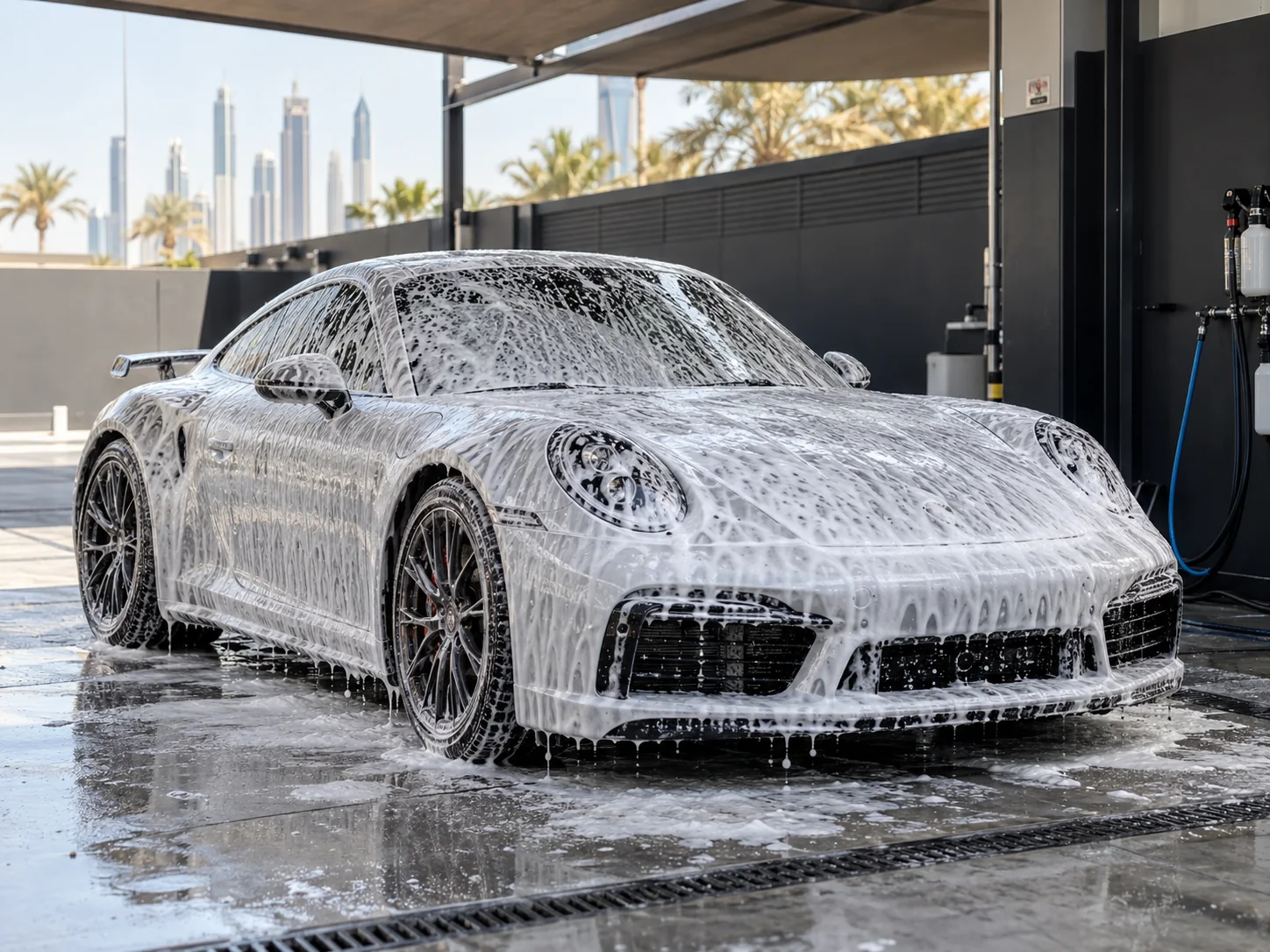
Wash a Porsche cool, in shade, wheels first, with a full rinse before any mitt touches the paint. Use a pH neutral shampoo, the two bucket method and clean microfibre, then dry with a soft towel or blower. Paint protection film, ceramic coating, matte paint and ceramic brakes each add their own rules, which this guide sets out for Dubai conditions.
Short answer
The safest wash is the one that moves the least grit across the paint. Porsche detailing advice and film makers agree on the same order of work, with small product differences.
Why Dubai is different
The same wash that suits a garaged car in a mild climate can scratch or spot a car parked outside in Al Quoz or the Marina. Four local conditions matter most.
Sand settles in a fine layer every day and is hard enough to mark clear coat. Never wipe it off dry. The Porsche owner manual for the 911 warns against rubbing dust off paint with a dry cloth.
Dark panels in summer sun get far too hot to wash safely. Shampoo dries on contact and leaves residue. Porsche advice is to avoid direct sunlight and use lukewarm to cool water.
Most Dubai tap water is desalinated seawater distributed by DEWA, and dissolved minerals stay behind when droplets evaporate. Dry the car promptly instead of letting it air dry.
Strong sun ages unprotected paint and trim, and construction dust and brake dust leave iron fallout. Both explain why many owners fit film or coating, which then need compatible care.
Step by step
This sequence follows the Porsche Newsroom detailing masterclass with Richard Tipper, adapted for sand and heat. Allow about an hour for a careful exterior wash.
Walk around and note lifted film edges, peeling clear coat, fresh paint, chipped wheels and damaged trim. Photograph anything you want on record before water touches it.
Wait until the bonnet and wheels feel cool to the hand. Wheels stay hot long after the body, especially after hard braking.
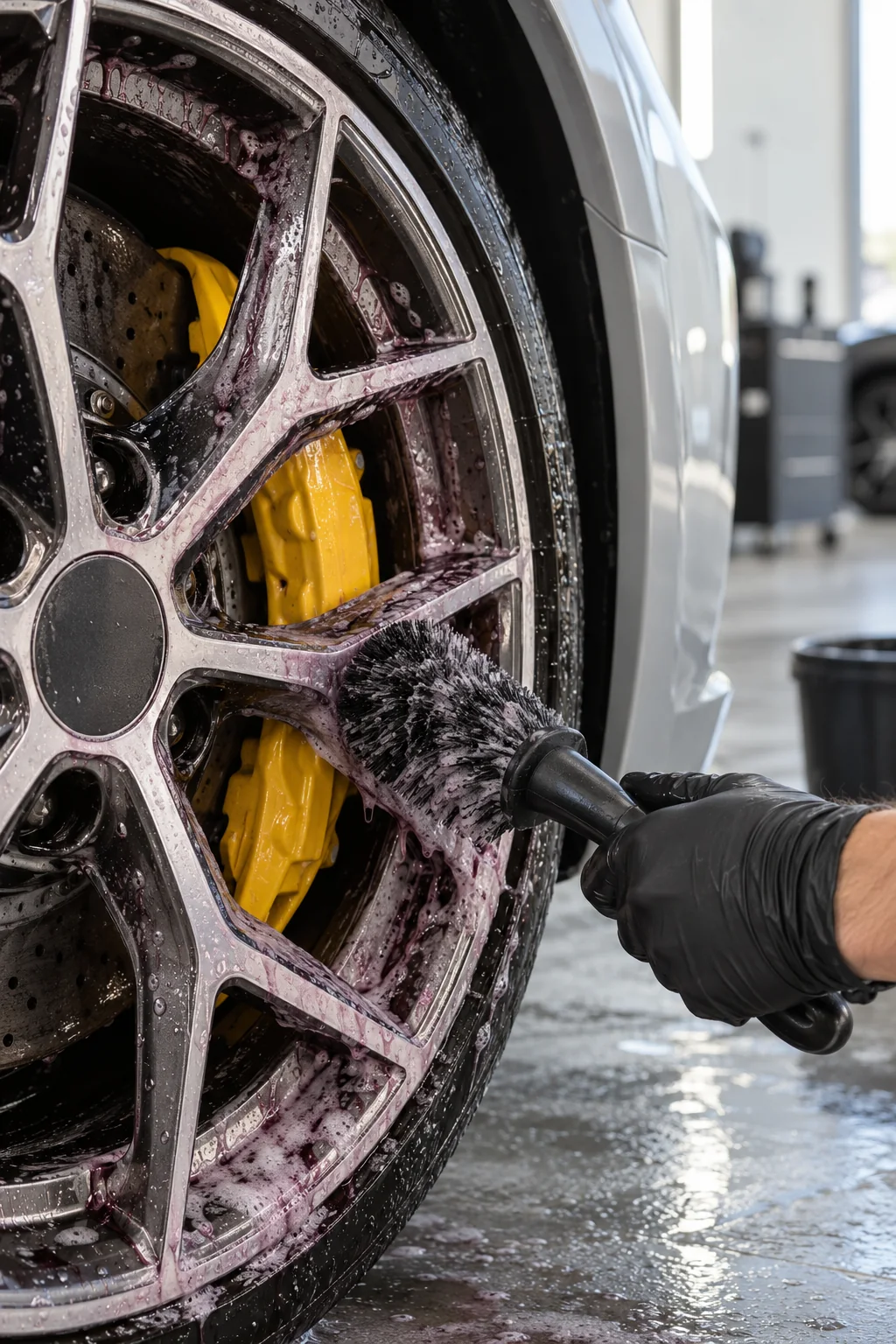
Use a separate bucket, soft microfibre wheel brushes and an acid free wheel cleaner. Agitate, rinse gently and keep these tools away from the paint.
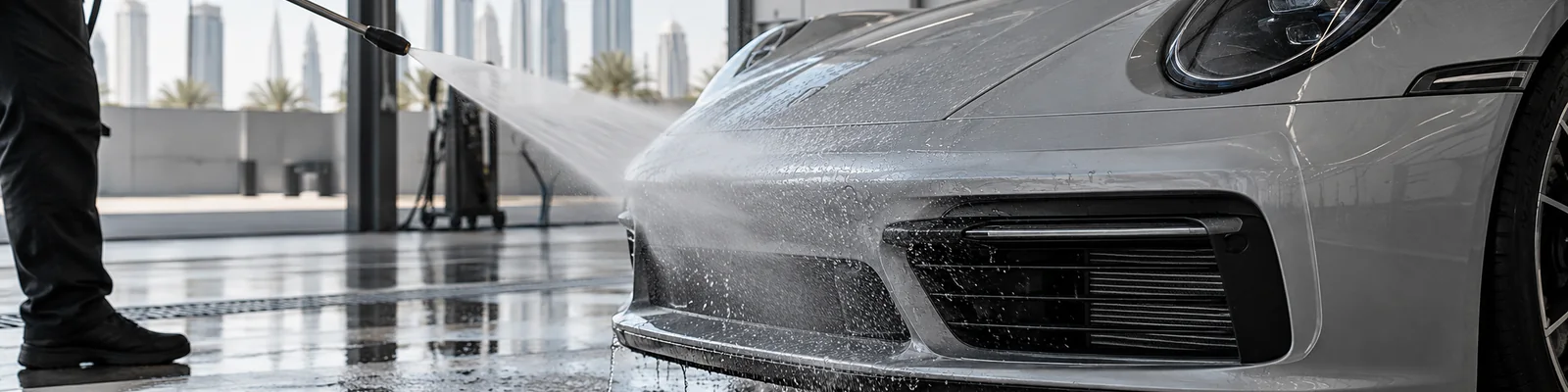
Rinse from the top with a wide spray to carry loose sand off the car. Keep the water moving and away from film edges, seals and sensors.
Cover the car in snow foam and let it dwell for the time on the label, without letting it dry. Rinse it off to remove the grit it has loosened.
Wash one panel at a time with a microfibre or synthetic lambswool mitt. Rinse the mitt in the plain water bucket with a grit guard before every return to the shampoo.
Rinse each section before it dries. On a hot day, wash and rinse smaller areas rather than scrubbing harder.
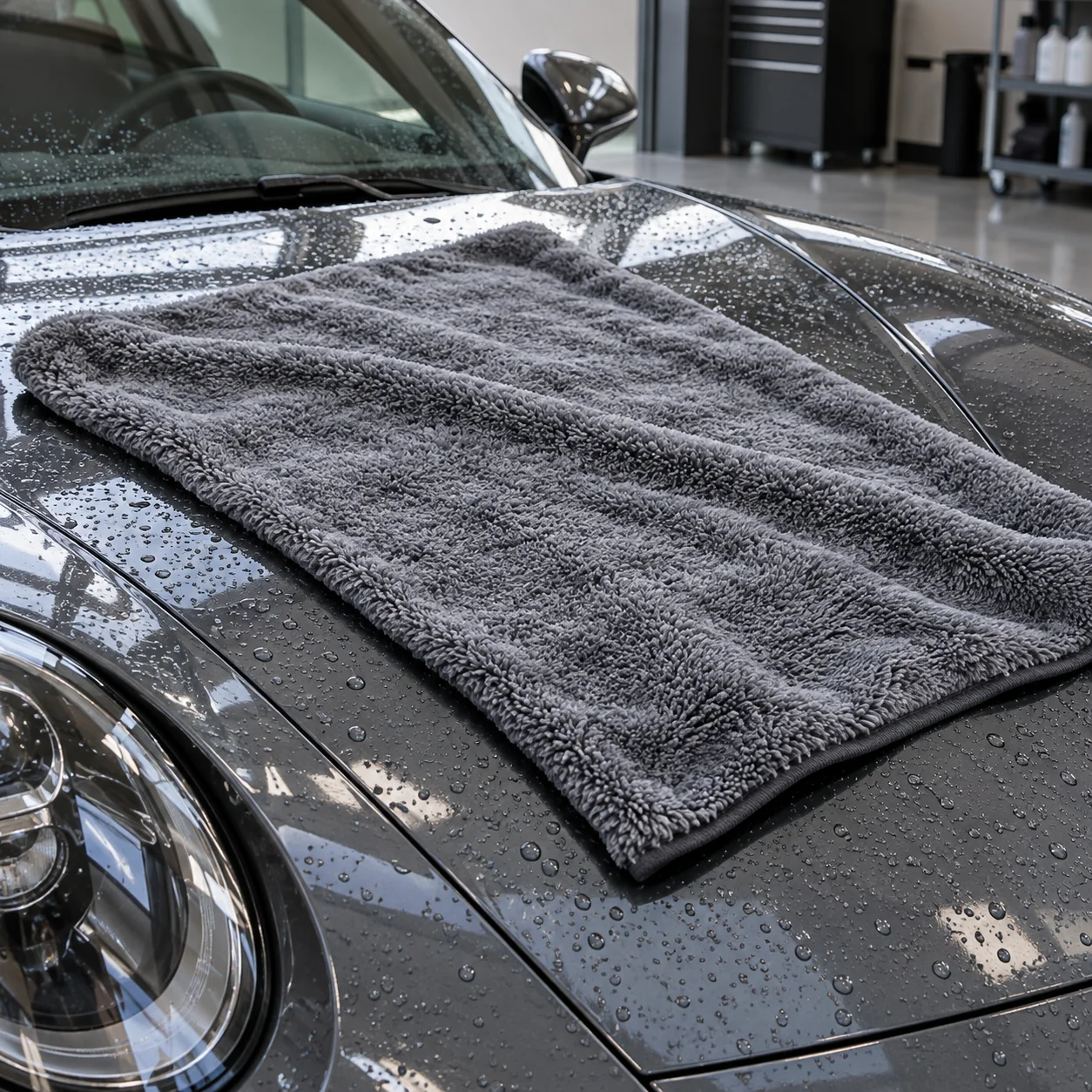
Lay a thick microfibre drying towel on the panel and draw it off, then use a blower for mirrors, badges, fuel cap and door shuts. Check glass and edges for residue.
Pressure washers
Close range jets cut into film edges, force water past seals and can damage sensors and badges. Porsche detailing advice is to rinse wheels gently rather than blast them at close range.
For protection film, 3M publishes clear limits that make a sensible upper bound for any filmed car. Your own film maker may set stricter numbers, so their sheet comes first.
Source, 3M Protection Wrap Film maintenance guidance. XPEL advises keeping high pressure water away from film edges altogether.
Surface by surface
One Porsche can have film on the nose, coating on the rest, matte wheels and PCCB brakes. Treat each surface on its own terms.
| Surface | Safe approach | Avoid |
|---|---|---|
| Gloss paint | pH neutral shampoo, two bucket wash, microfibre | Dry wiping dust, washing in sun, brush tunnel washes |
| Matte or satin paint | Matte specific shampoo, light pressure, blot dry | Wax, polish, preservatives, clay without approval |
| Paint protection film | Hand wash after the cure wait, gentle rinse, care sheet products | Jets at edges, strong solvents, abrasive pads, dyed waxes |
| Ceramic coating | Gentle shampoo or rinse free wash, full drying | Polishing compounds, aggressive decontamination |
| Alloy wheels | Acid free wheel cleaner, soft brushes, cool wheels | Acidic cleaners, metal polish on painted wheels |
| PCCB ceramic brakes | Acid free products, gentle rinse | Acidic cleaners, close range jets on discs |
| Camera lenses and sensors | Soft wet cloth, light touch | Scrubbing grit, polish, direct jets |
| Fabric soft top | Roof cleaner made for fabric, soft brush, rinse | Pressure jets on seams, folding the roof wet |
Wheels and brakes
Wheels carry the heaviest dirt, so they come first, with their own bucket and tools. Brake dust contains iron, which bonds to the wheel and to paint near the arches.
Cameras and ParkAssist
Modern Porsches carry reversing and surround view cameras, ultrasonic ParkAssist sensors and radar for driver assistance. Dust and dried water spots often trigger warnings. Cleaning helps, but cleaning is not a repair.
A clear image does not prove a camera is calibrated. If a warning follows a bump, a windscreen change or body repair, book a check. See our Porsche diagnostics page.
Film and coating
Paint protection film is a clear urethane layer. Ceramic coating is a thin chemical layer on the paint. Neither makes dirty tools safe, and each maker publishes its own care sheet. Find your installer invoice and the exact product name first. If you are still choosing between them, see ceramic coating or PPF for your Porsche.
Paint protection film
Ceramic coating
Choosing or fitting film or coating is a separate decision. This guide only covers keeping them clean once they are on the car.
Bonded contamination
If paint still feels rough after a careful wash, contamination is bonded to it. That calls for a separate decontamination step, chosen for the surface. It is not part of a routine wash.
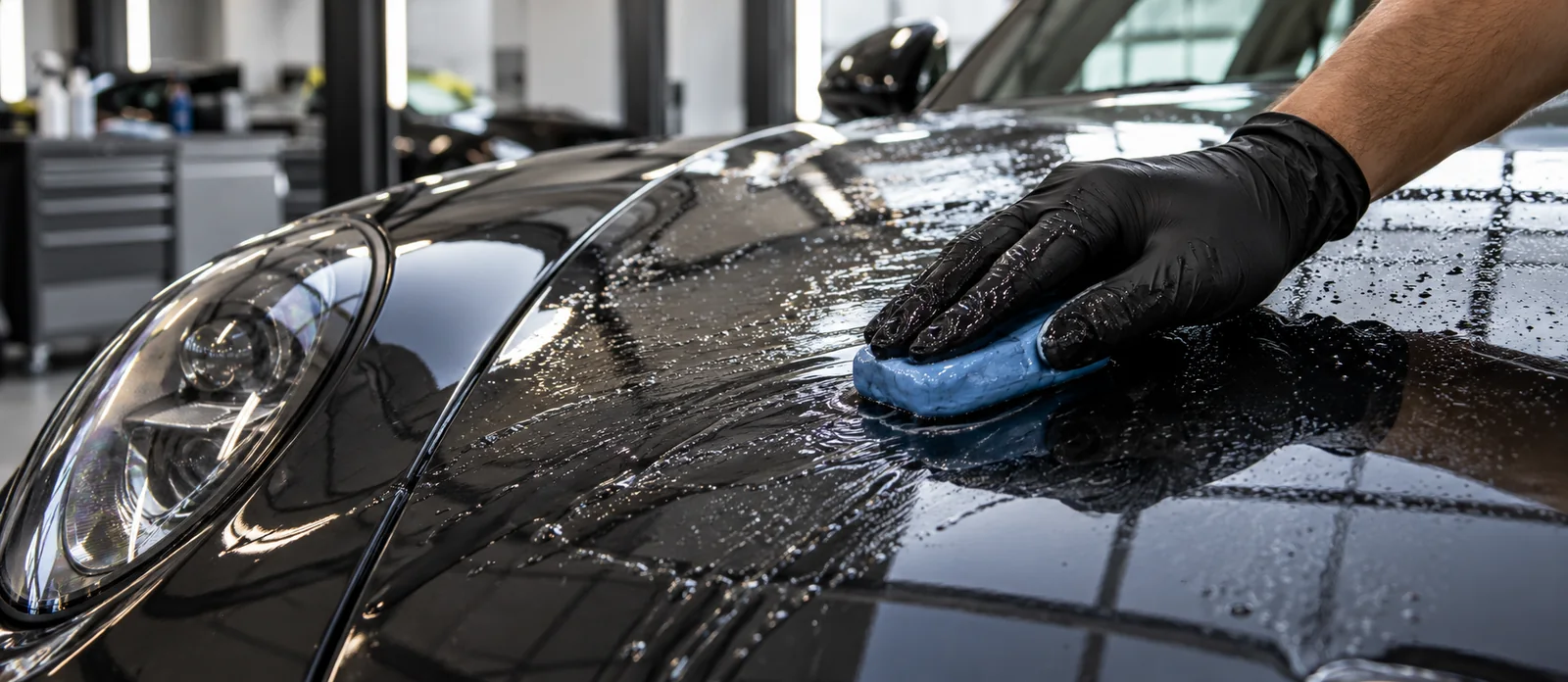
Use plenty of lubricant, light pressure and straight lines, folding the clay to a clean face often. Skip it on matte paint and check the film or coating sheet first.
Dissolves brake dust and industrial iron near the arches and rear panels. Use it on a cool surface, follow the dwell time and rinse fully.
Fresh spots usually come off with a gentle wash and prompt drying. Etched spots need assessment, not household acids or harder scrubbing.
Soften and lift them quickly with a compatible remover. In Dubai heat they can mark clear coat and film within days.
Between full washes
They can be, on a car that is only lightly dusty and when the product is used generously. A waterless spray wraps dirt in lubricant so a towel can lift it. A rinse free wash uses one bucket of diluted solution and several towels instead of a hose, which suits apartment parking where washing is restricted.
Neither is safe on a car caked in sand after a desert drive or a dust storm. That car needs a full rinse first, because no lubricant stops heavy grit from scratching.
Drying
Choosing a wash
The label matters less than the process. Ask how sand is removed before contact, which products are used and how the car is dried.
Best for most cars
Lowest scratch risk when tools are clean and the pre rinse is thorough. Older Porsche manuals recommend hand washing.
Risk, dirty mitts or towels still scratch.
Acceptable with care
No brushes touch the paint, and 3M accepts touchless washes for filmed cars.
Risk, strong chemicals and high pressure near edges and sensors.
Avoid
Brushes can trap sand from earlier cars and may not reach every curve.
Risk, swirl marks, lifted film edges, wheel and spoiler damage.
If an automatic wash is the only option, follow the owner manual preparation for mirrors, wipers, rear spoiler and transmission on your exact model.
Special finishes
Porsche tells owners not to use preservatives or polishes on matte finish parts, because the matte effect can be lost. Use a matte specific shampoo, wash with light pressure and blot dry. Treat bird residue straight away, since it cannot be polished out.
Rinse fabric soft tops with gentle water, clean with a fabric roof cleaner and a soft brush, and let the roof dry closed before folding it. Keep jets off seams, seals and drain areas.
Porsche sells its own care range through Porsche Tequipment and the Porsche shop, including wheel cleaners and paint care. Any quality product can work if it suits the surface and the installed protection.
Common mistakes
If you would rather not wash it yourself
Our Porsche car wash page lists planning estimates, including VAT. These are not fixed offers. The written total depends on the car and the agreed package.
Figures from our car wash page, planning estimates including VAT.
Questions
Wash it when contamination builds up rather than on a fixed day. A car parked outside usually needs a gentle wash every one to two weeks. XPEL suggests about every two weeks for its colour film. Remove bird residue and insects straight away.
No. Dust in Dubai is fine sand. Rinse or use a proper waterless wash with plenty of lubricant, never a dry cloth.
Yes, with a wide fan, moderate pressure and distance. 3M guidance for film is 1,200 psi or less, 30 cm or more and never along an edge. Keep jets off sensors and seals.
An acid free wheel cleaner or a decontamination gel. Avoid acidic cleaners on PCCB equipped cars and rinse gently.
3M says at least 72 hours. XPEL lists 48 or 72 hours depending on the film. Your installer sheet is the final word.
No. It still needs regular gentle washing and full drying. It makes washing easier, not unnecessary.
A touchless wash is the safer automatic choice. Brush tunnels risk swirl marks and lifted film edges. Follow the owner manual preparation for your model.
It can, if dirt was blocking the sensor. If the warning stays or returns, the sensor or camera needs diagnosis.
Wash in shade, rinse before products dry and dry the car straight away with microfibre or a blower. Do not let tap water evaporate on the paint.
Call or message the workshop
Porsche Repair Dubai is an independent workshop in Al Quoz. We are not affiliated with or authorised by Porsche AG, 3M or XPEL.