Porsche Engine Warning Signs and Maintenance Checks
The most useful Porsche engine checks start with the exact warning, oil and coolant information, recent symptoms and the service record for that engine. A low-oil-pressure warning, overheating or severe rough running needs a different response from a routine service reminder. Do not use one timing-chain, coolant-flush or oil-change interval for every Porsche.
Decide how urgently the symptom needs attention
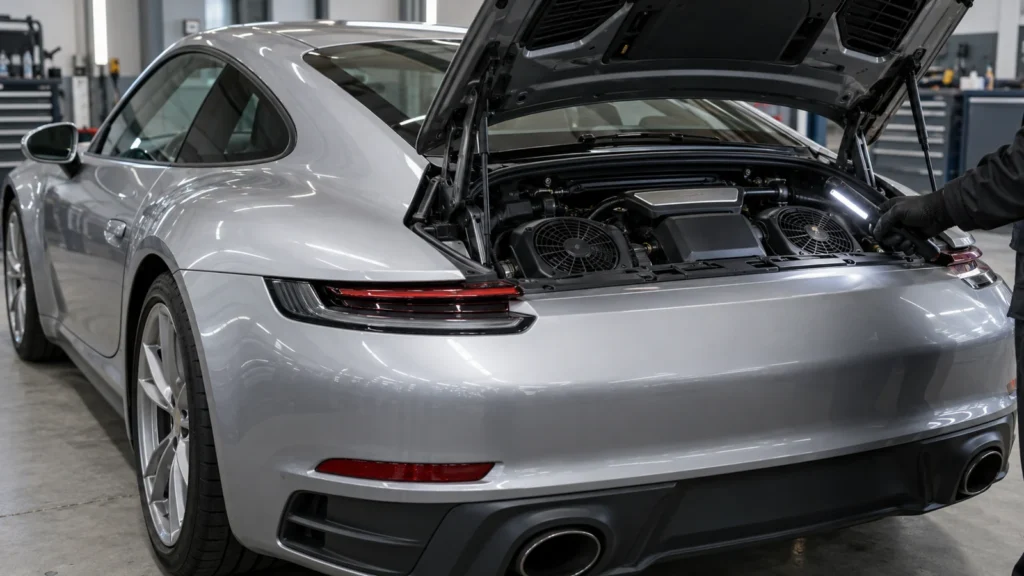
Read the complete dashboard message and follow the instructions for your vehicle. Warning colours and symbols help, but the wording and how the car is behaving determine the next step. Photograph the message only when safely parked.
| Warning or symptom | Sensible immediate response | What needs checking |
|---|---|---|
| Oil-pressure warning or an instruction to switch off the engine | Stop safely and switch off as instructed. Seek assistance before restarting. | Oil supply and pressure, the applicable warning and its cause. Topping up alone does not prove pressure is restored. |
| Overtemperature message, steam or rapid coolant loss | Stop safely, follow the shutdown instruction and arrange assistance. Keep clear of hot coolant. | Actual temperature, coolant loss, circulation and the relevant cooling circuit. |
| Flashing engine warning with shaking, strong fuel smell or major power loss | Stop safely and seek assistance rather than continuing a test drive. | Fault records and targeted engine-management and mechanical tests. |
| Steady engine warning without severe symptoms | Check the manual and arrange prompt diagnosis. Stop if symptoms develop or the message requires it. | Stored faults and operating conditions before deciding which component is at fault. |
| Service reminder with otherwise normal operation | Check the due date, mileage and service history and book the applicable maintenance. | The correct schedule and outstanding tasks for the model year and engine. |
Do not keep running an engine to investigate a serious warning
A normal-looking oil level does not establish normal oil pressure. A warning disappearing after a restart does not establish that the problem is repaired. Smoke, a strong fuel smell, a substantial leak or abnormal knocking warrants safe stopping and professional assessment.
Identify the engine before applying maintenance advice
The model name alone is not enough. Different generations and engines within the 911, Cayenne, Macan or Panamera range can have different oil approvals, service tasks and repair procedures. Record the VIN, model year, engine variant or code, original market and any engine replacement or modification.
This guide concerns combustion engines, including the engine in a hybrid. Identify the fitted engine and cooling arrangement before applying a maintenance task.
| Engine or powertrain | What changes the checks |
|---|---|
| Classic air-cooled engine | Engine-coolant reservoir checks do not apply. Oil specification, level measurement and other maintenance still need the correct engine instructions. |
| Water-cooled combustion engine | Match oil requirements, coolant checks and valve-drive procedures to the exact engine and generation. A shared model name does not establish the same service requirements. |
| Hybrid with a combustion engine | Follow the engine instructions and the vehicle's separate hybrid requirements. Do not open or test high-voltage parts as an owner check. |
| Battery-electric model | A Taycan or Macan Electric needs its own electric-vehicle maintenance guidance. Petrol-engine oil and timing-chain advice does not apply. |
Start with Porsche’s owner’s manual for your VIN, the vehicle’s maintenance booklet and the current service information applicable to that engine and market. A registration year or an online checklist for a similar-looking car is not a substitute.
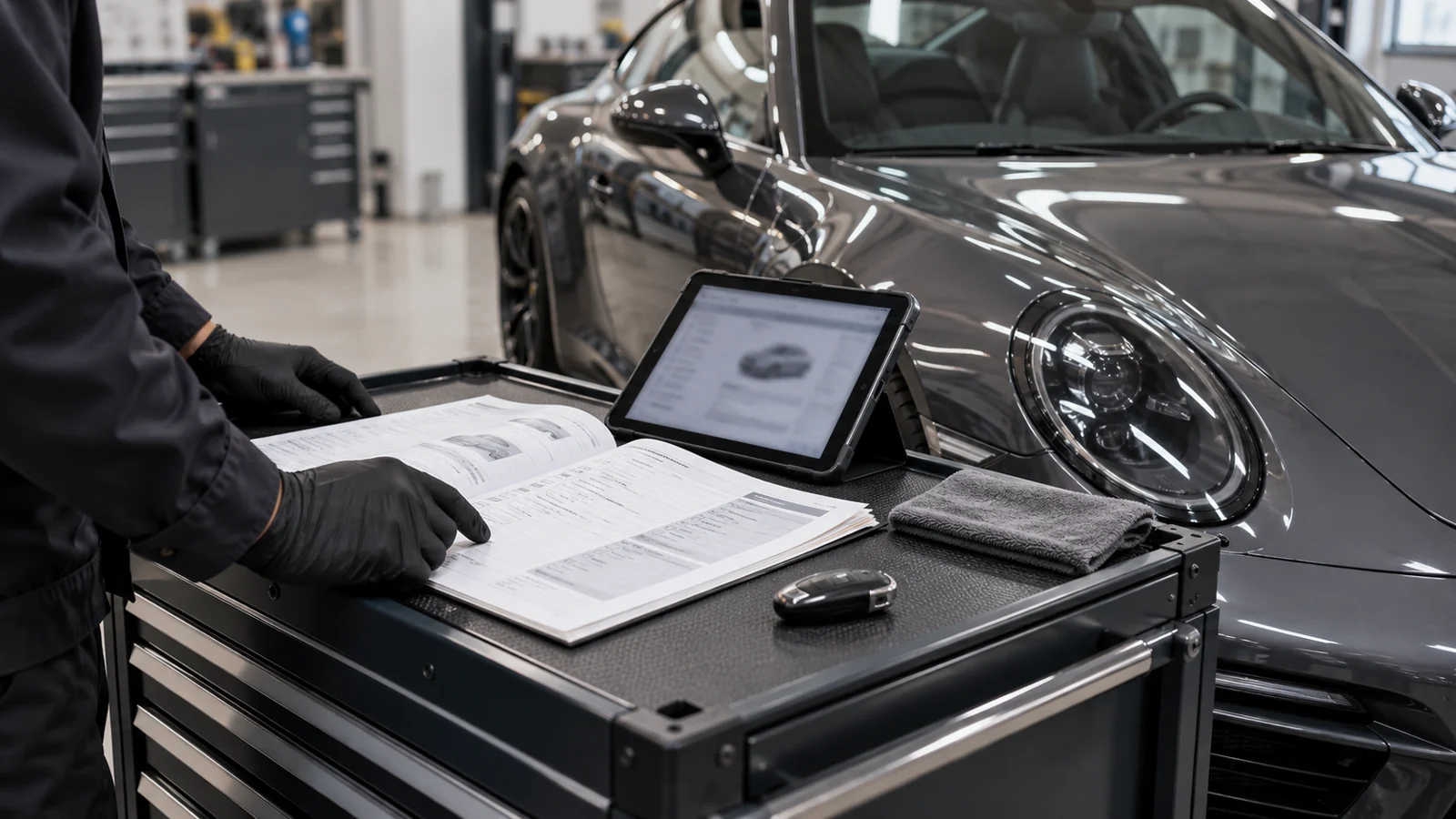
Porsche’s 2019 North American maintenance-checklist index separates documents by model, generation, year and variant. It illustrates why schedules need matching to the vehicle. It is a historical document index, not the maintenance schedule for every UAE Porsche.
Check oil level, specification and changes in consumption
Use the correct level-measurement conditions
- Some Porsche engines use an electronic oil-level display and others have a dipstick.
- Follow the exact measurement conditions in the manual or on the display.
- Do not apply a universal warm-up, waiting-time or engine-running instruction.
- A serious pressure or temperature warning takes priority over trying to complete a level measurement.
If topping up is appropriate, use the permitted oil and the amount specified for the situation. Avoid overfilling. Record the mileage, quantity added and date so the workshop can assess a change in consumption rather than relying on “it seems to use oil”.
Choose oil by approval as well as viscosity
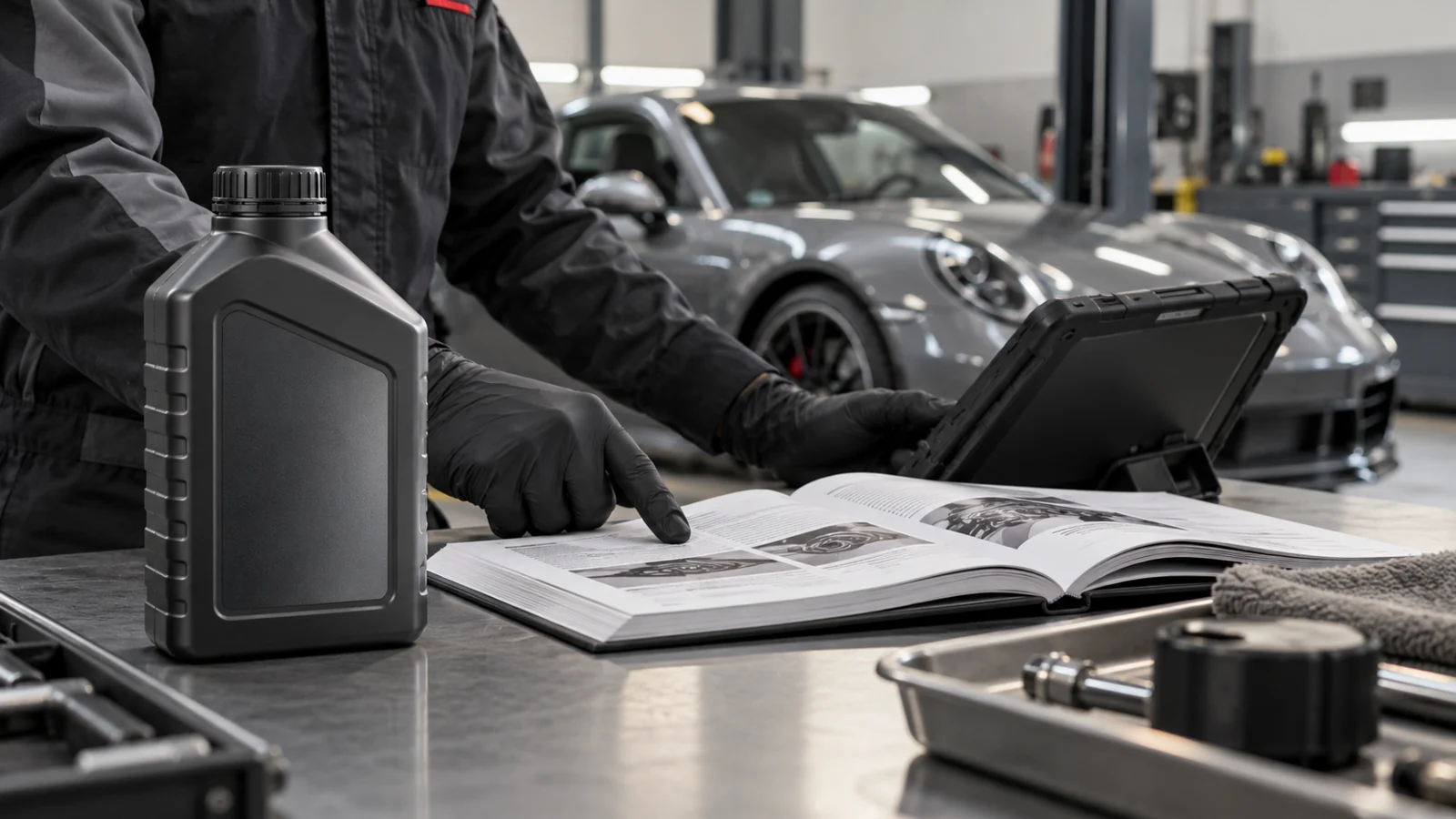
The viscosity grade alone does not establish suitability. Match the required Porsche approval and permitted grade to the engine and applicable documentation. Dubai heat does not justify choosing a thicker oil outside that requirement. Ask the workshop to identify the actual product used on the invoice.
Porsche’s engine-oil information explains the roles of lubrication, cleaning and heat transfer. Its general explanation does not replace the oil specification for your engine.
Investigate leaks and unusual consumption
A falling level can involve an external leak, consumption or an inaccurate measurement. A burning smell can have several sources and does not prove that the engine is running dry. Note fresh spots, smoke, smell and the circumstances without touching hot components or crawling under an unsupported car.
The workshop should locate the source, assess the level and investigate the pattern. Repeated top-ups without identifying the cause are not a repair plan. Equally, a stain on an undertray does not identify which seal needs replacement.
Check coolant safely on water-cooled engines
Only inspect an accessible coolant reservoir in the condition specified by the manual, normally with the engine cold. Identify the correct reservoir first, particularly on a hybrid with more than one cooling circuit. Do not open a hot or pressurised cooling system. If there is steam or a rapid loss of coolant, keep clear and arrange assistance.
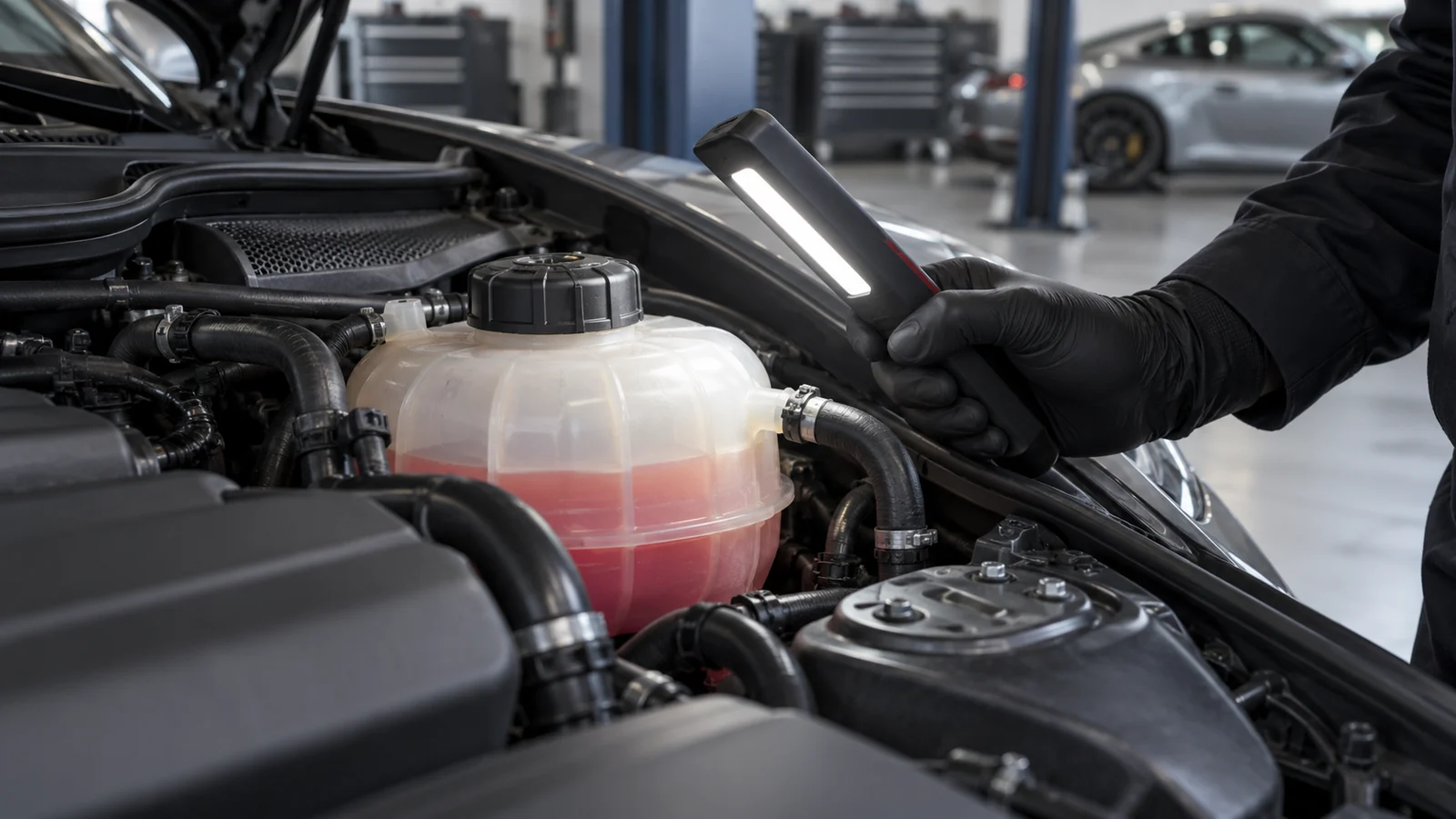
- Where the level is visible, compare it with the applicable markings and measurement conditions.
- Report repeated changes.
- Coolant colour alone cannot establish its specification or compatibility, and a puddle under the car is not automatically coolant.
- Air-conditioning condensation is a different possible source of water.
If topping up is permitted, use the exact fluid specification and mixture instructions. Do not mix products because their colours look similar. If the correct fluid or procedure is uncertain, obtain advice for that vehicle before adding anything.
A coolant flush does not diagnose overheating
Overheating can require checks for leaks, pressure retention, circulation, radiator airflow, fan control, thermostat operation or another cause. The appropriate tests depend on the engine and symptoms. Pressure testing must use the specified equipment, connection and limits, not a generic value.
Coolant replacement may be required by the applicable schedule or during a documented repair. Contamination or incorrect fluid can also require a specific corrective procedure. That does not make flushing the system a universal mileage-based service or a cure for a leaking pump.
Your vehicle's maintenance booklet and current service information should identify the applicable coolant checks and any renewal requirement. Keep inspection, scheduled replacement and repair-specific draining separate.
Investigate rattles before deciding on timing-chain work
A rattle, misfire or loss of response is a reason for diagnosis, not automatic proof that the timing chain is worn. The workshop should establish when the noise occurs, reproduce it safely where appropriate and consider relevant oil-supply, timing-control, drive and mechanical checks for that engine.
Ask what the fault records and measurements actually demonstrate. A timing-related code needs interpretation alongside the prescribed tests. It does not identify a complete parts list by itself. Repeated starting attempts to capture a noise are inappropriate where serious mechanical damage or an oil-pressure problem is suspected.
This guide does not prescribe a timing-chain replacement mileage for all Porsche engines. Follow any applicable engine-specific service requirement, campaign or technical instruction, and use the diagnostic findings to support intervention. Do not confuse a timing-chain procedure with a timing-belt or auxiliary-belt schedule for a different engine.
Where timing-chain work is justified, use the Porsche timing-chain replacement service to discuss the correct engine, access, related components and quotation. The repair scope should follow the evidence, with the parts options and warranty terms recorded in writing.
For the diagnostic alternatives and evidence to request, read our timing-chain symptoms and diagnosis guide.
Separate scheduled maintenance from fault diagnosis
Scheduled maintenance keeps due tasks organised. Diagnosis investigates a symptom or abnormal result. Changing oil or resetting a service reminder does not establish that a misfire, leak or timing fault is repaired.
| Maintenance item | What should determine the work | When extra investigation helps |
|---|---|---|
| Engine oil and filter | Applicable time, mileage and operating-condition requirements, with the approved oil and correct filter. | A pressure warning, unusual consumption, contamination concern or recurring leak. |
| Air-filter element | The engine’s schedule and condition assessment. Dust exposure can affect inspection needs. | Damage, poor sealing or a symptom requiring intake-system checks. |
| Spark plugs and ignition components, where fitted | The fitted engine’s requirements. Plug servicing does not automatically require replacing every ignition coil. | Misfire or starting symptoms supported by relevant tests. |
| Cooling system | The correct inspection and fluid requirements, plus any repair-specific draining and refilling procedure. | Level loss, overheating, contamination or a suspected circulation problem. |
Describe actual use, such as short trips, dusty conditions, extended storage or track driving, so the workshop can check any applicable operating-condition instructions. The correct schedule for the engine and market remains the starting point. Dubai use does not create one replacement interval for every engine.
Use the fuel specification required for the car. Premium-fuel marketing, an oil change or a bottle of additive does not establish that intake-valve deposits are prevented or removed. Rough idling or poor acceleration needs diagnosis before carbon cleaning is recommended.
Use the service record to plan the next step
Bring dated invoices showing mileage, oil specification, filters, plugs, coolant work and previous repairs. A reminder reset alone does not establish what was completed. If the history is incomplete, ask for a written catch-up plan that separates due servicing from inspection and confirmed faults.
Before authorising work, ask which finding supports the proposed repair, which parts are included and what will be checked afterwards. Useful completion evidence may include a repeat fault scan, leak check, measured test result or suitable road assessment. An intermittent symptom may need further monitoring.
For a diagnosed mechanical problem, our Porsche engine repair service is the destination for repair scope and pricing. This guide covers warning signs and maintenance decisions. A vehicle-specific quotation should state investigation, labour, parts, consumables, tax and warranty terms.
Porsche engine-health questions
Should every Porsche timing chain be replaced at the same mileage?
No single interval is prescribed here. Identify the engine and use its applicable service and technical information. Symptoms and measured diagnostic findings should support any condition-based recommendation.
Is there one coolant-flush interval for all Porsche engines?
No. Follow the exact engine’s maintenance and repair requirements. A coolant inspection, scheduled replacement and draining after a repair are different tasks. A flush does not repair the cause of overheating.
Can the oil level be normal when an oil-pressure warning appears?
Yes. Level and pressure are different measurements. Follow any instruction to stop safely and switch off. Do not assume that adding oil or restarting the engine makes continued driving safe.
How do I know which oil-change interval applies?
Match the VIN, model year, engine and market to the maintenance booklet and current service information. Consider both time and mileage, plus any applicable operating-condition guidance. Ask which document supports the proposed interval.
Does a rattle mean the timing chain needs replacement?
Not necessarily. The noise needs diagnosis against the fitted engine’s procedures. Other mechanical or control-related sources can require investigation. Stop and seek assistance for serious knocking, pressure warnings or severe running problems.
Will preventive carbon cleaning fix a rough idle?
Only if deposits are established as the relevant cause and the procedure is suitable for that engine. Ignition, fuelling, intake or mechanical faults can produce similar symptoms, so cleaning should not replace diagnosis.
Get the right engine check
Send the model year, engine details, exact warning and service history. Describe when the symptom occurs so we can confirm the diagnostic scope before quoting work. For urgent stop instructions or severe symptoms, arrange assistance rather than driving to the workshop. Porsche Repair Dubai is an independent workshop.