
Ever heard a strange rattle from your Porsche engine when starting up? It might not be a small thing. In Dubai’s heat, timing chain problems can sneak up fast, and when they do, the damage spreads quicker than most drivers expect. A weak Porsche timing chain can ruin the smoothness you paid for, and ignoring it can push you into full engine repair territory. Whether you drive a Cayenne or 911, this is one part that needs attention before it bites back. Let’s break down why timing chain repair matters.
What Is a Porsche Timing Chain & What Does It Do?
Most drivers only hear about Porsche Timing Chain Repair when the engine starts rattling or something feels off during acceleration. But by then, damage is usually already in motion. Knowing what this chain does can help avoid bigger problems later. Here is what it handles:
- It controls engine timing
This chain connects the crankshaft and camshaft, making sure your Porsche’s valves open and close at the right moment. If it slips, timing is off, and the engine misfires. - It runs under constant load
Every time you turn the key, the chain is working. In Dubai’s heat, it wears faster, especially with long idling or poor oil changes. - It affects engine feel & response
A stretched or loose chain messes with combustion timing. That’s when you start noticing shaky starts, hesitation, or rattles, often a sign you need Porsche Timing Chain Repair. - It keeps internal parts synced
Without it, parts start colliding or losing rhythm. One small shift can throw off everything else inside the engine block.
In short, this chain does not just help the engine run; it keeps it alive. Overlooking it means risking full engine rebuilds, especially in cars exposed to harsh Dubai conditions.
Why Timing Chain Problems Often Hit Porsche Engines
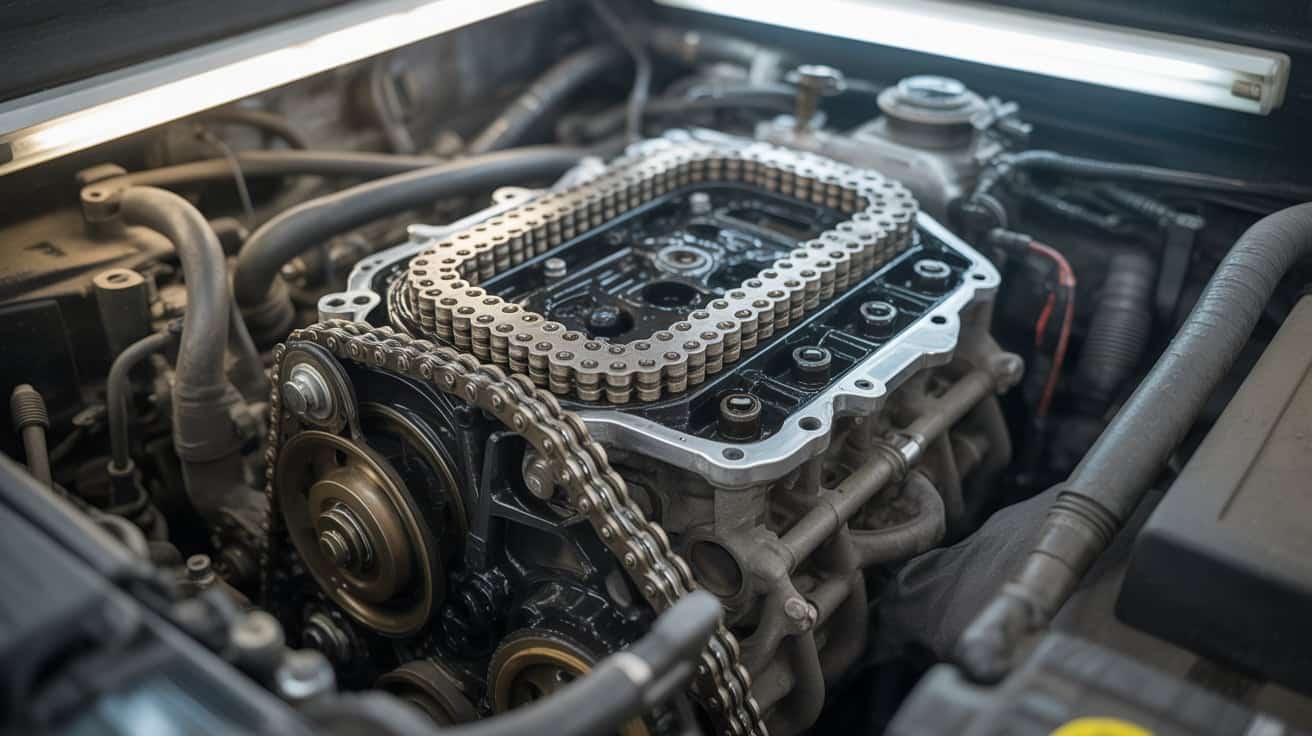
Porsche engines are known for performance. But that performance depends on perfect timing, and when the chain starts to slip, things go wrong fast. In Dubai’s tough driving environment, the risk gets even higher. Here’s why Porsche Timing Chain Repair is needed more often than people expect:
- Chain Tensioners Wear Out Early
Many Porsche models, especially Cayenne V6, Macan Turbo, and older 911 (996/997) engines, use hydraulic tensioners that lose pressure over time. Once tension weakens, the chain becomes loose and starts making noise. - Plastic Chain Guides Break Down
Porsche engines rely on plastic rails to guide the timing chain. But heat, age, and poor oil quality make these brittle. Once cracked, they send fragments into the oil and throw the chain off-track. - Irregular Oil Changes Speed Up Wear
Skipping oil service or using the wrong grade oil causes sludge. That sludge builds around the guides and tensioners, damaging the timing chain. In Dubai’s heat, the effect is even faster. - Turbocharged Engines Add More Strain
Cars like the Macan Turbo or Panamera push more pressure through the engine. This extra load puts stress on the chain, tensioner, and guides, especially when driven hard or in stop-go traffic. - High Temperatures Impact Chain Life
Dubai roads easily hit 50°C, and under-hood temps go even higher. Over time, that heat affects chain metal fatigue, plastic degradation, and oil thinning, all of which speed up chain problems.
Even with strong engines, Porsche timing systems are not immune. Without early inspection, small issues become expensive repairs. That is why Porsche Timing Chain Repair is not just common,it is necessary.
Early Warnings of Porsche Timing Chain Issues
A stretched or failing timing chain rarely breaks suddenly. It starts with small shifts,noises, codes, leaks,and gradually throws the whole engine out of rhythm. In Dubai, with extreme heat and stop-start traffic, these symptoms show up earlier than they do elsewhere.Below are common signs that point toward Porsche Timing Chain Repair being overdue:
- Cold Start Rattle (Lasting 2–5 Seconds)
A dry metallic rattle heard during early morning starts often means the timing chain tensioner is no longer maintaining proper pressure. It’s especially common in Porsche V6 engines, including those in Cayenne and Panamera models built between 2011 and 2018. - Engine Fault Code P0016 or P0017 (Timing Correlation Error)
These codes appear when the crankshaft and camshaft sensors detect mismatched rotation angles. It’s a clear diagnostic clue that the timing chain has stretched, disrupting cam timing. - Unstable Idle or Low RPM Misfire
If your Porsche engine begins to vibrate slightly or feels unsteady at idle, it could be due to chain slack causing late valve opening. This symptom grows worse in Macan Turbo models when driven in stop-go traffic or high heat. - Oil Leak Around Timing Cover
Look for fresh oil stains near the lower timing cover. This can result from internal wear on chain guides or tensioner movement loosening the gasket. These leaks are early clues that components behind the cover are wearing. - Delayed Throttle Response or Sluggish Power
A soft or slow reaction when pressing the accelerator may indicate camshaft timing is no longer perfectly synced with combustion. This is a typical symptom of a chain elongation issue, often missed until performance noticeably drops.
Tip: If you notice any of these signs, avoid extended driving. Catching timing chain issues early can prevent internal engine damage, which in some cases may lead to full engine overhaul or valve train failure.
Porsche Timing Chain Repair is not just about stopping noise,it is about restoring correct engine timing, fuel efficiency, and long-term reliability. Especially in Dubai, these symptoms can show up faster due to oil breakdown and high ambient temperature. Better to act early than face a complete rebuild.
How Porsche Timing Chain Repair Is Done (Step-by-Step Breakdown)
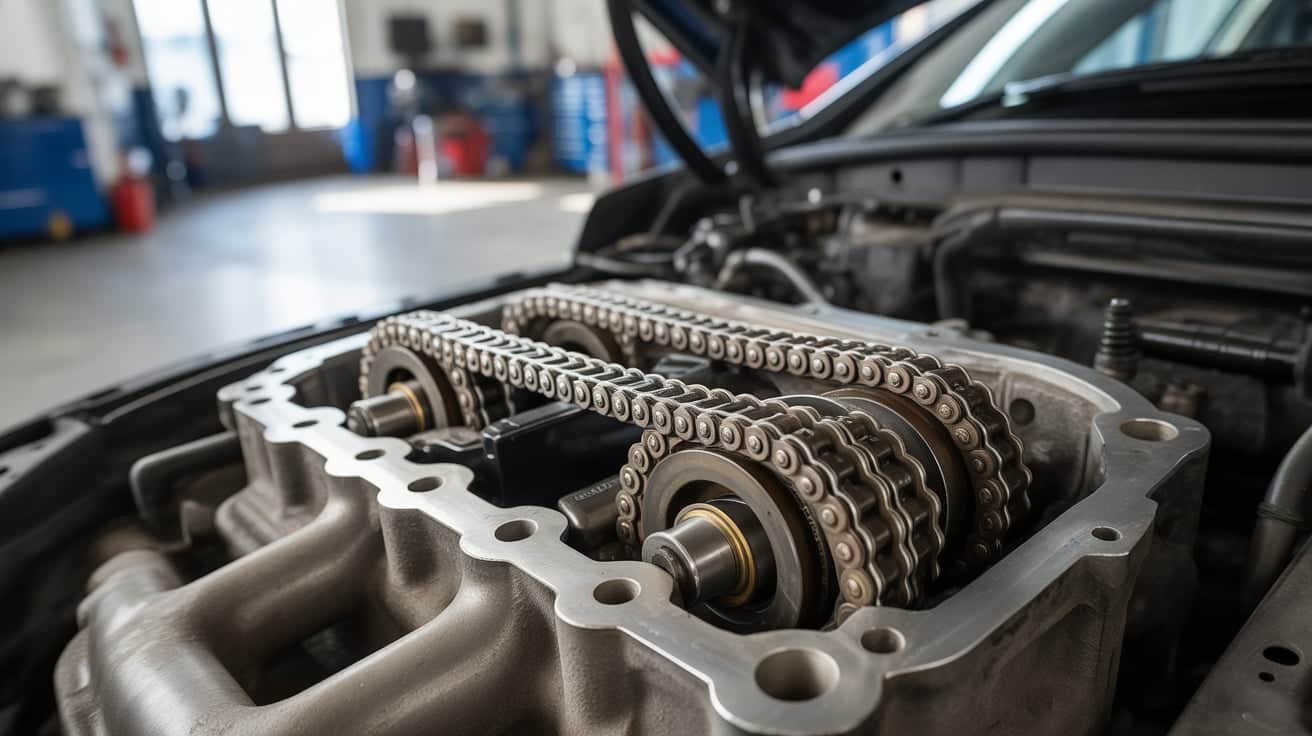
This is not a quick oil change. Porsche Timing Chain Repair is a detailed job that involves precise alignment, factory tools, and experience with Porsche engine timing systems. Whether it’s a Porsche Cayenne V6, a 911 flat-six, or a Macan Turbo, the basic procedure remains similar, but every step has to be accurate. Here’s how the repair is done in real workshops, not just in theory:
- Step 1: Full Diagnostic Scan with Porsche PIWIS
The job starts with scanning fault codes like P0016, P0017, or P000A using the Porsche PIWIS 3 diagnostic system. It checks camshaft timing, oil pressure values, and sensor readings. If chain stretch is confirmed, the repair begins. - Step 2: Engine Disassembly Begins
Technicians remove the serpentine belt, engine covers, fan assembly, and sometimes even the radiator for front access. On models like the 911 Carrera, the engine may need to be dropped for better access due to tight engine bay spacing. - Step 3: Accessing the Timing Assembly
Once the front timing cover is removed, the worn timing chain, chain guides, and tensioner are exposed. You’ll often see damaged plastic guide rails and chain slack. Dubai heat usually worsens the wear on these parts, especially after 120,000 km. - Step 4: Replacing Components with Timing Tool Kit
Mechanics use a Porsche timing lock tool to hold the crankshaft and camshafts in place. The chain, tensioner, and all guides are replaced as a full kit. This is critical; mixing old and new parts often leads to timing errors. - Step 5: Re-Timing & Reassembly
After aligning everything using factory timing marks, the engine is reassembled carefully. Gaskets are replaced, bolts are torqued to spec, and fluids are topped up. Any leak-prone areas like the timing cover seal are double-checked. - Step 6: Engine Test & PIWIS Re-scan
The car is started and checked for rattles, vibration, and performance response. Another PIWIS scan confirms the camshaft correlation is back in range. If everything’s clean, the job is done.
Fact: Most Porsche timing chain repairs take 1.5 to 3 working days depending on engine layout. For example, a Cayenne V6 job can be done with the engine in the car, but a 911 (996) may need partial engine removal.
Porsche Timing Chain Repair is not about just swapping parts; it is about correcting internal engine timing so the car runs like it should. A mistake here does not just cause a warning light; it can bend valves or damage pistons. That’s why in Dubai, where heat and oil breakdown are major risks, this repair needs precision, not shortcuts.
Tools & Parts Used in Porsche Timing Chain Repair
You wouldn’t fix a Swiss watch with a hammer, and you definitely shouldn’t touch a Porsche timing chain without the right tools and parts. Many issues we see in Dubai workshops come from either low-grade components or mechanics trying to wing it with universal tools. Let’s walk through what actually goes into a proper Porsche Timing Chain Repair, from the bench to the bay.
Genuine Parts Matter More Than People Think
You’d be surprised how many engines fail again because someone reused a tensioner or bought a budget gasket. These are the critical parts that should never be skipped:
- Timing Chain Kit (Complete Set)
Every proper repair includes the chain itself, tensioner, guide rails, and sometimes a sprocket. For a Porsche Cayenne 3.6 V6, part numbers like 948105121 (chain) and 948105509 (guide) are often used. Aftermarket kits exist, but Dubai heat demands original Porsche-supplied quality. - Tensioners (Hydraulic or Mechanical)
Especially in the Macan Turbo and 911 Carrera, worn tensioners are the root cause of chain slack. Updated tensioners have stronger oil-holding capacity and better internal seals. - Crankshaft & Camshaft Seals
Once the chain comes off, seals around the rotating shafts are exposed and often leaking. Ignoring them is like sealing your roof but leaving the windows open. - Timing Cover Gasket Set
This set includes rubber seals and metal gaskets. Cheap versions harden fast in Dubai conditions, leading to repeated oil leaks.
The Tools That Actually Make or Break the Job
It’s not just about the parts; it’s about how you install them. And that’s where most garages mess up. Here’s what proper Porsche engine timing work actually requires:
- Porsche Camshaft Locking Tool Kit
This holds both camshafts perfectly in place. Without it? One slip, and the timing’s off by a tooth. That’s all it takes to cause misfires or valve contact. - Crankshaft Holding Fixture
Prevents the crankshaft from moving during chain removal. In flat-six Porsche engines, even a minor rotation causes timing errors. - Torque Wrench (Nm Calibrated)
Every bolt in this job has a torque value, some as low as 10 Nm. Guessing with feel? That’s how timing covers warp or bolts snap. - Porsche PIWIS 3 Diagnostic Tool
After the repair, this tool checks camshaft correlation and confirms timing is back to factory spec. Without it, you’re flying blind.
Tip from the floor: If your garage doesn’t mention using camshaft locks or PIWIS scans, that’s a red flag. These tools are non-negotiable for safe and accurate Porsche Timing Chain Repair.
When it comes to timing chain jobs, the tools and parts are just as important as the hands doing the work. Skipping the right seal, using a worn tensioner, or trusting a generic timing kit can all lead to the same result: you coming back with a dead engine light. In Dubai’s climate, cutting corners here is not just risky; it’s expensive.
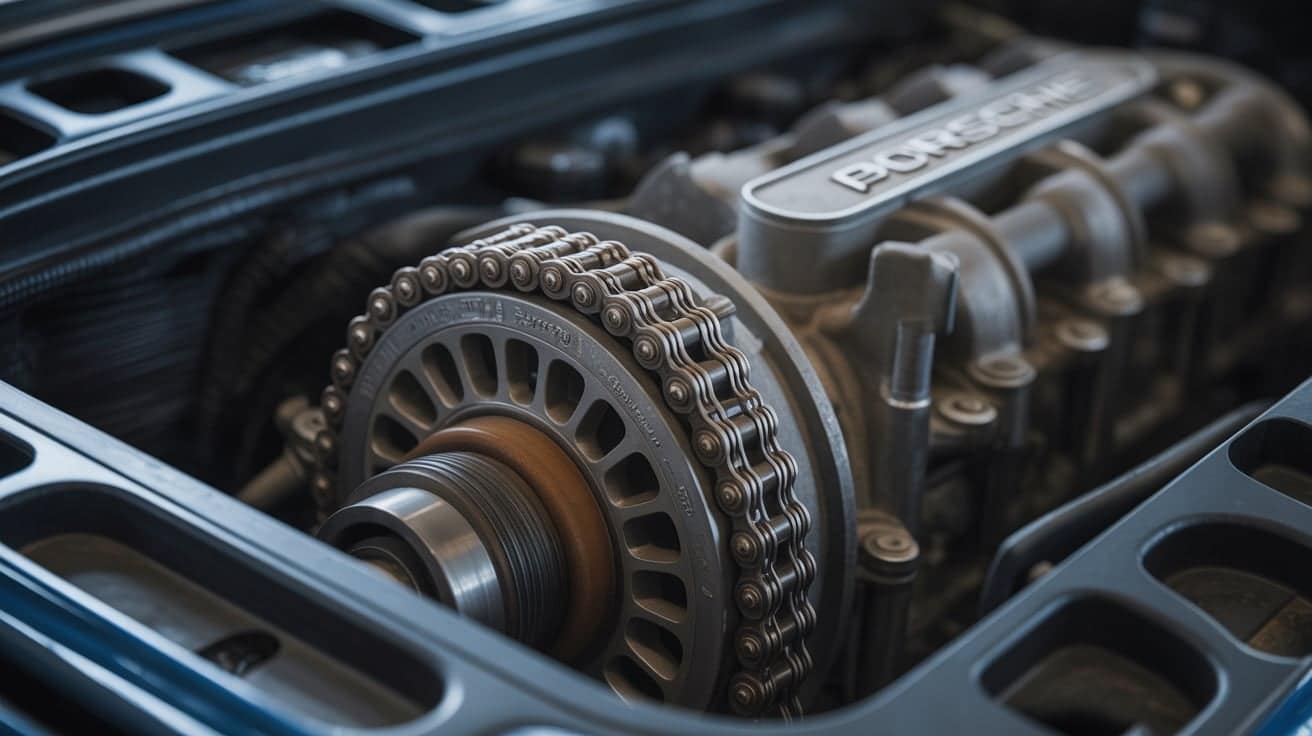
What Happens If You Ignore Porsche Timing Chain Repair
It always starts small. A faint noise. A quick hesitation. Maybe a warning light that disappears. But when it comes to Porsche timing chain problems, small doesn’t stay small for long, especially not in Dubai’s heat and traffic. Most owners delay it, thinking it’s just a noise. But the chain doesn’t wait. Here’s what ignoring the problem really leads to:
- Valves Hit Pistons
When the timing chain stretches, the camshaft and crankshaft go out of sync. Valves open when pistons are rising,result? Bent valves, damaged pistons, and a full engine rebuild. This is common in 911 Carrera, Cayenne V6, and other high-compression engines. - Check Engine Light & Shutoffs
Fault codes like P0016, P0017, or random misfire codes show up. Then you get limp mode, or worse, engine shutdown. We’ve seen this happen in traffic on Sheikh Zayed Road. It’s not just inconvenient; it’s unsafe. - Chain Snaps or Guide Breaks
If the chain breaks or a plastic guide shatters, the engine seizes instantly. No warning. No restart. Car has to be towed. Repairs go upwards of 15,000 AED depending on the damage. - Oil System Contamination
Fragments from worn timing chain guides enter the oil, clog the pickup, and reduce pressure. This affects hydraulic lifters and camshaft adjusters and wears the engine from inside, silently.
Most timing chain failures we see in Dubai happen between 110,000 to 140,000 km, especially with irregular oil change history.
Ignoring Porsche Timing Chain Repair doesn’t make the noise go away. It makes the problem worse, more expensive, and more damaging to your engine. Fixing it early isn’t just maintenance,it’s protection. Waiting turns a 4,000 AED job into a full engine crisis.
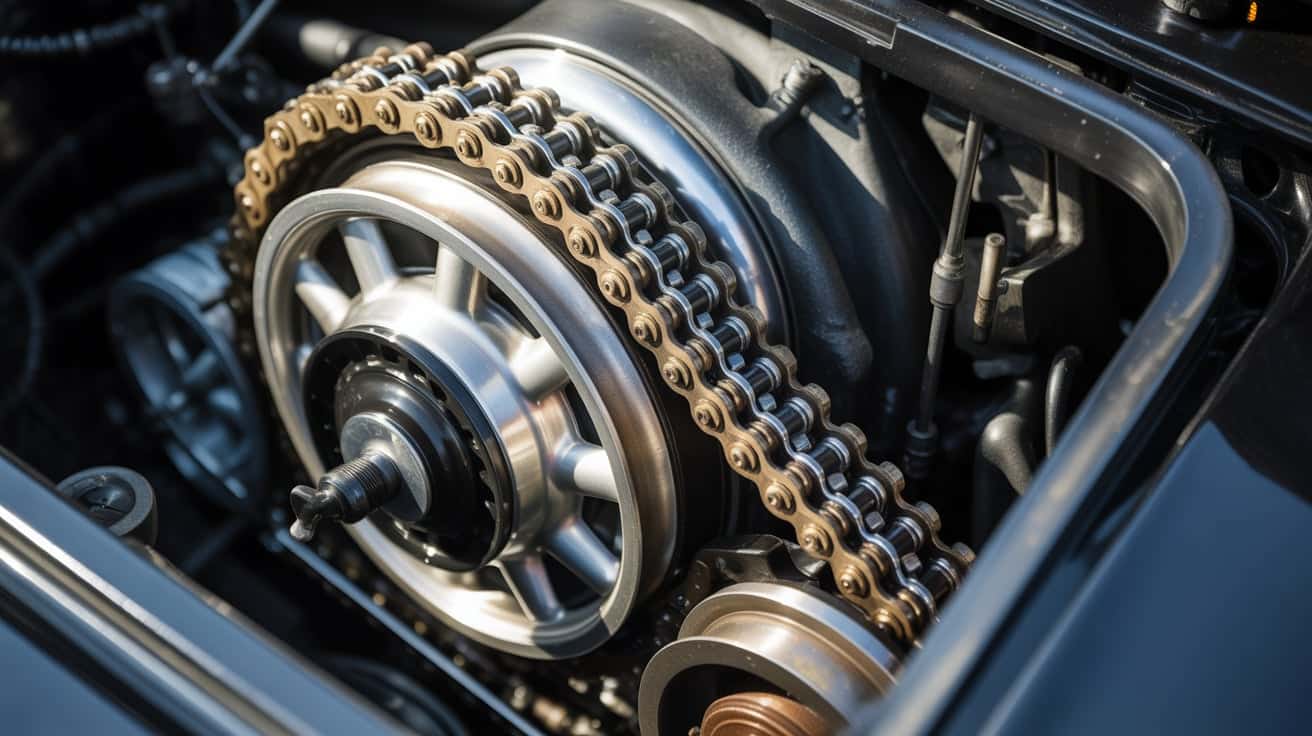
What Does Porsche Timing Chain Repair Cost in Dubai?
This is one of those repairs where costs can swing wildly,depending on the engine, model year, and how far the damage has gone. But if you catch it early, Porsche Timing Chain Repair doesn’t have to break the bank.In Dubai, the heat makes everything wear faster, especially in Cayenne, Macan, and older 911 models. And once the chain starts rattling or throwing codes, delay means cost goes up.Here’s a realistic look at what you might pay in a proper Porsche-specialized workshop:
| Model | Typical Cost (AED) | Job Time | Engine Access Notes |
| Cayenne V6 (3.6L) | 3,800 – 5,000 | 1.5 – 2 days | Chain accessible without engine removal |
| Macan Turbo (2.9L/3.0L) | 4,500 – 6,200 | 2 – 3 days | Tighter space, more parts to remove |
| 911 Carrera (996/997) | 5,000 – 7,000 | 3 days (or more) | Engine may need partial removal |
| Panamera V6/V8 | 4,000 – 6,000 | 2 – 3 days | Timing system layout varies by engine |
💡 Note: These are real estimates from Dubai garages using original parts and Porsche timing kits. Cheaper quotes often skip tensioners or reuse worn components.
Keep in mind,this is the cost before further engine damage. If you wait too long and the chain jumps timing, bends valves, or throws camshaft errors, you’re not looking at 5,000 AED anymore. You’re easily over 12,000–15,000 AED with valve train repairs and extended labor.
Getting Porsche Timing Chain Repair done early is not just about avoiding a breakdown,it’s about keeping the engine reliable, the resale value strong, and the bills under control. In Dubai, early is always cheaper.
If your Porsche engine is starting to sound different, feel rough, or flash fault codes,don’t brush it off. Timing chain issues don’t fix themselves. And in Dubai’s heat, even a small delay can turn a minor repair into a full engine rebuild. Whether you’re driving a Cayenne, Macan, or 911, staying ahead of Porsche Timing Chain Repair is the difference between keeping your car healthy… or parked on a flatbed.
Book an inspection with our Porsche repair specialists in Dubai. We’ll run a full diagnostic, check your timing system, and give you honest feedback,before the damage gets expensive. No guesswork. No unnecessary upselling. Just proper repairs done right, with the tools and parts your engine actually needs. Call or WhatsApp now to schedule a visit.