
Porsche Air Oil Separator Failure Symptoms and Diagnosis
A failed air oil separator can cause smoke, abnormal crankcase vacuum, rough idle or increasing oil use. Those symptoms do not identify the separator on their own. Confirm the engine, correct oil level and ventilation readings before choosing parts or assuming internal engine wear.
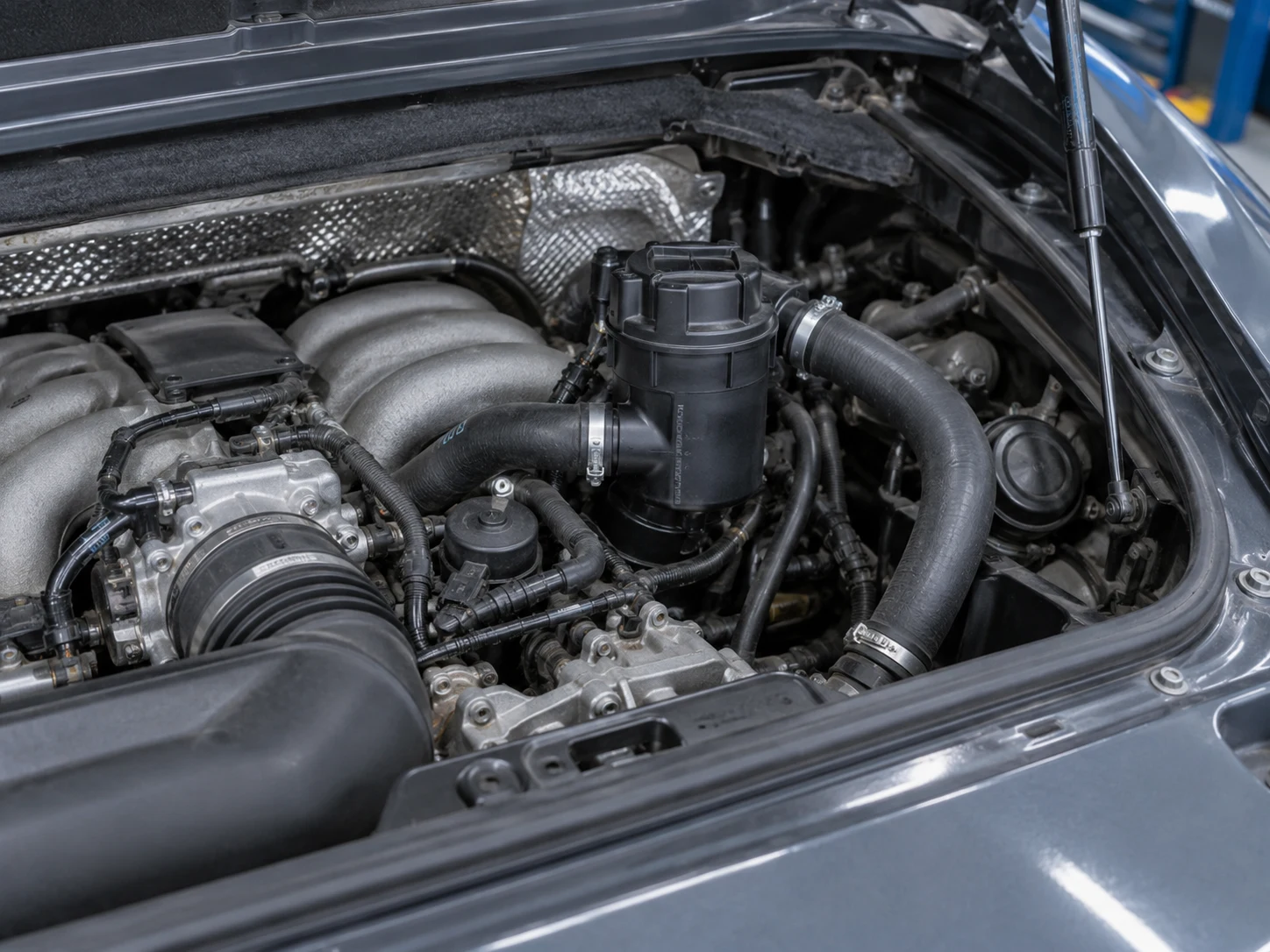
When smoke or a warning means stop driving
Stop safely for persistent heavy smoke with rough running, a flashing engine warning, an oil-pressure warning, rapid oil loss or knocking. Follow the complete dashboard instruction and arrange assistance. Do not repeatedly crank an engine that will not turn or may have ingested liquid.
Severe oil ingestion can damage the engine, while continued misfire can overheat catalytic converters. A steady warning with smooth running still needs prompt advice. An oil-level message and an oil-pressure warning are not interchangeable. Follow the vehicle-specific instruction and investigate why the level changed.
One brief puff without other symptoms does not prove an AOS failure. Record when it happens and whether it recurs. Persistent smoke, increasing consumption or a new whistle deserves investigation rather than being dismissed as normal.
How the separator and PCV system work
Combustion gases that pass the piston rings are called blow-by. Positive crankcase ventilation, or PCV, manages those gases. An air oil separator, or AOS, separates oil droplets from the gas stream so oil can return through the engine’s designed drain path while vapour is routed through the ventilation system.
Pressure-regulating diaphragms and valves control crankcase vacuum. Hoses, seals, return passages and check valves are also part of the system. A torn diaphragm, blocked passage, incorrect part or leaking connection can produce different pressure conditions. The exact layout changes between engines.
A separator fault can allow excessive oil into the intake, abnormal vacuum, unmetered air or pressure that encourages external leakage. The words PCV and AOS are sometimes used loosely in parts listings. Identify the failed function and correct assembly before ordering.
Identify the design before using a test value
| Engine application | Design and scope | What to verify |
|---|---|---|
| M96 and M97 sports-car engines | Separate separator and associated breather components on relevant 996, 997.1, 986 and 987.1 applications. | Engine code, installed part, hoses and replacement-engine history. The 997.1 base 3.6 is M96.05. |
| MA1 or 9A1 applications | Different ventilation arrangement on relevant 997.2, 991.1, 987.2 and 981 engines. | Use the correct test procedure. A retail kit’s contents do not define every application. |
| Mezger-derived Turbo and GT engines | Dry-sump ventilation with a different layout. | Identify the specific variant. The 997.2 Turbo is not the earlier Mezger Turbo. |
| Later turbocharged sports cars | Engine-specific pressure regulation, valves and oil separation. | Do not transfer M96 or MA1 figures without checking applicability. |
| Cayenne, Macan and Panamera | Separate or integrated components vary by engine, year and hybrid configuration. | Confirm whether the approved repair is a valve, hose, separator, cover or assembly. |
| Air-cooled flat six | Different breather and oil-system arrangements. | Do not apply the water-cooled diaphragm test or replacement advice automatically. |
Use the engine number and actual hardware alongside the VIN. A replacement engine or modified breather system can change the diagnosis. For broader model distinctions, read 911 common problems by engine.
Symptoms and alternative causes
| Symptom | A ventilation-related possibility | What else needs consideration |
|---|---|---|
| White or blue-looking start-up smoke | Oil entering the intake through the ventilation system. | Oil overfill, retained oil, valve seals, cylinder wear, turbo systems where fitted or coolant-related steam. |
| Whistle or honk at idle | Air moving through a damaged diaphragm or leak. | Other intake leaks and nearby rotating components. |
| Rough idle or lean mixture faults | Unmetered air through a breather leak or abnormal pressure regulation. | Intake leaks, fuelling or sensor faults. A code is a clue, not a part diagnosis. |
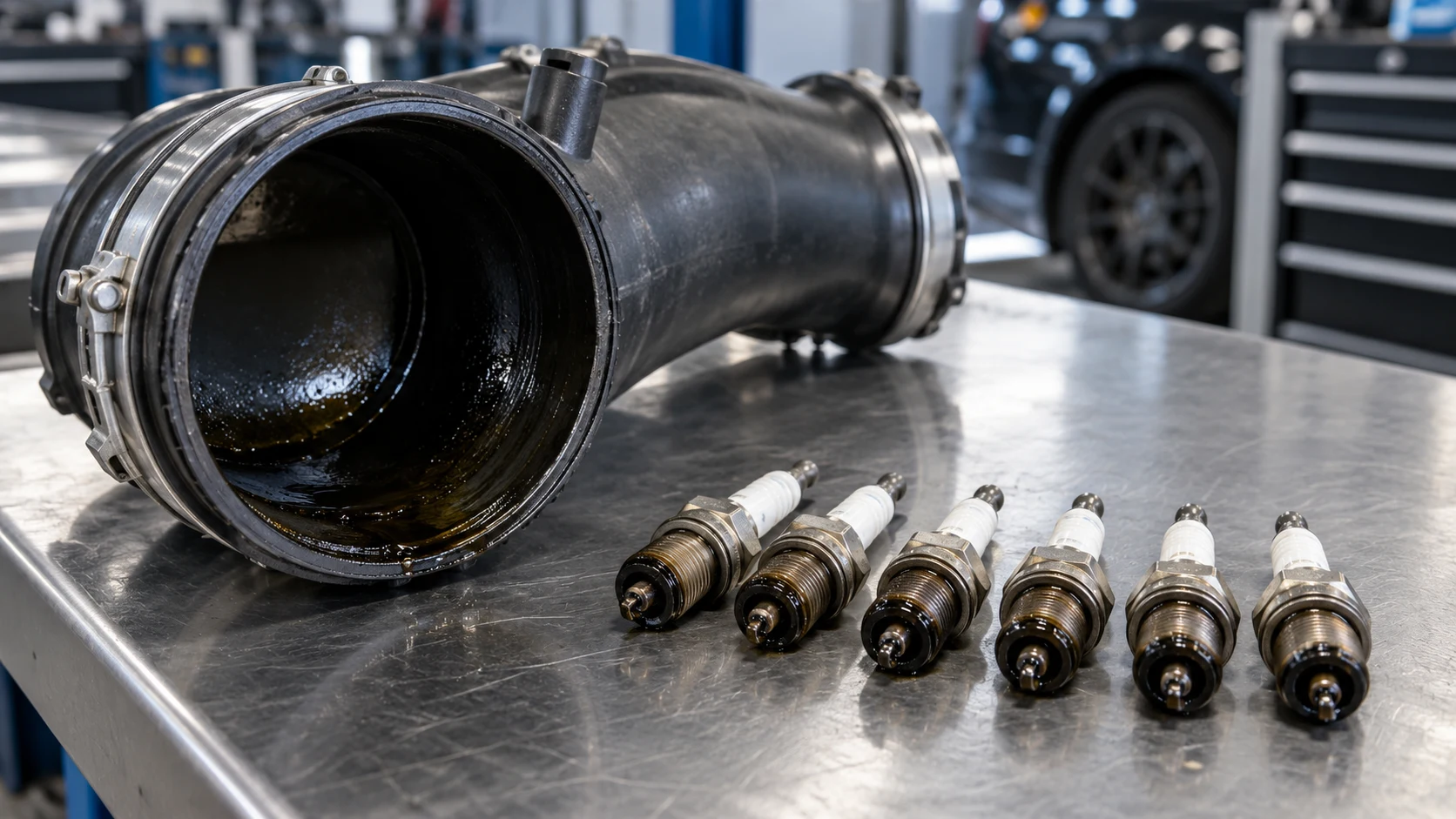
| Oil use or oily intake tract | Excessive oil carryover. | Oil level, normal residue versus pooling, blow-by and other oil entry paths. |
| Filler cap difficult to remove | Higher-than-expected crankcase vacuum. | Engine-specific normal suction and test conditions. Cap feel is not a calibrated measurement. |
| External oil leakage | Pressure regulation or a restricted passage may contribute. | A local seal or gasket defect can leak independently of the separator. |
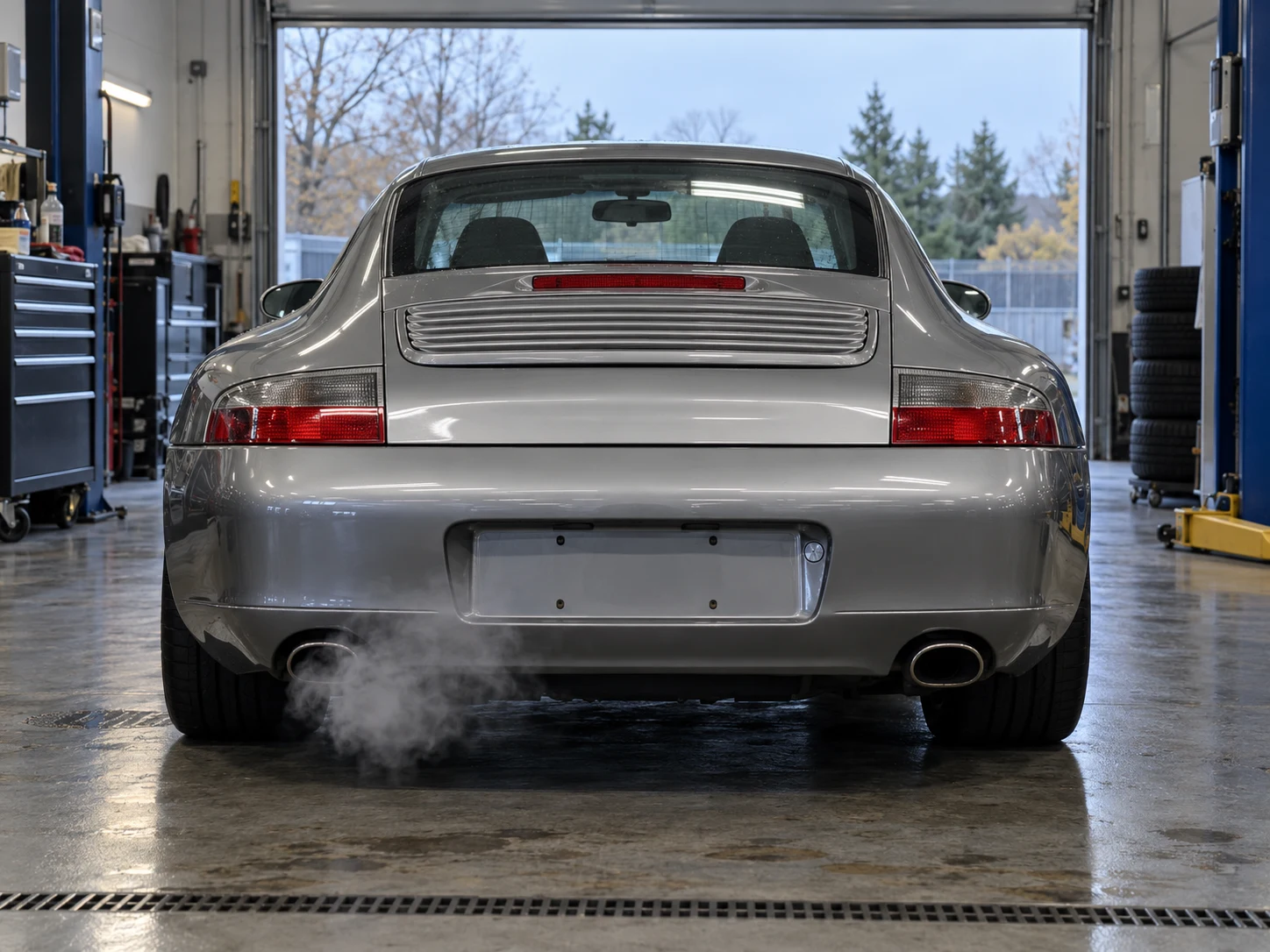
Smoke colour varies with lighting and temperature. Persistent steam with falling coolant needs a coolant investigation. A normal vacuum reading does not automatically move the diagnosis to bore scoring. Intermittent ventilation faults, oil level and other causes remain possible.
For cylinder-related evidence, see bore scoring and borescope limitations. A plug-well oil leak is different from oil fouling on the firing end inside the cylinder.
Crankcase vacuum figures need units and conditions
A manometer measures the small pressure difference between crankcase and atmosphere. Vacuum is negative gauge pressure. Inches of water, written inH2O, are not inches of mercury. The unit selected on a digital meter matters.
| Reference application | Specialist nominal vacuum | Interpretation |
|---|---|---|
| M96 and M97 | Approximately −4 to −6 inH2O | A reference from the cited Callas instructions. Confirm the exact engine procedure and condition. |
| MA1 | Approximately −14 to −16 inH2O | Different nominal vacuum. An M96 limit cannot be used as an MA1 pass or fail threshold. |
| Other engines and modified systems | Use the applicable workshop specification | Do not extrapolate either sports-car range to all V6, V8, turbo or hybrid engines. |
The Callas Rennsport manometer instructions published by LN Engineering support those reference ranges. They also describe high vacuum during some cold-start faults and list internal sludge as another possible cause of high vacuum.
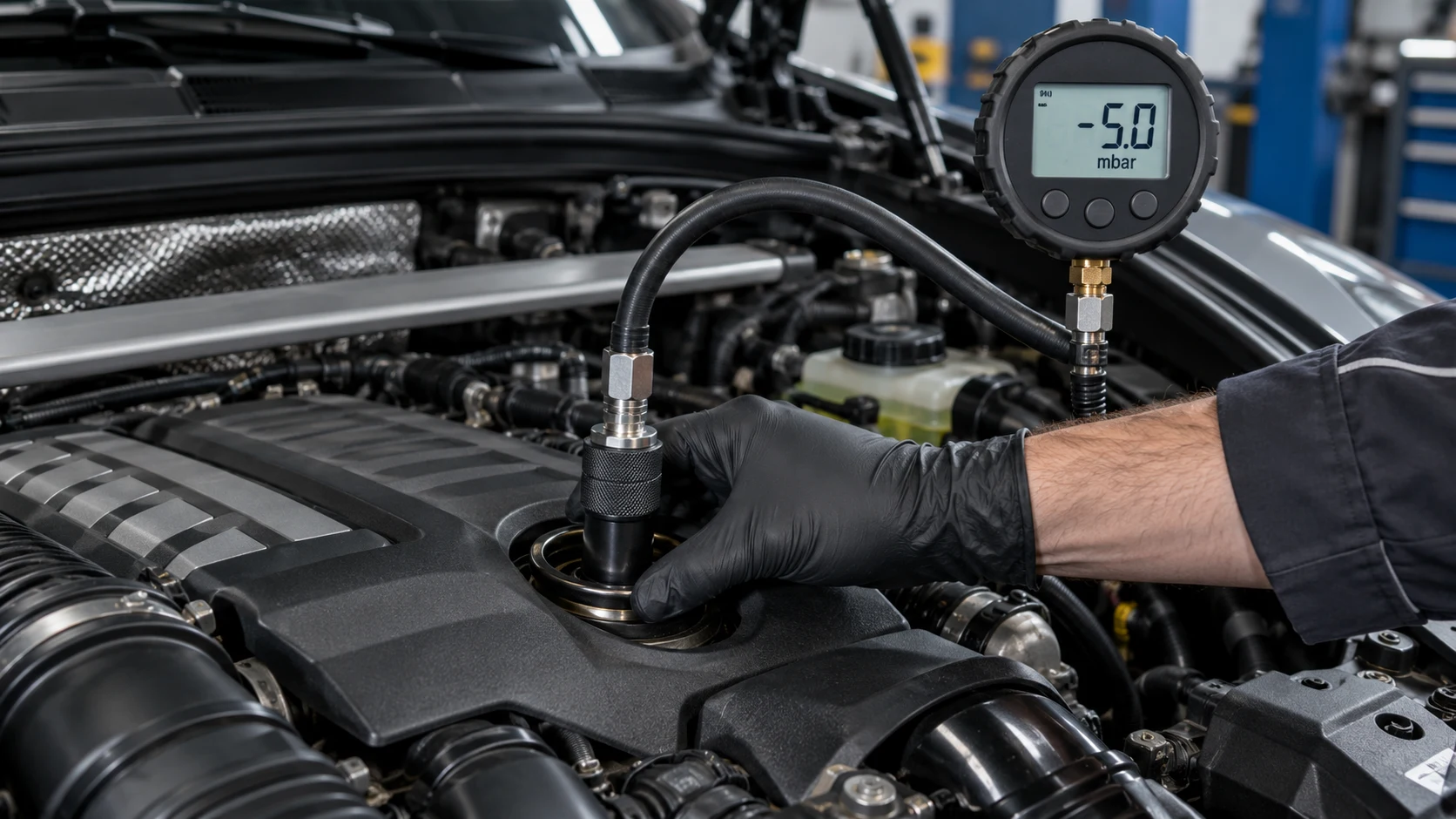
Report actual readings rather than describing them only as high or low. Record engine identity, oil level, temperature, idle condition, meter zero, adapter sealing and whether the symptom was present. A normal warm-idle reading may not capture an intermittent cold-start fault.
The filler-cap check can prompt further testing, but cap resistance is subjective. Removing the cap also changes the system being tested. Do not use prolonged running with the cap removed as a diagnostic shortcut.
A diagnostic sequence that avoids guessing
- Confirm engine identity, symptoms and recent work. Record warnings and codes before clearing them.
- Check oil level using the exact model’s procedure, including its required temperature, running state and waiting period. Do not use one warm-idle method for every Porsche.
- Inspect accessible hoses, connections, seals and oil residue. Distinguish a light film from substantial pooling.
- Measure crankcase pressure or vacuum under the specified conditions. Reproduce an intermittent symptom only when safe.
- Use a regulated smoke test where appropriate for the system. Do not apply uncontrolled pressure to the crankcase.
- Read fuel trims, misfire counters and relevant live data. Example lean or misfire codes describe a condition, not a confirmed AOS failure.
- If symptoms remain unexplained, select ignition, fuelling, coolant or mechanical tests based on the evidence.
Compression, leak-down and cylinder imaging provide different information. Normal readings do not exclude every form of wear. Likewise, abnormal vacuum should lead to investigation of regulation, passages and leaks rather than automatic replacement of the first separator in a parts catalogue.
Choose the repair for the confirmed fault
| Confirmed problem | Possible repair scope | Checks before approval |
|---|---|---|
| Failed separate separator | Correct separator and required seals, with damaged associated hoses addressed. | Fitment, part number, access, oil contamination and any related damage. |
| Split hose or failed connection | Repair or replace the affected hose, seal or fitting. | Whether the separator regulates correctly after the leak is repaired. |
| Integrated regulator or separator | Engine-specific valve, cover or complete assembly where required. | Whether a membrane-only repair is approved and reliable for the installed design. |
| Restriction, sludge or incorrect installation | Identify and correct the actual restriction or installation issue. | Why it developed and whether further contamination or engine checks are needed. |
| Track-use or modified system | Application-specific assessment of an appropriate system. | Compatibility, operating use, installation instructions and maintenance obligations. |
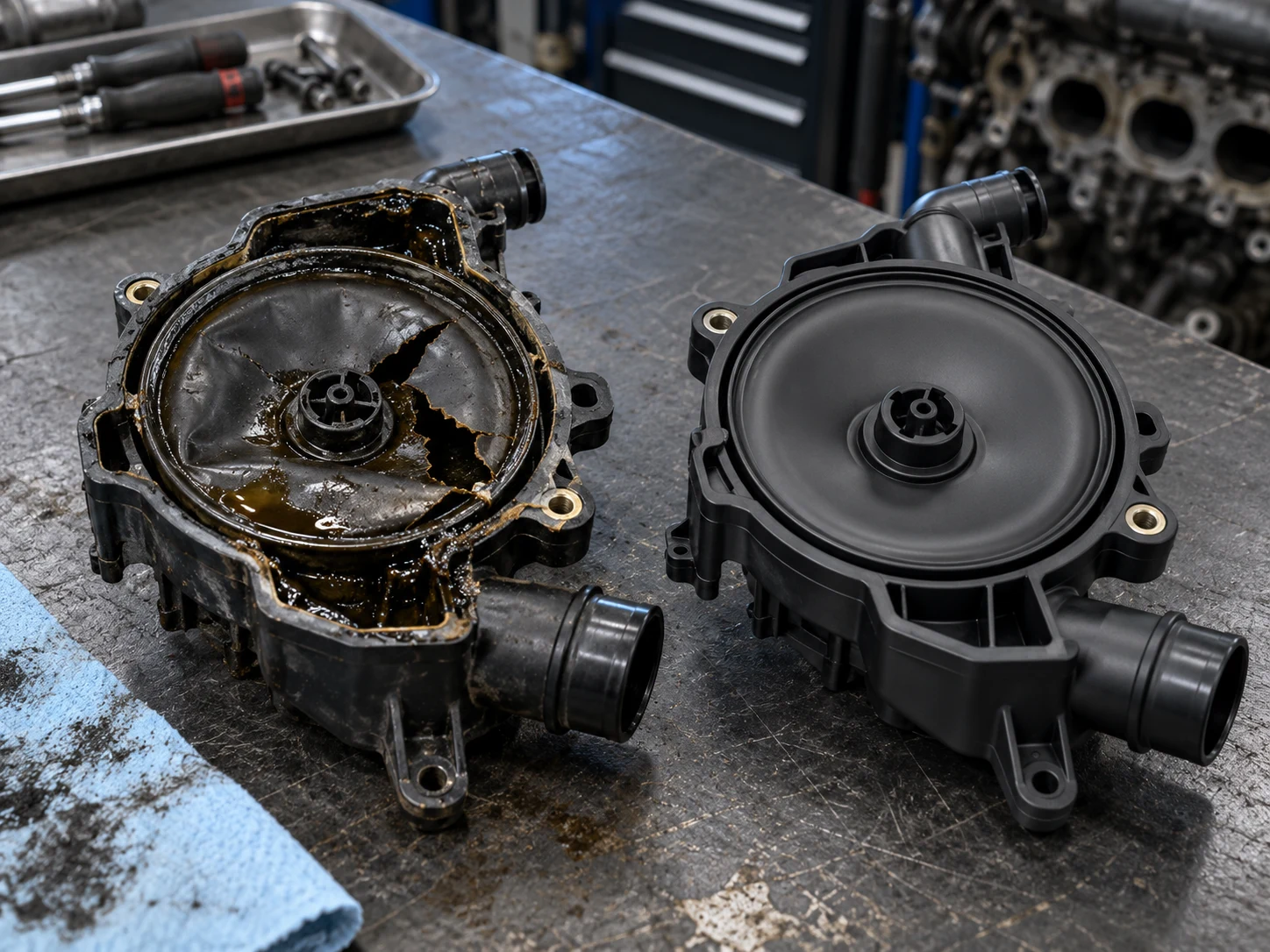
A specialist may recommend preventive replacement on a particular application, but there is no single AOS replacement interval for every Porsche. A supplier recommendation is different from a factory maintenance requirement. Discuss condition, history and the fitted component.
A new separator cannot repair existing cylinder damage. Equally, smoke does not justify engine work until more accessible causes have been investigated.
Panamera WLD4 is a specific hose campaign
Porsche Technical Information 71/20, campaign WLD4, describes replacement of a positive crankcase ventilation hose on assigned Panamera 971 vehicles. The linked revision is dated 29 August 2022 and covers relevant 2017 to 2019 applications with 3.0 V6 monoturbo or 2.9 V6 biturbo equipment.
The described part-load valve sealing washer can crack and allow oil leakage near the filler cover. This is a defined hose issue, not proof that every Panamera smoke complaint needs an AOS. Only vehicles assigned to the campaign qualify. Ask a Porsche Centre to check VIN eligibility and completion status.
Read Porsche’s WLD4 technical information. Imported-vehicle and local campaign arrangements need confirmation with the centre.
How to confirm the repair worked
Repeat the relevant vacuum measurement under comparable conditions, inspect for leaks and review fuel trims and misfire behaviour. If oil entered the intake, assess the amount and remove contamination as required by the repair procedure. Inspect fouled plugs and investigate catalyst concerns where misfire or oil ingestion makes that necessary.
Residual oil can sometimes produce smoke after the original fault is corrected, but persistent or heavy smoke must not simply be waved away. Agree the expected follow-up, what observations to record and which symptoms require stopping. Recheck a recurring fault instead of assuming a second separator will solve it.
- Record the original finding and the part or connection repaired.
- Keep before-and-after readings with the units and operating conditions.
- Document remaining symptoms or tests not completed.
- Check oil consumption over a stated distance using a consistent level procedure.
- Keep the invoice, part details and written warranty terms.
What diagnosis and repair cost in Dubai
| Scope | Published guide amount including VAT | Boundary |
|---|---|---|
| Initial diagnostic assessment | AED 200 to 500 | Scan, saved faults and agreed live-data checks. Confirm whether a manometer or smoke test is included. |
| Initial engine diagnosis | AED 420 to 1,260 | The agreed investigation may differ from a scan. Compression, leak-down or borescope work is included only if listed. |
| AOS or ventilation repair | Written quote after identification | Part numbers, access labour, hoses, seals, cleaning, retesting and VAT must be specified. |
These are different scopes, not two mandatory fees for every visit. Ask which assessment fits the symptom and approve additional tests before they start. Overseas parts-only prices do not establish a fitted Dubai repair price.
Related service information is available through engine diagnosis and repair and oil-leak investigation. A complete quote should distinguish the ventilation repair from any separately evidenced plug, catalyst or engine work.
Air oil separator questions
Is AOS the same as PCV?
PCV describes crankcase ventilation. The AOS performs oil separation within that system and may include pressure regulation. Parts names vary, so confirm the actual component and engine.
Does smoke prove the separator has failed?
No. Oil level, ventilation, valve seals, cylinder wear, turbo systems where fitted and coolant-related problems can produce similar symptoms. Diagnose the pattern and supporting evidence.
Is the oil-cap test enough?
No. Cap suction is subjective and opening the cap changes the circuit. A manometer and the applicable procedure provide a useful measurement.
Can the fault disappear once warm?
Some ventilation faults are intermittent or more apparent during cold start. A normal warm-idle reading does not exclude a fault under different conditions.
Does normal vacuum prove the engine has worn bores?
No. Normal vacuum at one test condition cannot select a different cause by exclusion. Continue with oil-level, ventilation, ignition, fuelling or mechanical checks as indicated.
Must the complete cover be replaced?
It depends on the design and approved repair. Some faults need a separate component or hose, others a cover or assembly. Confirm fitment and repair scope before ordering.
How often should an AOS be replaced?
There is no universal interval. Use the applicable maintenance information and discuss test results, condition, previous repairs and any component-specific recommendation.
Can I drive with heavy smoke or a flashing engine light?
Persistent heavy smoke, strong misfire or a flashing warning needs immediate attention. Stop safely, follow the vehicle instructions and arrange assistance rather than continuing normal driving.
Describe the smoke before booking
Send model, year, mileage, warning text and when the symptom occurs. Share an existing start-up video if available, but do not restart an engine showing severe symptoms just to film it. Ask which tests are proposed and what the initial assessment includes.
Related guides cover cylinder inspection and 911 problems by generation. Model-specific service information includes Boxster and Cayman.
Porsche Repair Dubai is an independent workshop and is not affiliated with Porsche AG. Model names identify the vehicles discussed. Vehicle-specific workshop instructions and the condition of the car determine diagnosis and repair.