Porsche Cayenne Transfer Case Shudder and Diagnosis

Cayenne shudder does not identify a failed transfer case by itself. Tyres, a prop shaft support, mounts, engine operation or the gearbox can produce a similar sensation. The useful diagnosis identifies the drivetrain fitted to your Cayenne and shows which test supports the proposed repair.
Describe whether the vibration occurs during a slow turn, acceleration, a gear change or steady cruising. Include the model year, engine, warning text and recent tyre or fluid work. Do not deliberately reproduce a severe fault to collect more information.
When to stop driving and arrange assessment
Do not rely on the absence of a warning
Stop safely if movement becomes unpredictable, the vehicle binds or hops severely, drive is lost, there is substantial leakage or you hear grinding or heavy knocking. Follow any dashboard stop instruction and arrange suitable recovery. A warning-free dashboard does not prove that continued driving is safe.
For mild or intermittent symptoms, contact the workshop with the details before deciding how to bring the car in. There is no universal safe number of days or kilometres to keep driving with judder. Recovery arrangements must follow the vehicle manual and its drivetrain requirements.
Once parked, record the conditions you already observed. Do not use repeated full-lock manoeuvres, hard acceleration or disabled safety systems as an owner test. A workshop should first decide whether a controlled road test is appropriate.
Cayenne shudder diagnosis and quotation scope
Initial diagnostic assessment is estimated at AED 200–500 including VAT, consistent with our Cayenne repair page. Confirm the initial inspection, scan and reporting allowance before booking. Extended road testing, electrical investigation or dismantling requires an agreed additional scope.
| Possible work | What the fitted quotation must identify |
|---|---|
| Tyre correction | Actual tyre sizes, approval and compatibility, quantity, fitting and balancing. Replacement depends on measurements. |
| Transfer-case fluid service | Exact transfer case and fluid specification, quantity, seals or plugs, labour and reassessment. This is not a Tiptronic fluid service. |
| Electrical or actuator work | Confirmed circuit or servo fault, repair versus replacement, parts source and any applicable setup. |
| Transfer-case assembly | Correct part and revision, new versus remanufactured or used, core charge, labour, fluid and required checks. |
| Further investigation | Purpose, maximum authorised cost and a reporting point before parts or dismantling are approved. |
There is no verified universal fitted transfer-case price on this page. These jobs differ substantially, so an unrelated gearbox-service price would mislead. Ask for parts, labour and VAT in the total, with exclusions, warranty conditions and parts lead time stated separately. A fluid service is not a guaranteed cure for worn internal parts.
Identify the Cayenne drivetrain first
The Cayenne badge spans several drivetrain designs. Confirm the VIN, model year, engine and installed transfer-case identification rather than choosing parts from a symptom alone.
| Cayenne group | Important distinction |
|---|---|
| 955 and 957 first generation | Use the first-generation transfer-case, actuator and prop-shaft procedures. Do not copy a 958 clutch repair recipe. |
| 958 petrol variants with active PTM | An electronically controlled multi-plate clutch is relevant to the investigation. Exact hardware and software still matter. |
| 958 V6 Diesel and relevant Hybrid variants | These differ from the active clutch arrangement of the listed petrol versions. Identify the specific differential and torque distribution system. |
| 958 S Diesel V8 | Do not group it with the V6 Diesel. Porsche specifies active PTM with an electronically controlled multi-plate clutch. |
| Third-generation Cayenne | Match the newer hardware, software and vehicle specification. A 2011–2017 bulletin is not automatic evidence of applicability. |
Porsche's Cayenne technical information distinguishes the Diesel, S Diesel and E-Hybrid systems. This is why a general statement about all Diesel Cayennes gives the wrong answer.
For other model concerns, use the Cayenne common problems guide. This article stays focused on identifying the source of shudder.
Separate the sensation from the suspected part
| Observed behaviour | Possible areas to investigate | What it cannot prove |
|---|---|---|
| Shudder under light acceleration | Transfer-case control, gearbox behaviour, engine running or mounts | A particular road speed does not identify the failed component. |
| Binding or hopping on tight turns | Tyre compatibility, drive mode and drivetrain operation | Not every tight-turn sensation is normal and not every one means clutch failure. |
| Vibration that follows road speed | Tyres, wheels, prop shaft and other rotating parts | A gearbox code is not required for a mechanical vibration. |
| Clunk when selecting Drive or Reverse | Mounts, driveline play and engagement behaviour | The sound alone does not establish an actuator fault. |
| Vibration during a shift or steady cruise | Transmission operation and other load-related causes | A short road test may not separate an intermittent fault. |
When safe, a technician can compare steering angle, gear, load, temperature and the timing of the sensation with supported live data. Results guide the next test. They are not a substitute for checking tyres and physical components.
Check tyres and mechanical condition before buying a unit
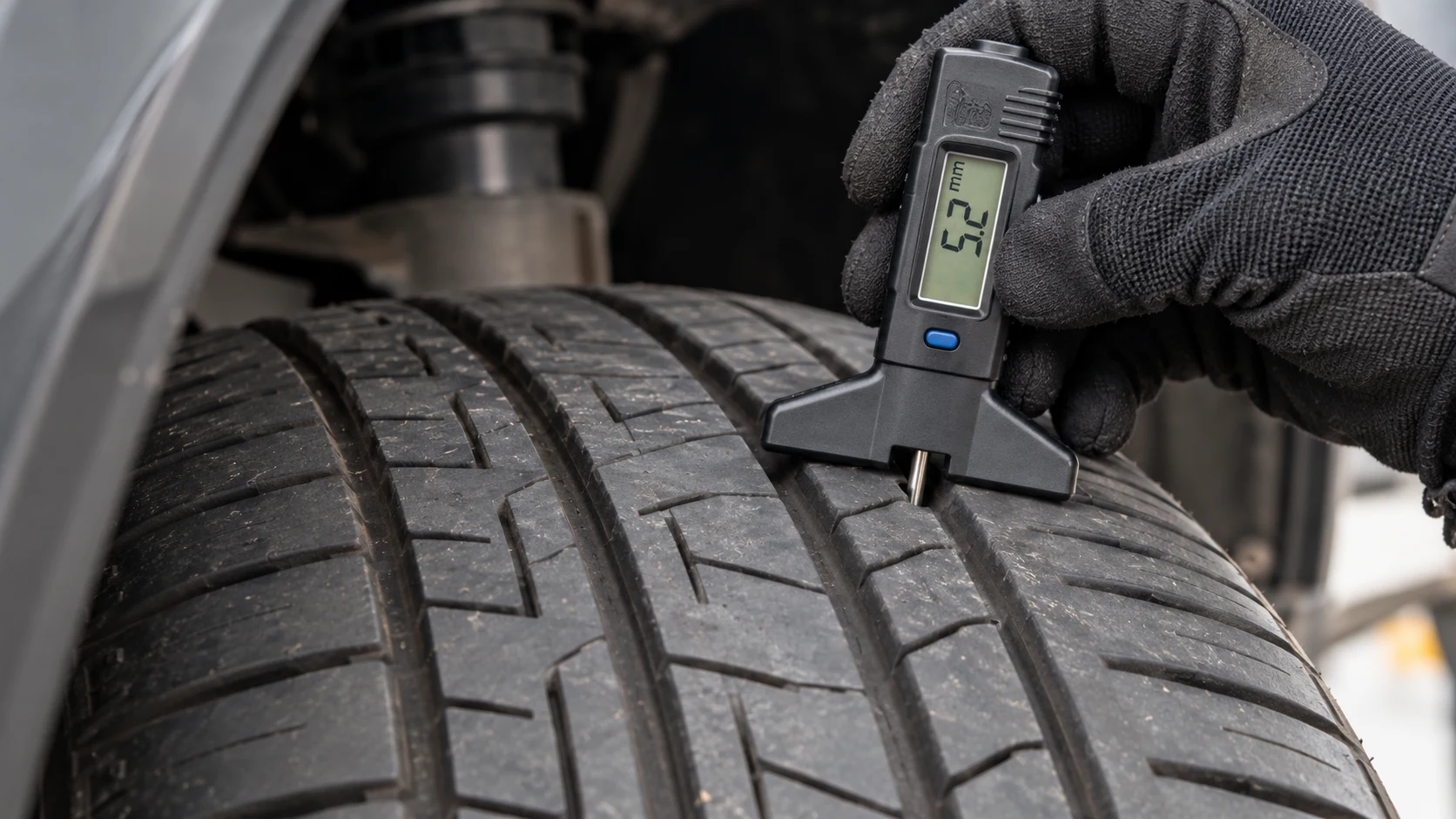
Read the sizes on all four tyres and compare them with the approved fitment. Porsche can specify different front and rear sizes, so matching does not always mean four identical size markings. Check brand and product compatibility, approval requirements, pressure, tread condition and circumference where the procedure requires it.
Use the vehicle's pressure instructions and the applicable tyre guidance. Do not apply a universal percentage tread-wear rule to every Cayenne. One replacement tyre may or may not be suitable depending on the approved fitment and measurements of the remaining tyres.
Rolling-circumference differences can influence an all-wheel-drive system, but a mixed set does not prove that the transfer case is damaged or explain every vibration. Correct a confirmed tyre problem and reassess rather than promising that tyres will cure the complaint.
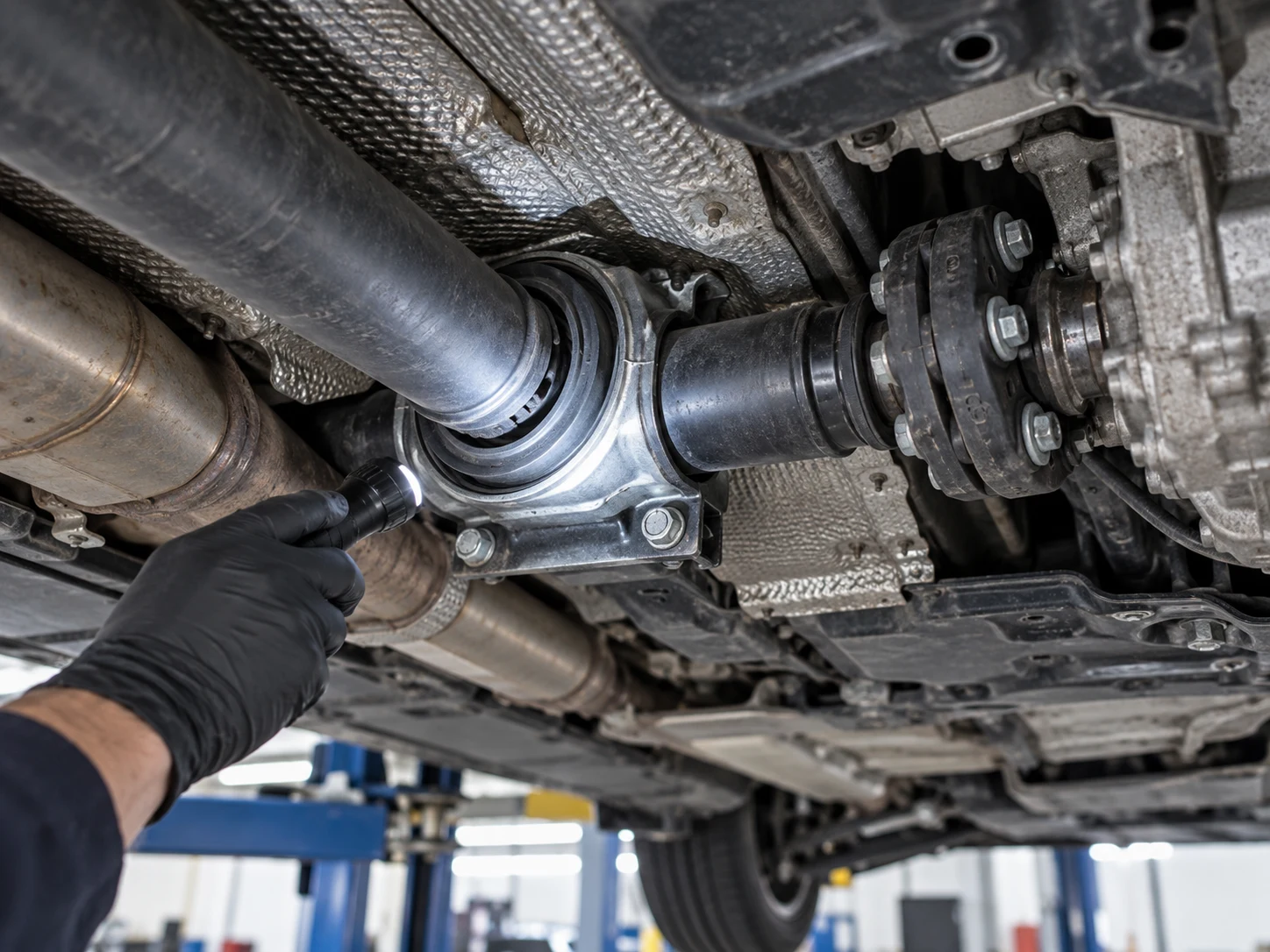
Lift inspection should also consider prop-shaft supports and joints, mounts, leaks and other components implicated by the symptom. Record actual play or damage and its location. A photograph of a component without a finding is not evidence that it needs replacing.
What Porsche bulletin 84/17 actually covers
Porsche Technical Information 84/17 revision 4 from September 2018 lists specified model-year 2011–2017 Cayenne, S, GTS, Turbo and Turbo S applications. S Diesel is not in that document's applicability list. Similar drivetrain hardware does not establish bulletin coverage.
The bulletin discusses different complaints and checks. It describes drivetrain tension under certain tight-turn and off-road conditions, with limits. It must not be read as permission to dismiss new or severe hopping in normal use.
For specified 2015–2016 vehicles, clicking can involve the servo motor and an all-wheel-drive software level below 1010. The document also distinguishes coated-plate hardware and matching software. The workshop needs the current instructions, vehicle equipment and actual software level before proposing an update or parts.
A technical bulletin is not automatically a recall or a free-repair entitlement. Ask an authorised Porsche Centre to check campaign or warranty eligibility by VIN and market. This guide does not infer UAE eligibility from a US-hosted document.
What a useful diagnostic report should show
- Baseline and safety assessment Record the complaint, visible condition and relevant faults before clearing anything. Decide whether a road test is safe.
- Physical checks Record tyre fitment and measurements, leaks and relevant shaft, joint or mount findings.
- Application checks Identify the transfer case and compare applicable bulletins, software and service history.
- Directed testing Select signals that answer the suspected cause. Depending on system support, this can include requested clutch operation, actuator information, temperatures, gear and wheel-speed signals.
- Conclusion and limits State what has been confirmed, what remains uncertain and what further work needs approval.
Not every control unit exposes the same values. Wheel-speed signals do not replace reading tyre markings and taking measurements. Gearbox adaptation data alone cannot rule the gearbox in or out. Engine misfire or torque irregularity may also need investigation where it coincides with the complaint.

For an intermittent concern, record whether it was reproduced and under which conditions. A brief cold test does not confirm a warm-running repair. Controlled testing should be planned around the actual complaint, rather than a universal speed or full-lock routine.
When fluid service is relevant
Use the specification and fill procedure for the identified transfer case. Transfer-case fluid, differential oil and Tiptronic transmission fluid are separate service items. A general gear-oil label is not enough to select the product.
A fluid inspection may reveal contamination or debris that affects the next decision. Colour and smell alone cannot measure remaining clutch life or prove that the entire assembly is healthy. Record the findings and identify any leak before correcting the level.
A correctly indicated fluid service can be part of a repair plan, followed by reassessment. It cannot repair damaged bearings, worn clutch hardware or an electrical fault. Do not promise a cure or prescribe repeated fluid changes when symptoms return without investigating why.
Dubai heat, traffic and desert use belong in the service history. They do not establish a universal shortened interval or a confirmed failure mechanism. After off-road use, restore road pressures according to the vehicle instructions before normal road driving.
Choose a repair supported by the findings
Tyre correction, connection repair, software work, fluid service, an actuator and an assembly are alternative responses to different findings. They are not a fixed cheapest-to-most-expensive ladder. Four tyres can cost more than an update, and neither is justified without a relevant finding.

For an assembly quotation, compare new, remanufactured and used options by exact compatibility, supplied components, provenance, warranty, core return and availability. A used unit can carry unknown wear. A new unit does not justify a promised lifespan.
Setup depends on what was replaced. Bulletin 84/17 distinguishes a complete transfer-case/servo assembly with classification information already included from motor-only replacement requiring the relevant data procedure. Do not add universal coding or adaptation claims to every invoice.
After work, request the applicable fluid and leak checks, required setup result and reassessment of the original complaint. A cleared fault list by itself is not proof of a completed repair. For a separately confirmed gearbox fault, see transmission repair options.
Cayenne transfer-case questions
Does shudder mean I need a new transfer case?
No. Tyres, shafts, mounts, engine running and gearbox operation can need investigation. Replacement requires findings that support the diagnosis.
Can I keep driving if there is no warning?
The absence of a warning does not establish safety. Stop for severe binding, grinding, substantial leakage, lost drive or unpredictable movement and arrange advice or recovery.
Is the S Diesel the same as the V6 Diesel?
No. The 958 S Diesel uses an active PTM clutch arrangement. Do not apply a general Diesel statement without identifying the engine and drivetrain.
Will a fluid change solve the problem?
Only where the actual findings support that service. It does not restore damaged hardware. Agree how the original symptom will be reassessed.
Is bulletin 84/17 a recall for every Cayenne?
No. It is technical information with defined applications. Current campaign or warranty eligibility must be checked by VIN and market.
What should I keep after the repair?
Keep tyre measurements, baseline faults, confirmed findings, the parts and fluid details, authorisation, setup results and written warranty together.