
Porsche Oil Change Intervals and Oil Specifications
Find your Porsche’s oil-change interval in the maintenance documents for its model year, engine and market. Then choose an oil with the required Porsche approval and permitted viscosity. There is no single interval, oil grade or refill quantity that applies to every Porsche.
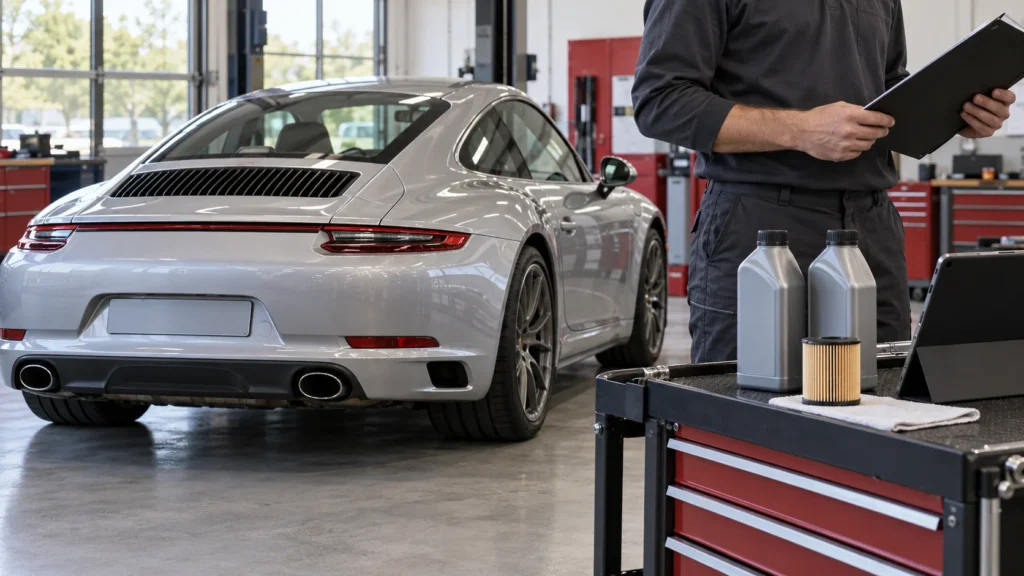
Use the VIN, service history and vehicle documentation to answer three separate questions. What oil service is due, which exact product is suitable, and how must the final oil level be checked? A broad package name or a viscosity number on a bottle does not answer all three.
This guide covers combustion engines, including the engine in an E-Hybrid. Taycan and Macan Electric models do not need a combustion-engine oil change.
How to find the correct oil-change interval
- Identify the vehicle precisely. Confirm the VIN, model year, engine or powertrain and original market specification. Registration year alone may not identify the model year. An imported vehicle needs particular care when selecting its documents.
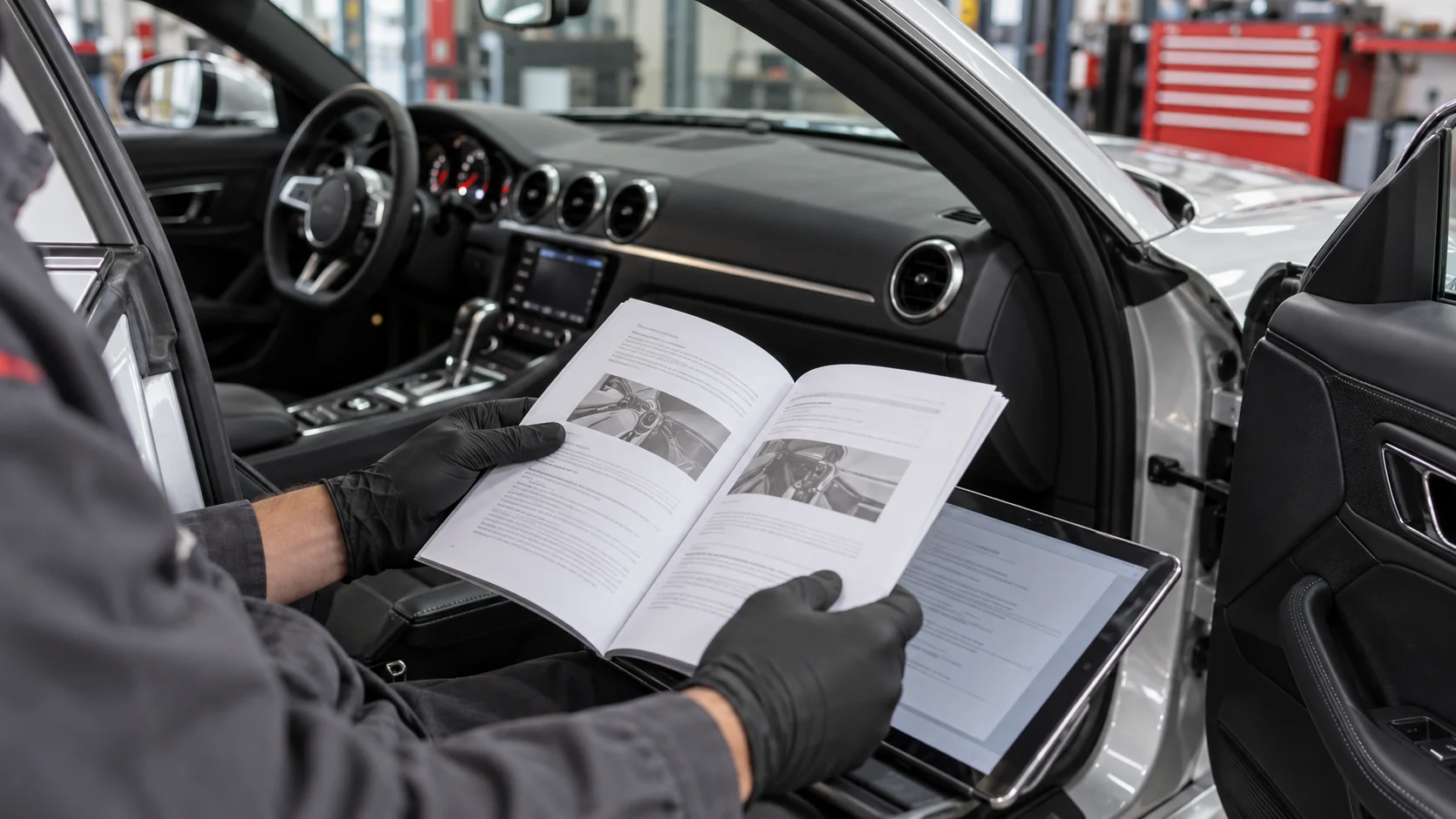
- Find the oil-service entry. Check the maintenance booklet and current applicable service information. The driver’s manual explains owner checks and top-up requirements. Use Porsche’s official manual portal to locate the vehicle instructions.
- Compare time and distance with the last completed work. Where both limits apply, act on whichever is reached first. Verify the dated invoice and mileage rather than assuming a reset reminder proves an oil and filter change.
- Account for the way the car is used. Report repeated short trips, long idle periods, towing, track use, long storage or other unusual operation. Ask the workshop to identify any applicable additional requirement and distinguish it from an optional earlier-service recommendation.
A historical schedule example with a defined scope
The Porsche Cars North America Macan maintenance checklist, edition May 2016, labelled Macan, S, GTS and Turbo from 2015, lists an oil change every 10,000 miles or 15,000 km, or one year. Those are the published figures in that North American document, not a conversion or a timetable for every Porsche in the UAE. Match the current schedule to your own vehicle.
Oil service can have a different due date from the wider maintenance inspection, spark plugs or drivetrain-fluid work. Ask which reminder and scheduled operations the quotation covers. Compare the manufacturer’s due-item list with the minor-service package checklist rather than treating them as automatically identical.
Porsche approval and viscosity answer different questions
| Label detail | What it tells you | What to verify |
|---|---|---|
| Porsche approval | A manufacturer specification such as A40, C40, C40 GT, C30 or C20. | Which approval is allocated to your exact engine and model year. These codes are not a ranking from ordinary to better oil. |
| SAE viscosity | A grade such as 0W-20, 0W-30 or 0W-40 describes viscosity characteristics. | The grade permitted with the required approval. A thicker grade is not automatically more protective or more suitable for Dubai. |
| Product name and version | The exact formulation being supplied, beyond the brand name. | Match the current product data and approval status. Different products from the same brand can have different approvals. |
| Quantity and procedure | The amount for the particular service operation and final level check. | The correct engine, filter work and workshop procedure. A full service refill and a small top-up are different operations. |
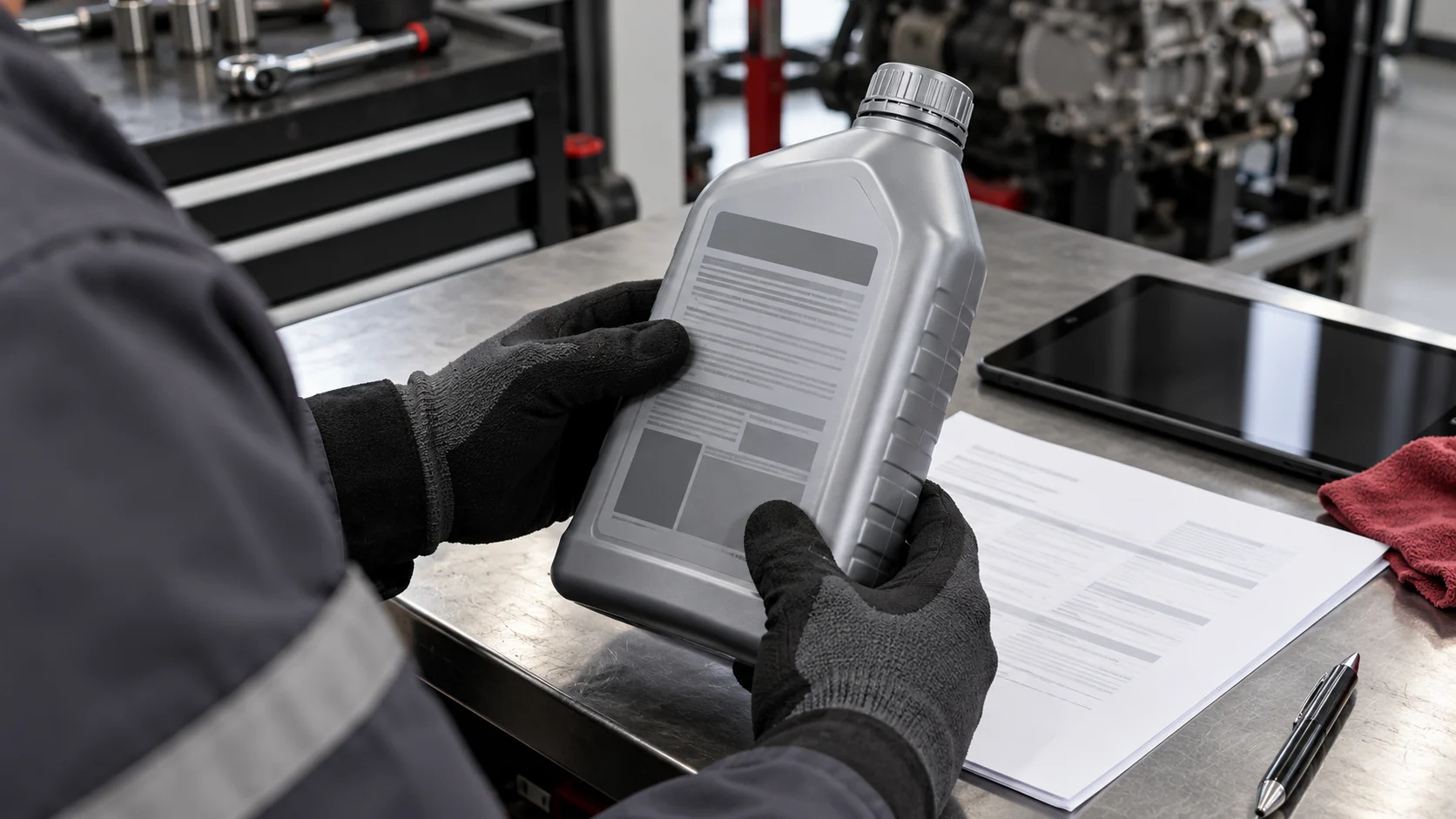
The number before W relates to low-temperature viscosity behaviour. The second number describes high-temperature viscosity classification. Neither number states which Porsche engine the product is approved for. Approval and grade must be read together.
Also distinguish an oil-allocation document from an approved-product list. Allocation tells you the specification needed by the engine. The product list identifies oils approved to that specification. Product approvals can have validity periods, so an old screenshot is not enough to establish current status.
Engine-specific oil examples from Porsche documents
These are labelled examples from Porsche’s worldwide allocation documents. They demonstrate why a model name or viscosity alone is insufficient. They do not replace the latest VIN-specific information, and they must not be transferred to a different model year, engine or electric powertrain.
| Vehicle and document year | Engine listed | Approval and grade listed |
|---|---|---|
| 2026 petrol Macan and Macan T | EA888 evo4 | Porsche C20 with 0W-20 |
| 2026 petrol Macan S and Macan GTS | EA839 LK3 | Porsche C30 with 0W-30 |
| 2026 911 Carrera and Carrera T | EA9A2evo 3.0-litre B6T | Porsche C40 with 0W-40 |
| 2026 911 GT3 | EA9A1.5 4.0-litre B6S | Porsche C40 GT with 0W-40 |
| 2025 718 Boxster and Cayman 2.0 | EA9A2 2.0-litre B4T | Porsche C40 with 0W-40 |
| 2025 718 GT4 RS and Spyder RS | EA9A1.5 4.0-litre B6S | Porsche C40 GT with 0W-40 |
Sources are the MY 2026 allocation, dated 22 May 2026, and the MY 2025 allocation, dated 28 February 2025. Both state worldwide validity and direct technicians to the current approval lists. The 0W-40 rows show that the same viscosity can accompany different required approvals.
Older A40 applications and Porsche Classic recommendations need their own applicable information. Do not use the table as a reason to change an older car to a newer specification. Likewise, a petrol Macan entry does not apply to the electric Macan. A plug-in hybrid still has a combustion engine with its own oil requirements.
Confirm refill quantity and the oil-level procedure
Ask for the service refill quantity for the exact engine and operation. A dry-engine capacity, a normal oil-and-filter refill and the amount needed for a top-up are not interchangeable. The quantity printed on a package or the size of the purchased bottles does not establish the final level.
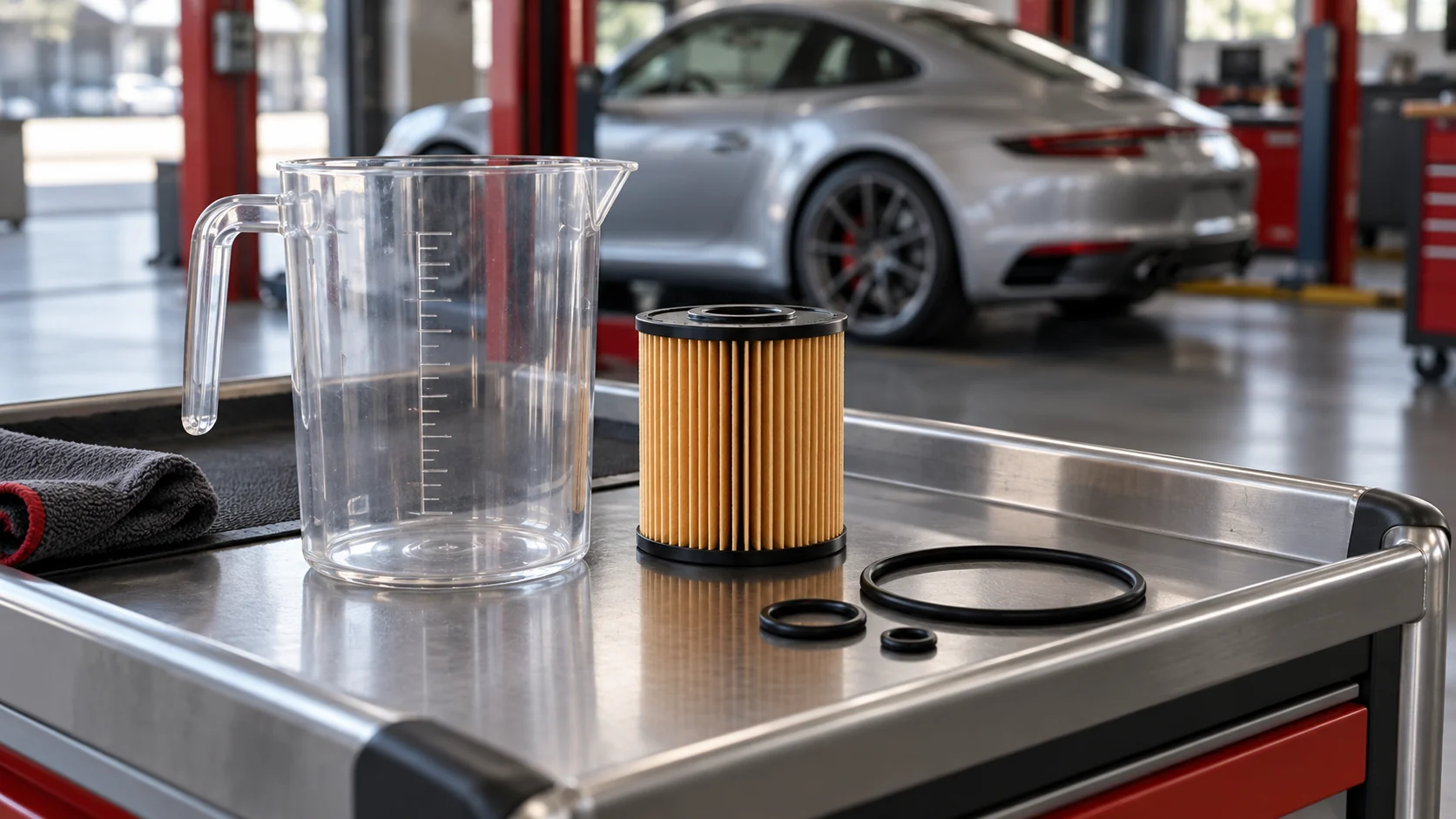
The workshop should identify the filter and seals required, use the specified filling procedure and confirm the level afterwards. If the quantity differs from an earlier invoice, ask whether the engine variant, operation or recorded amount differs. Do not assume the larger figure is safer.
Electronic measurement and dipstick checks vary by vehicle
Follow the manual’s required surface, temperature, engine state and waiting conditions. Some vehicles use electronic measurement, and others have different checking arrangements. A procedure copied from another generation can produce an invalid reading. An unavailable measurement is not proof that the sump is empty.
Do not restart or warm the engine against an oil-pressure warning or stop-engine instruction just to obtain a level reading. For an allowed top-up, identify the correct filler, switch off as instructed, keep clear of hot or moving parts, add only the directed amount and recheck using the prescribed conditions. Cooling fans can start unexpectedly, so keep hands and clothing clear.
Why overfilling and underfilling matter
Too little oil can compromise lubrication. Too much can also harm the engine or emissions system. The aim is the specified operating level, not filling to the highest imaginable amount. Do not continue adding oil while waiting for an electronic display to update.
If excess oil has been added, or the level cannot be confirmed, stop topping up and ask the workshop for instructions. A recurring low reading needs investigation for leakage, consumption or a measurement problem. Repeated top-ups should be recorded with date, mileage, product and amount.
A service reminder is different from an oil warning
| Message or symptom | What it concerns | Appropriate response |
|---|---|---|
| Oil-service reminder | Scheduled maintenance based on the applicable service system. | Check the due work and history, then arrange the required service. A reset alone does not complete it. |
| Low oil-level message | Oil quantity measured under specified conditions. | Follow the manual’s level-check and top-up instructions. Investigate repeated loss, an invalid reading or other symptoms. |
| Oil-pressure warning or stop-engine instruction | The lubrication system may not be maintaining the required pressure. | Stop safely, switch off and follow the vehicle’s warning instructions. Do not treat it as a routine oil-change reminder. |
| Burning smell, smoke, leakage or unusual engine noise | A possible fault that an oil change may not resolve. | Assess the symptoms and urgency. Stop safely with serious symptoms and arrange assistance rather than assuming fresh oil is the cure. |
A normal oil-level display cannot establish that oil pressure is correct. Our engine warning signs guide explains when a symptom needs diagnosis before routine maintenance.
Use driving conditions and service history properly
Tell the workshop about repeated short trips, extended idling, towing, track driving or long periods parked. These details can affect the maintenance discussion. They do not justify a universal Dubai interval or an automatic change to thicker oil. Ask which documented requirement or vehicle finding supports an earlier service.
An oil change restores the scheduled lubricant service when the correct product and procedure are used. It does not guarantee a particular fuel-economy gain, repair mechanical wear or resolve every noise. Increased fuel consumption or poor performance may need a separate investigation.
Keep the invoice with the exact oil product, Porsche approval, SAE grade, amount supplied, filter details, date and mileage. Ask what record the workshop can provide and which reminder has been reset. Do not assume that a generic service stamp proves every scheduled operation was completed.
What to confirm before booking an oil change
- The VIN or exact model year and engine covered by the quotation.
- The oil product, required approval, viscosity and included quantity.
- The filter, seals, labour, disposal and final level check included.
- How extra oil or additional diagnostic work would be charged and authorised.
- The VAT treatment and payable total.
- The service record, reminder reset and next due date or distance.
For prices and appointments, use our Porsche oil-change service page. We are an independent workshop. This guide helps you check the specification and due work before comparing a quotation.
Porsche oil interval and specification questions
Is every Porsche due an oil change at 10,000 miles or one year?
No. That interval must not be applied to every model, year and market. Find the oil-service requirement in the maintenance documents for your vehicle and compare it with the last completed service. A dated Macan example is shown above with its original document scope.
Is the viscosity grade enough to choose an oil?
No. Match the required Porsche approval as well as the permitted SAE viscosity and exact product. Two oils labelled 0W-40 can carry different approvals. The current engine-allocation document and approved-product list answer different questions.
Should I use thicker oil because the car is in Dubai?
Do not select a thicker grade simply because of the climate. Use the approved grade and product for the engine and market. If the car sees unusual use, discuss its service needs using the applicable documentation rather than changing the oil specification by guesswork.
How many litres does my Porsche need?
Confirm the service refill quantity for the exact engine and procedure, including whether the filter is being changed. It is different from topping up an existing fill. The workshop should record the amount added and complete the prescribed final level check.
Does a low oil-level message mean an oil change is due?
Not necessarily. It concerns the measured quantity, while a service reminder concerns scheduled work. Follow the manual’s checking and top-up instructions. A pressure warning, a stop-engine instruction or other serious symptoms need urgent attention rather than a routine oil-change booking.
Can I change oil brands at the next service?
Check that the exact replacement product has the required current Porsche approval and viscosity. Porsche’s cited allocation documents distinguish oil specifications and advise using the same brand and type for topping up where possible. Do not assume that products with different approvals are interchangeable.