Porsche Tyre Rotation and Wheel Alignment Explained
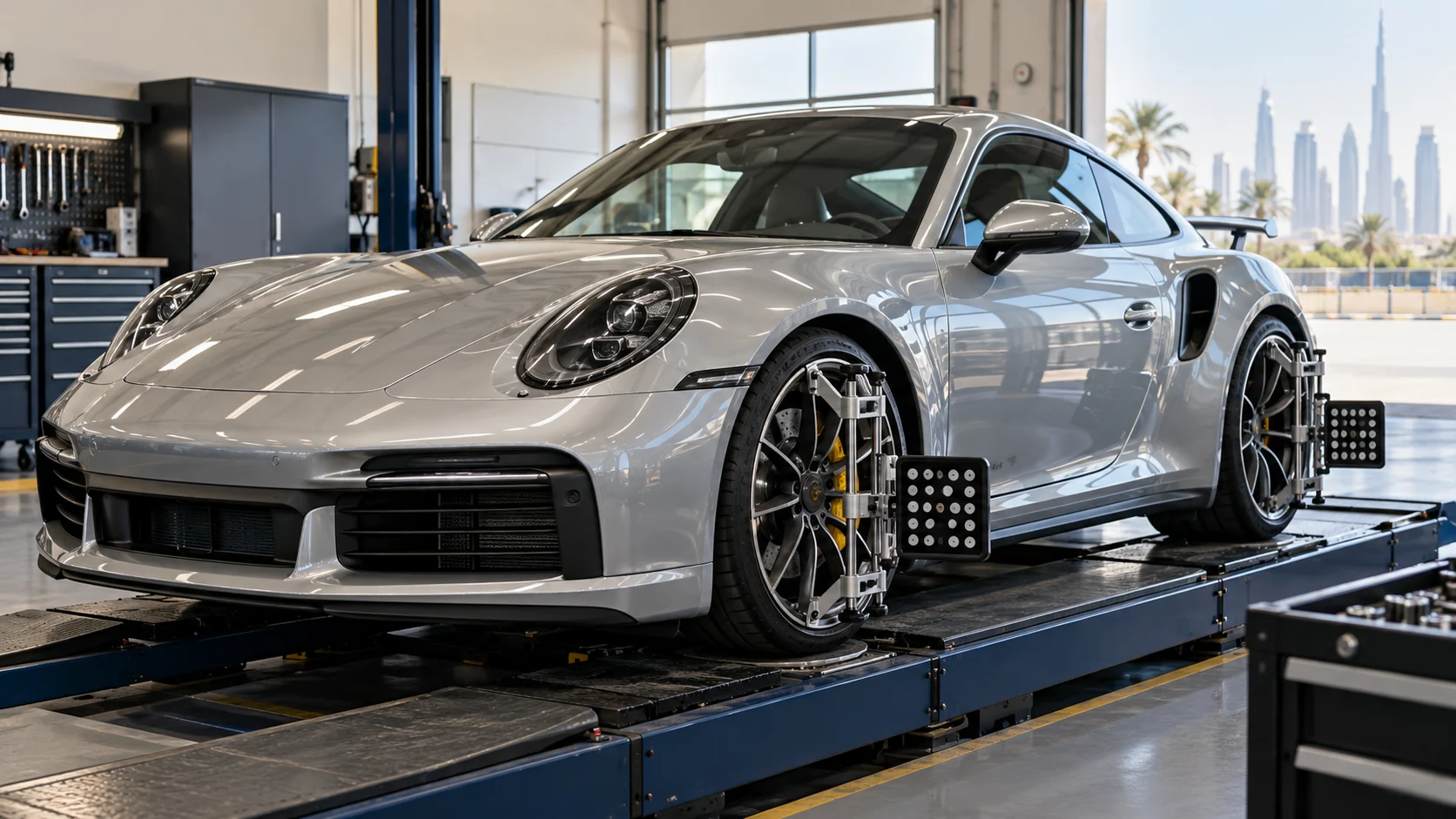
Check the actual wheel and tyre package before rotating tyres on a Porsche. Different front and rear sizes, directional tyres or axle-specific wheels can prevent a normal swap. Alignment adjusts wheel geometry, balancing corrects imbalance in a wheel and tyre assembly, and permissible rotation changes its position. Each addresses a different need.
Do not start with a rotation pattern
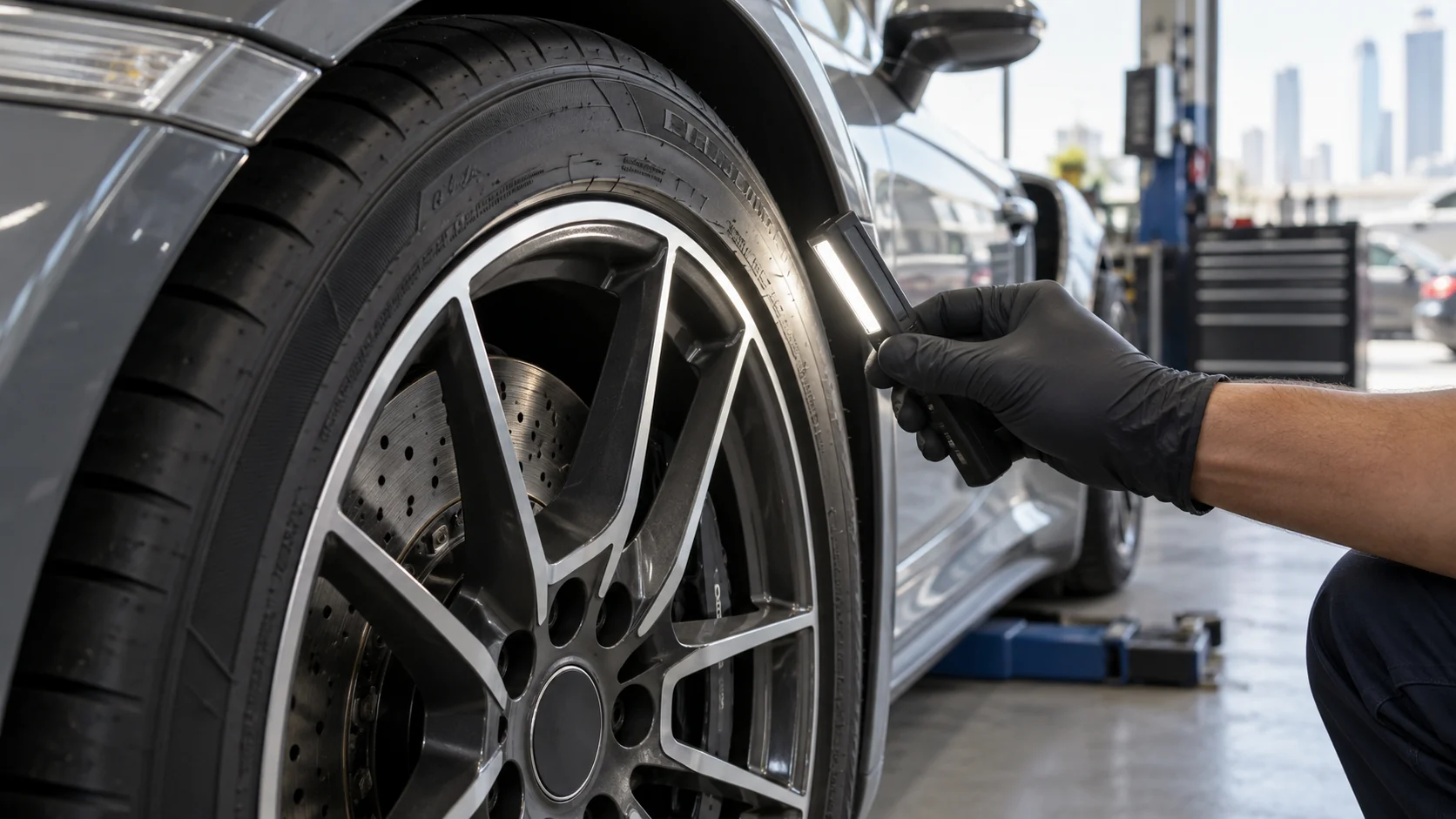
First confirm the model instructions, tyre sizes, wheel specifications and sidewall markings. A front-to-rear or diagonal diagram for another car is not permission to move your Porsche’s wheels. If the fitment is unclear, leave the assemblies in their approved positions until checked.
Can the tyres on your Porsche be rotated?
Identify the car by model year and fitted equipment, then compare the actual front and rear assemblies. A model badge or a statement that all four tyres have the same wheel diameter is not enough. Previously changed wheels, spacers or a different tyre package need specific confirmation.
- Check front and rear tyre sizes. Read the complete size on each axle. A staggered package uses different front and rear sizes. Keep each size in its approved axle position rather than swapping it front to rear.
- Confirm wheel interchangeability. Tyre size alone does not establish that the wheels can change positions. Wheel width, offset and the approved application also need checking. Do not assume identical-looking wheels are interchangeable.
- Read the directional markings. A directional tyre must roll in the direction of its sidewall arrow. Moving an assembled directional wheel across the car can reverse that direction. Front-to-rear movement on the same side is only an option when the sizes, wheels and vehicle instructions allow it.
- Check the mounting and application restrictions. An asymmetric tyre’s inside and outside markings govern mounting. Some tyres are both directional and asymmetric, with additional side-specific restrictions. Read all the markings rather than judging the tread by appearance.
- Check condition and the model instructions. Uneven wear, damage or an unsuitable combination needs assessment before any position change. Use the applicable Porsche instructions and tyre guidance to confirm whether a permitted pattern exists.
Michelin’s rotation guidance explains directional-tyre restrictions and the priority of the vehicle manufacturer’s instructions. Its directional-tyre FAQs also distinguish tyres that are both directional and asymmetric. These restrictions come before selecting a route based on rear-wheel drive or all-wheel drive.
| Fitted package | Decision before moving wheels |
|---|---|
| Different front and rear tyre sizes | Do not interchange the axles. Side-to-side movement is not automatically permitted either. |
| Same sizes with directional tyres | Preserve the direction arrow. Confirm whether the wheels and vehicle instructions permit movement on the same side. |
| Same sizes with non-directional tyres | Check wheel specifications, condition and Porsche instructions before choosing any pattern. |
| Unknown, modified or mixed package | Identify the application first. Do not use rotation to work around a fitment mismatch. |
Removing a tyre from its wheel and remounting it is different from exchanging complete assemblies. It requires its own suitability assessment, correct mounting and balancing. It does not make an incompatible front and rear package interchangeable.
Rotation, balancing and alignment do different jobs
Ask which finding each proposed service will address. A package containing all three is not automatically necessary, and an alignment cannot make prohibited rotation acceptable.
| Service | What changes | What it cannot repair |
|---|---|---|
| Permissible rotation | The approved position of a serviceable wheel and tyre assembly | Lost tread, tyre damage, incorrect wheel angles or imbalance |
| Wheel balancing | Mass distribution of the rotating wheel and tyre assembly, normally using balance weights | Incorrect suspension geometry or every cause of vibration |
| Wheel alignment | Wheel angles compared with the correct vehicle specification, with adjustment where provided | A damaged tyre, a bent wheel or a worn suspension component |
What permissible rotation can achieve
Where authorised for the package, rotation can help manage differing wear between positions.
It does not restore material already worn away or remove the fault causing abnormal wear. A tyre that is unserviceable in one position does not become serviceable simply by moving it elsewhere.
If the package cannot be rotated, maintaining it in its approved configuration is the correct approach.
Continue checking pressures, wear, damage and geometry as appropriate. Rotation eligibility and the need for other tyre care are separate decisions.
What balancing checks
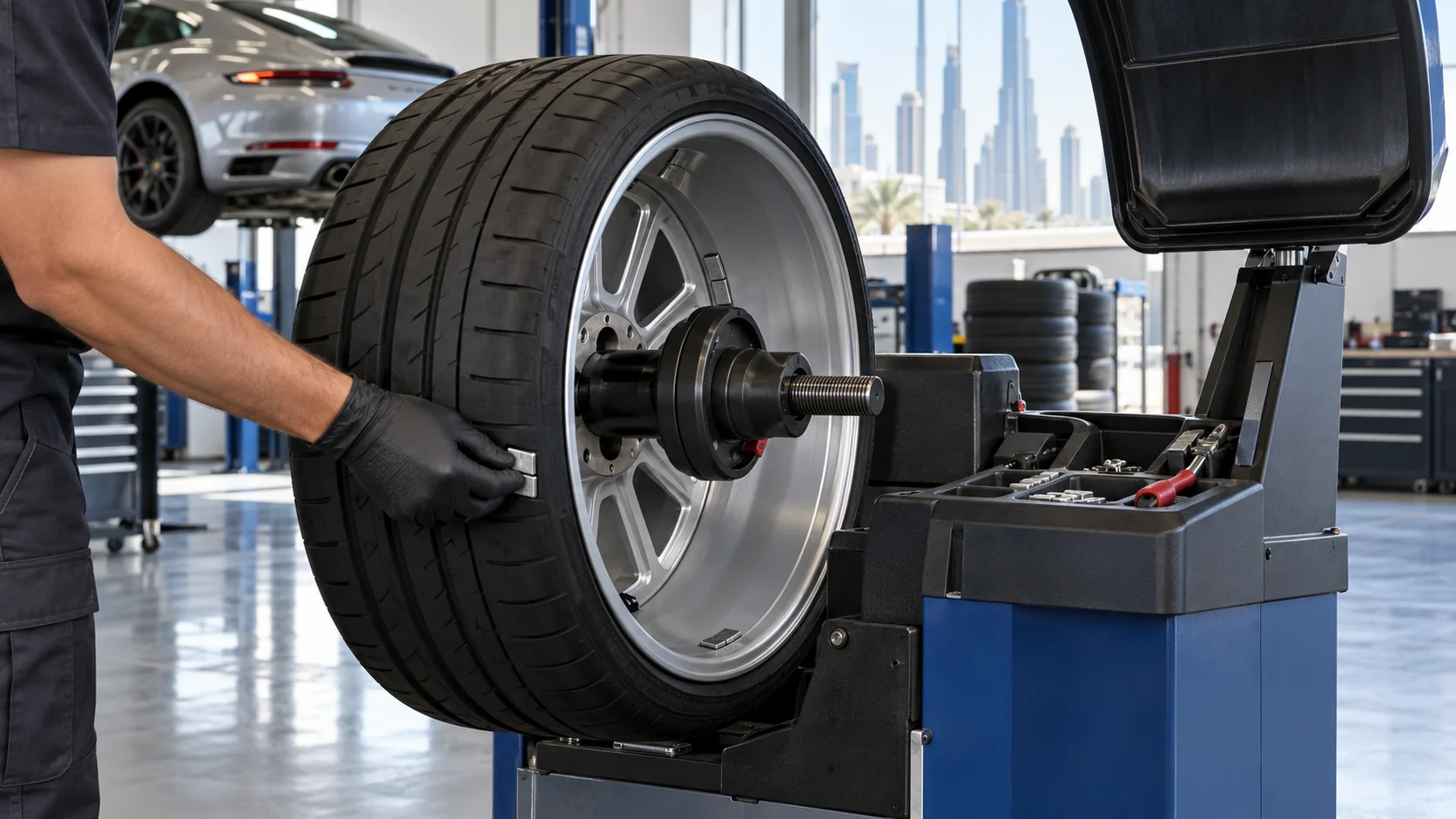
Balancing assesses the rotating assembly for imbalance.
A speed-related vibration can justify this check, especially following tyre fitting, but the complaint still needs describing accurately. Continental’s balancing guidance distinguishes mass imbalance from alignment.
If correctly performed balancing does not resolve the vibration, further inspection may be needed.
Tyre condition, wheel damage, mounting or other vehicle components can matter. Avoid agreeing to repeated balancing without an explanation of the remaining finding.
What alignment checks
Alignment compares the wheels’ angles with the specification for the car.
- Toe describes the inward or outward pointing direction viewed from above.
- Camber describes tilt viewed from the front or rear.
- Caster concerns steering-axis inclination viewed from the side.
- The available adjustments depend on the vehicle.
Continental’s alignment explanation sets out these distinctions.
The aim is the appropriate specification and a sound vehicle, rather than simply making every wheel appear visually upright.
Choose the check from the symptom
Describe when the problem occurs and what changed before it began. A pothole strike, recent tyre fitting, suspension work or a gradual change in steering feel can lead to different checks. A symptom suggests a diagnostic route, not a guaranteed repair.
| Symptom | Useful assessment | Avoid assuming |
|---|---|---|
| The car pulls or the steering wheel sits off-centre | Check pressures, tyre condition and fitment, steering and suspension, then geometry as indicated | That rotation alone will correct it |
| Vibration appears in a particular speed range | Inspect tyres and wheels and assess balance, with further checks if the finding does not explain it | That every vibration is an alignment fault |
| One edge wears faster | Measure the tread across the tyre and assess pressures, geometry and relevant components | That moving the tyre will repair the worn edge |
| The symptom appears mainly while braking | Report that detail so the assessment includes relevant brake and chassis checks | That a standard tyre package will necessarily cure it |
| A tyre loses pressure or has visible damage | Assess the tyre, valve, wheel and safe-use decision before routine service | That balancing or rotation makes it safe |
Michelin’s handling problem guidance uses symptom details to narrow the checks. Tell the technician whether the vibration is through the steering wheel, seat or floor and whether it changes with braking. Do not recreate an unsafe speed or steering manoeuvre to demonstrate it.
When to stop and arrange assistance
Severe or sudden vibration, a bulge, exposed cords, rapid pressure loss or difficulty controlling the car needs prompt safety advice. Stop in a safe place and arrange assistance where continued driving may be unsafe. Do not drive on a visibly flat tyre to reach an alignment appointment.
Use the model’s inspection advice and the car’s condition
There is no single rotation mileage that overrides a Porsche wheel package’s restrictions. Check the maintenance and tyre information for the exact model year and equipment. Porsche’s owner’s manual website lets you select the vehicle by VIN or model and year.
Use scheduled maintenance as an opportunity to record tyre condition and ask whether any permitted rotation is due.
Inspect sooner after a significant impact, a pressure-loss warning, unusual wear, new pulling or vibration. Suspension repairs or changes to ride height also warrant checking the applicable geometry procedure.
For Dubai driving, tell the workshop about repeated kerb contact, rough access roads, heavy loads, long storage or track use.
These details help interpret the findings. They do not establish that every Porsche needs the same service at the same distance.
Keep pressure checks separate from rotation
Use the prescribed cold pressures for the fitted sizes and load conditions.
Front and rear requirements may differ. After an authorised position change, the workshop needs to confirm the appropriate pressures and any required tyre-pressure monitoring procedure.
Continental’s fitment and rotation guidance notes both pressure and monitoring-system considerations.
A generic reset sequence should not replace the instructions for your Porsche.
Do these services guarantee a fuel saving?
No fixed percentage can be promised from this guide. Pressure, geometry, tyre choice, load and driving conditions influence energy use. The useful evidence from a tyre visit is the measured condition, the work required and the result of the relevant checks. It is not an assumed fuel-economy gain.
What to ask for in the workshop report
A useful report explains what was checked, what was found and why any work was recommended. Ask for enough detail to compare the next inspection with this one, without treating a photograph or a coloured screen as the entire diagnosis.
- Fitment record. Model year, wheel package, front and rear tyre specifications, directional or mounting restrictions, and whether rotation is allowed are identified.
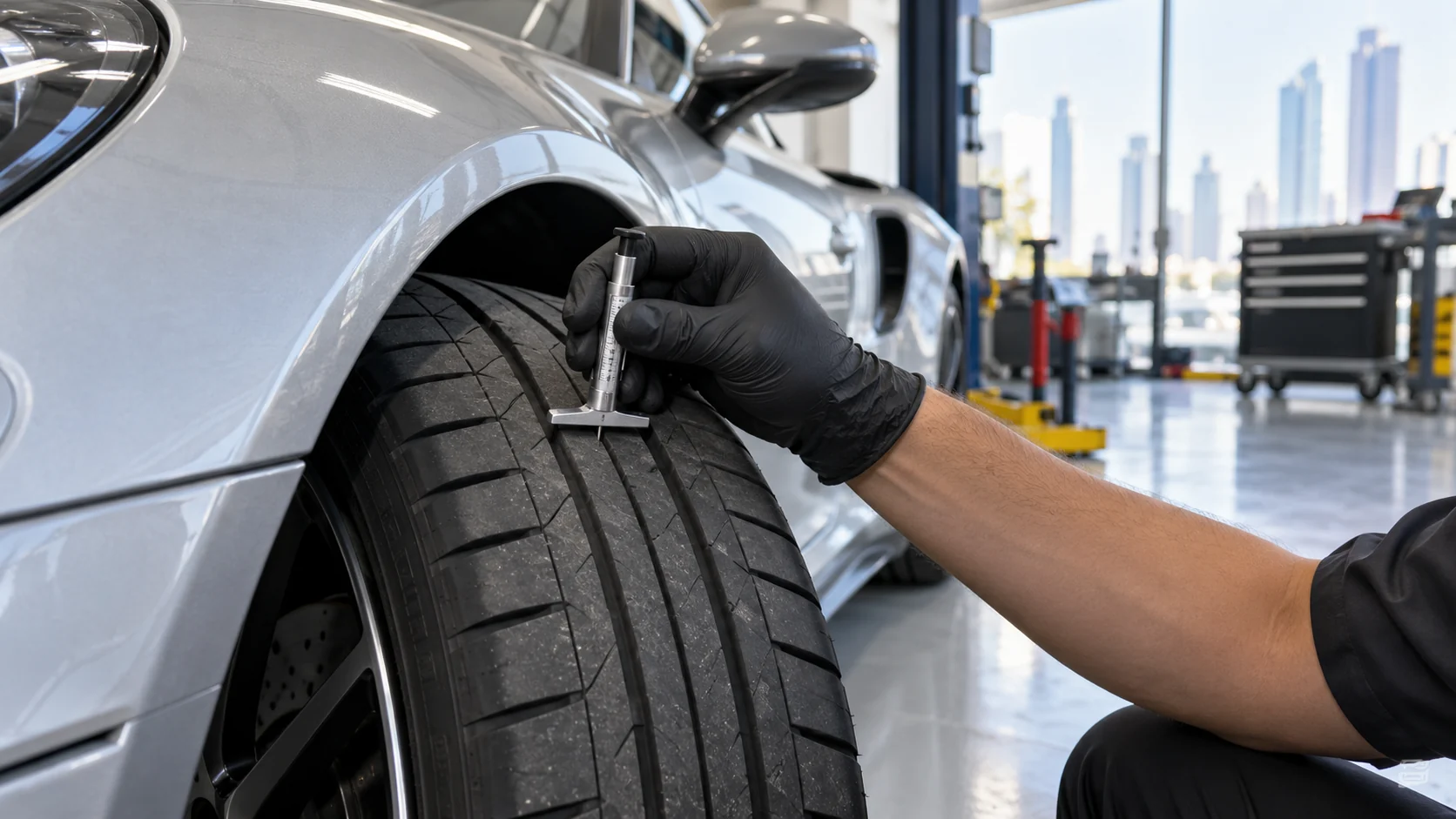
- Tyre condition. Inner, centre and outer tread readings are recorded in millimetres for each inspected tyre, with pressure, damage and uneven-wear findings.
- Any position change. Original and final positions are listed, together with the approved pattern and pressure or monitoring work required.
- Alignment results. Where alignment is performed, request before-and-after readings, the vehicle specification used and an explanation of any value that remains outside it.
- Balance and follow-up. Where balancing is performed, identify the assemblies checked and whether the reported vibration was resolved or needs further investigation.
The alignment setup needs to follow the applicable Porsche procedure, including any required loading, suspension position or ride-height conditions.
A road-going car should not receive another model’s settings or an unexplained track setup.
Worn, damaged or loose components may need attention before a meaningful adjustment can be completed.
Ask whether a repair is necessary first and whether alignment is a separate item. Hunter’s alignment equipment guidance shows the value of vehicle-specific information and before-and-after reporting.
When replacement tyres are the right discussion
Lost tread, damage or an unsuitable fitment can require a replacement decision rather than a position change. Confirm the correct front and rear sizes, load and speed ratings, and approved tyre application. An N marking concerns Porsche approval of a tyre application. It does not make every N-marked tyre interchangeable between models or axles.
For replacement choices, use our Porsche tyre selection and N ratings guide.
Confirm the approved front and rear application before ordering a set.
For assessment and booking, use our Porsche wheel alignment and balancing service.
Confirm which checks, adjustments and report outputs are included in the quotation. Tyre replacement, wheel repairs and suspension repairs should have their own clearly identified scope.
Porsche rotation and alignment questions
Can every Porsche have a front-to-rear tyre rotation?
No. Staggered sizes and axle-specific wheel applications can prevent it. Directional markings, tyre condition and the model’s instructions also matter. Confirm the complete fitted package before choosing a pattern.
Can directional tyres move diagonally?
Do not use a generic diagonal swap for assembled directional tyres. It can reverse the required rolling direction. Same-side front-to-rear movement is only an option where the wheels, sizes and vehicle instructions permit it.
Does alignment include wheel balancing?
They are separate services. Alignment concerns wheel angles, while balancing concerns the rotating assembly’s mass distribution. Check the quotation to see which assessments and work are included.
Will rotation fix pulling or a worn tyre edge?
Rotation does not restore worn tread or repair a geometry fault. Pulling and abnormal wear need appropriate pressure, tyre and chassis checks. The findings determine whether alignment, repair or replacement is required.
How often should I book these services?
Use the exact model’s maintenance and tyre guidance. Rotation must first be permitted for the fitted package. Arrange an earlier inspection for new symptoms, pressure loss or a significant impact rather than waiting for a universal mileage figure.
Should I buy a package containing all three?
Only where the fitment and findings justify each item. Ask why rotation is allowed, what the balance check found and what the alignment readings show. A bundled price is not evidence that every service is necessary.
The manufacturer references support the distinctions explained here. The current instructions and approved wheel and tyre application for your exact Porsche take priority over generic rotation patterns.