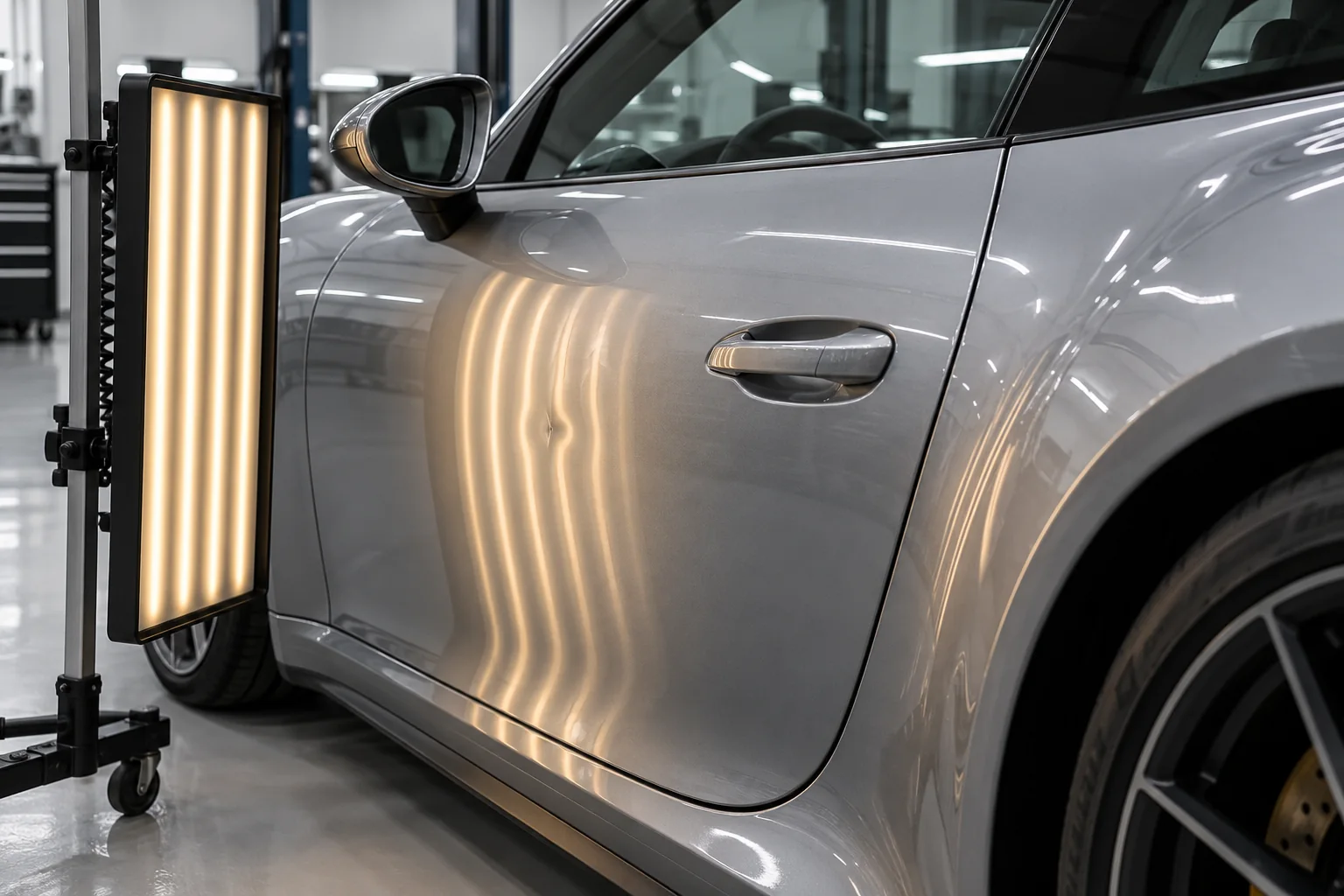
Rod access from behind
Long steel rods push the metal out through an existing opening, a lamp aperture or after trim removal. It gives fine control on broad panels.
By Porsche Repair Dubai. Last reviewed 30 October 2026
Paintless dent repair, panel repair with repainting and panel replacement each solve a different problem. The right choice depends on the paint, the panel material, the shape of the damage and what is fitted behind it, not on the size of the dent alone.
Suits a dent with unbroken paint, a shape the metal can return to and a safe way to reach or pull it. The factory finish stays.
Suits a repairable panel where the paint is chipped, cracked or already repaired, or where the crease is too sharp for a paintless result.
Suits damage beyond the permitted repair, torn or split material, or a bumper area where Porsche does not allow repair over a sensor.
One car can need more than one method. A door can have a paintless dent and a separate chip, while the next panel needs a colour blend. Ask which method is proposed for each defect.
| Question | Paintless dent repair | Repair and refinish | Panel replacement |
|---|---|---|---|
| Factory paint kept | Yes, when the attempt succeeds | No, the repair area is refinished | No, the new part is painted |
| Needs unbroken paint | Yes | No | No |
| Handles sharp creases | Sometimes, with a possible trace | Usually, within repair limits | Yes, the damaged part is removed |
| Colour matching needed | No | Yes, often with blending | Yes, often with blending |
| Typical extra work | Trim or lamp removal for access | Preparation, primer, colour and clear coat | Fitting, corrosion protection, paint and system checks |
| Main risk | Paint lifting or a remaining trace | Visible colour or texture difference | Hidden damage behind the panel left unchecked |
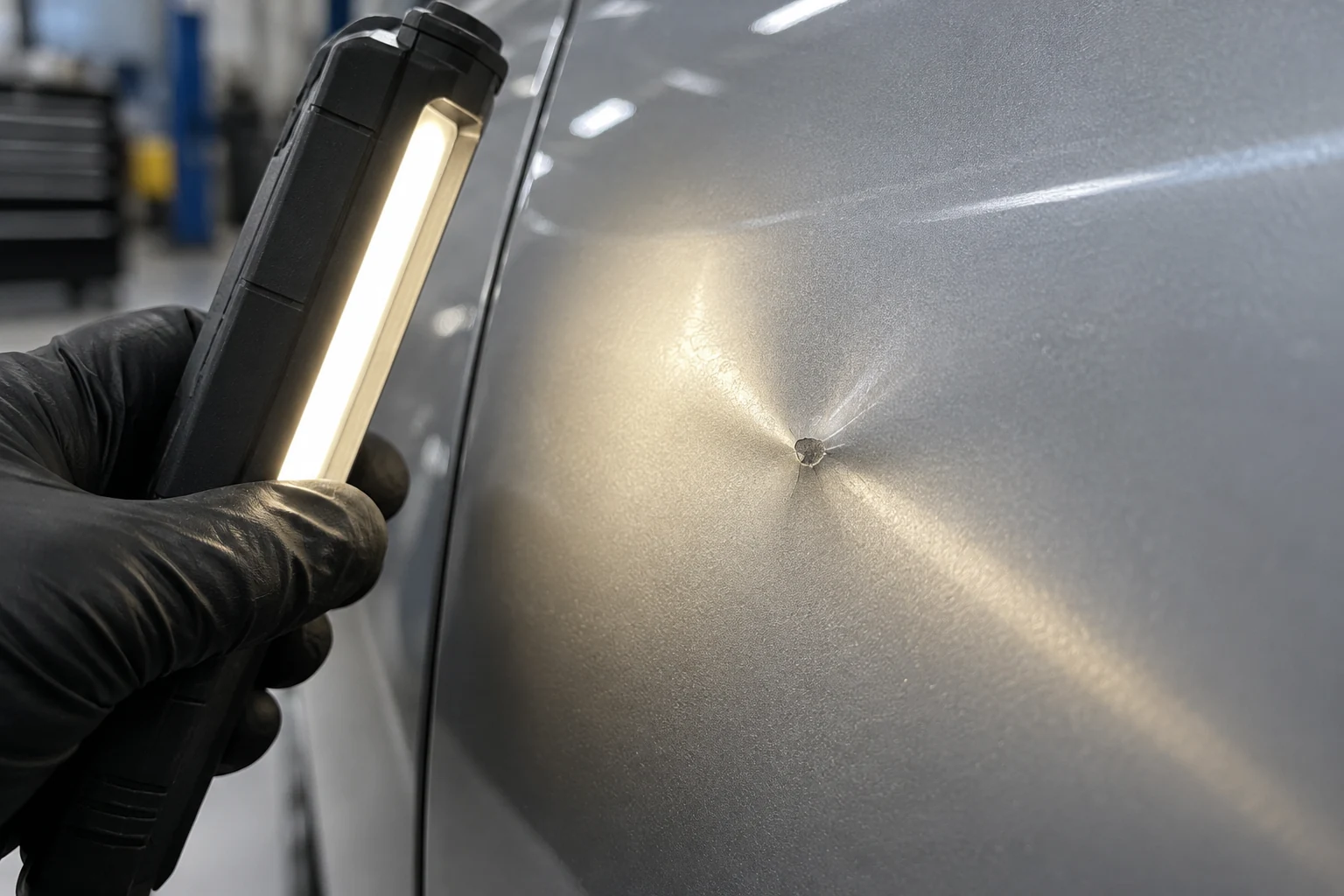
Paintless dent repair needs an unbroken paint surface. The IMI national standard for this work lists paint condition first among the checks, alongside access, damage size and depth, panel type and material.
A chipped dent can still be reshaped, but the chip needs separate finish work. That result should not be described as keeping the original paint untouched.
Paintless repair does not only work from behind the panel. Technicians push, pull, tension and gently strike the metal, and choose the method for each dent.
Long steel rods push the metal out through an existing opening, a lamp aperture or after trim removal. It gives fine control on broad panels.
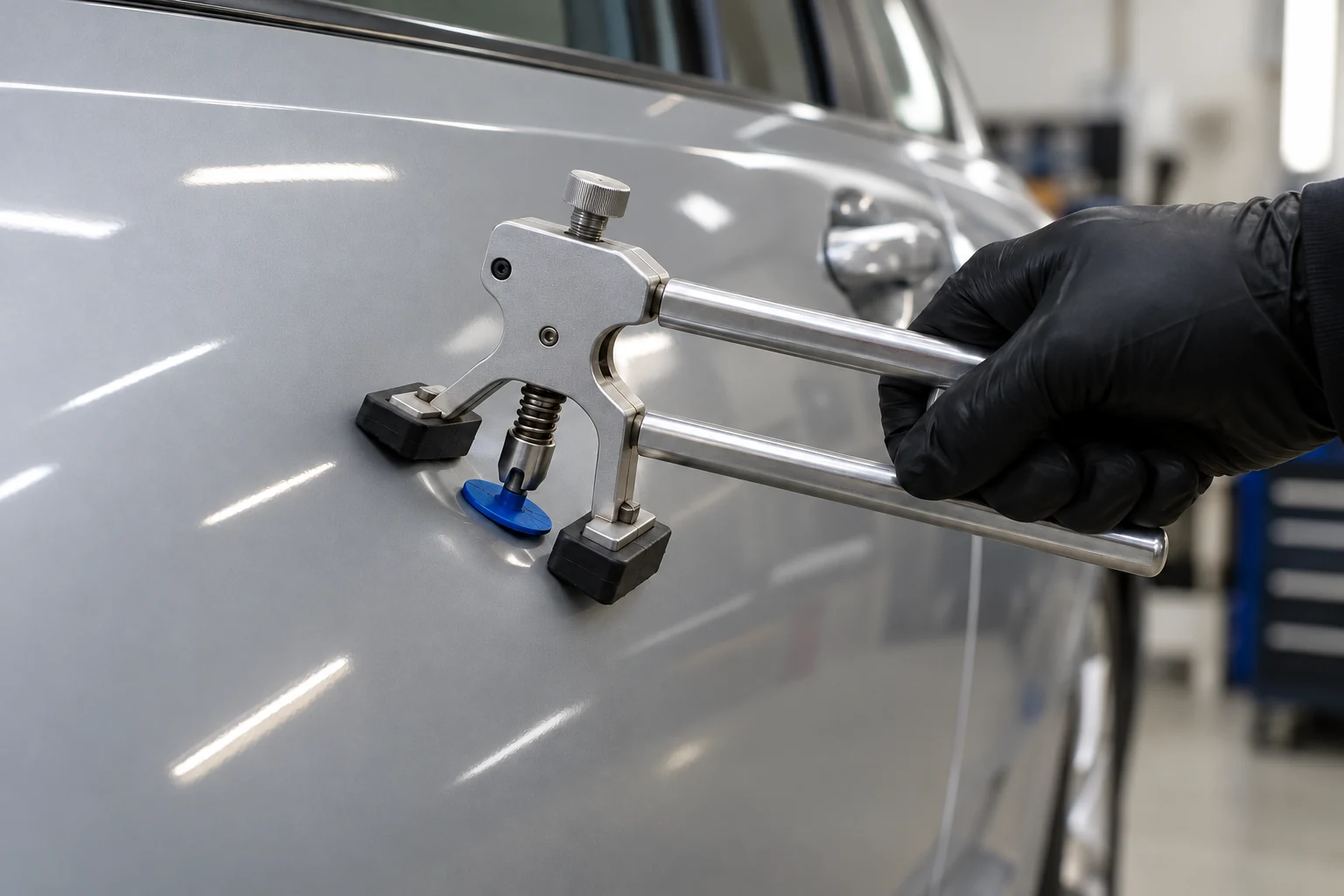
A tab is bonded to the paint with hot glue and pulled with a lifter or slide hammer. It suits dents behind braces, box sections or double skins.
High spots around the dent are knocked down and stress is relieved, so the panel settles back to its shape instead of being stretched.
The IMI standard states that drilling to gain access is not acceptable, and I CAR advises against drilling holes, removing foam or damaging nearby parts to reach a dent.
Tool maker KECO explains that glue pulling is also used in conventional body repair before filler and paint. So a quote that mentions glue pulling does not mean the finish will remain original. Ask which result is being priced, a finished paintless repair or reshaping followed by paint.
A shallow round dent on a broad door and a sharp fold across a body line can measure the same and need completely different work. Depth, sharpness, stretched metal and closeness to a folded edge matter more than diameter.
This scale shows typical difficulty only. The actual decision comes from inspecting your panel under a reflection board.
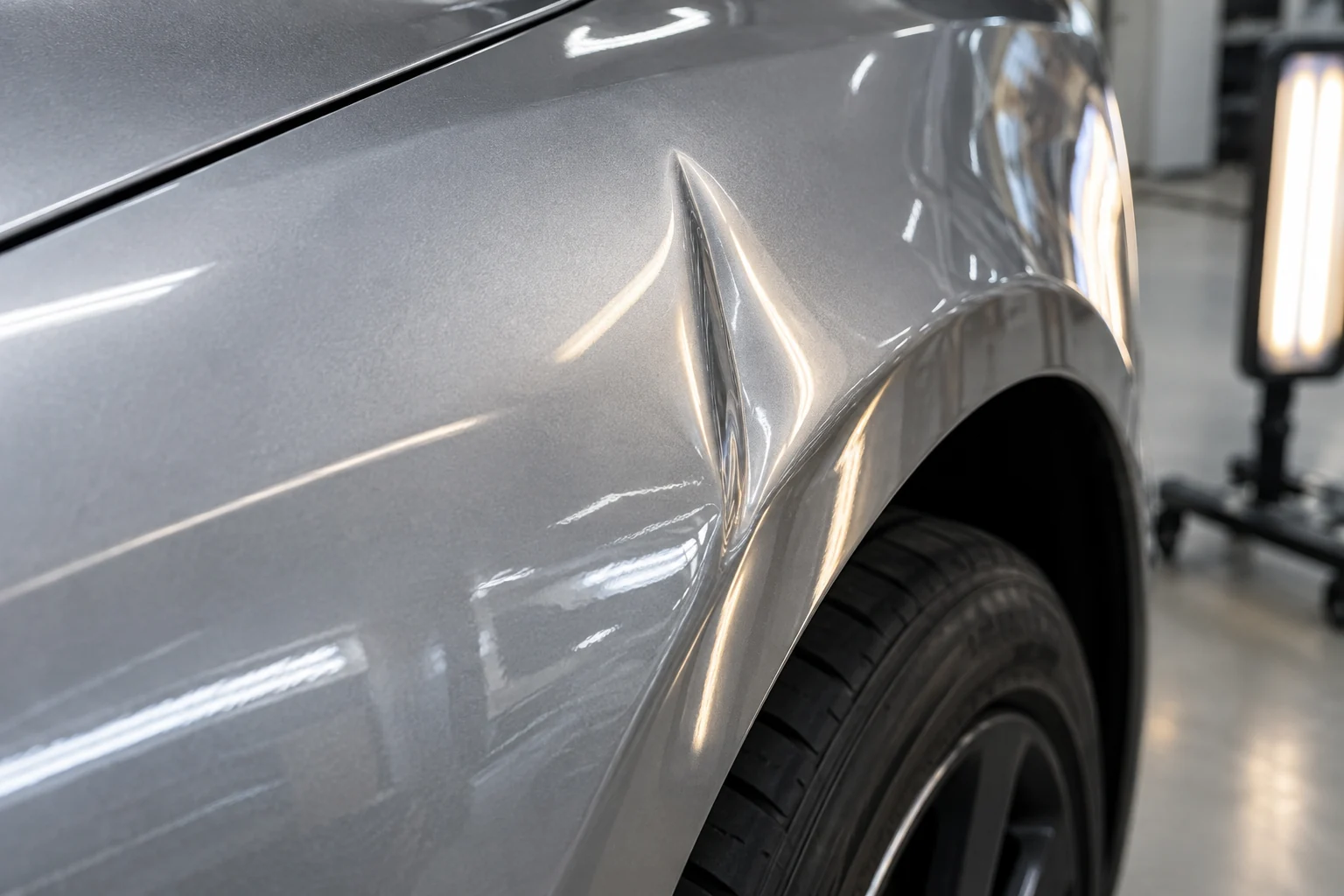
Aluminium work hardens and has less memory than steel, so it does not spring back as easily. Body repair guidance warns that overheating permanently softens it, which is why heat is controlled and measured, not guessed.
Steel is more forgiving to reshape, but it is not automatically simple. Thickness, design and the shape of the damage still set the limit, and bare steel must be protected from corrosion after work.
A bumper cover is a plastic repair, not metal paintless work. Cracks, torn mounting tabs and the sensors behind it change the decision, and heat or filler is not acceptable just because the surface looks smooth.
Carbon roof panels, mirror caps and aero parts cannot be reshaped like metal. Damage to the weave or resin needs a composite specialist or replacement.
The model name does not tell you what every panel is made of. Many current Porsche models combine steel and aluminium, so the repairer should confirm the material of the exact part.
Porsche describes its lightweight bodies as a mix of materials joined by rivets and adhesive more than by welding. That changes what a body repair involves.
Porsche states that bodyshell repairs on new models are carried out only by Porsche approved collision centres. Cosmetic outer panel work is a different job, but anything touching joints, bonded areas or the structure needs the correct procedure and equipment.
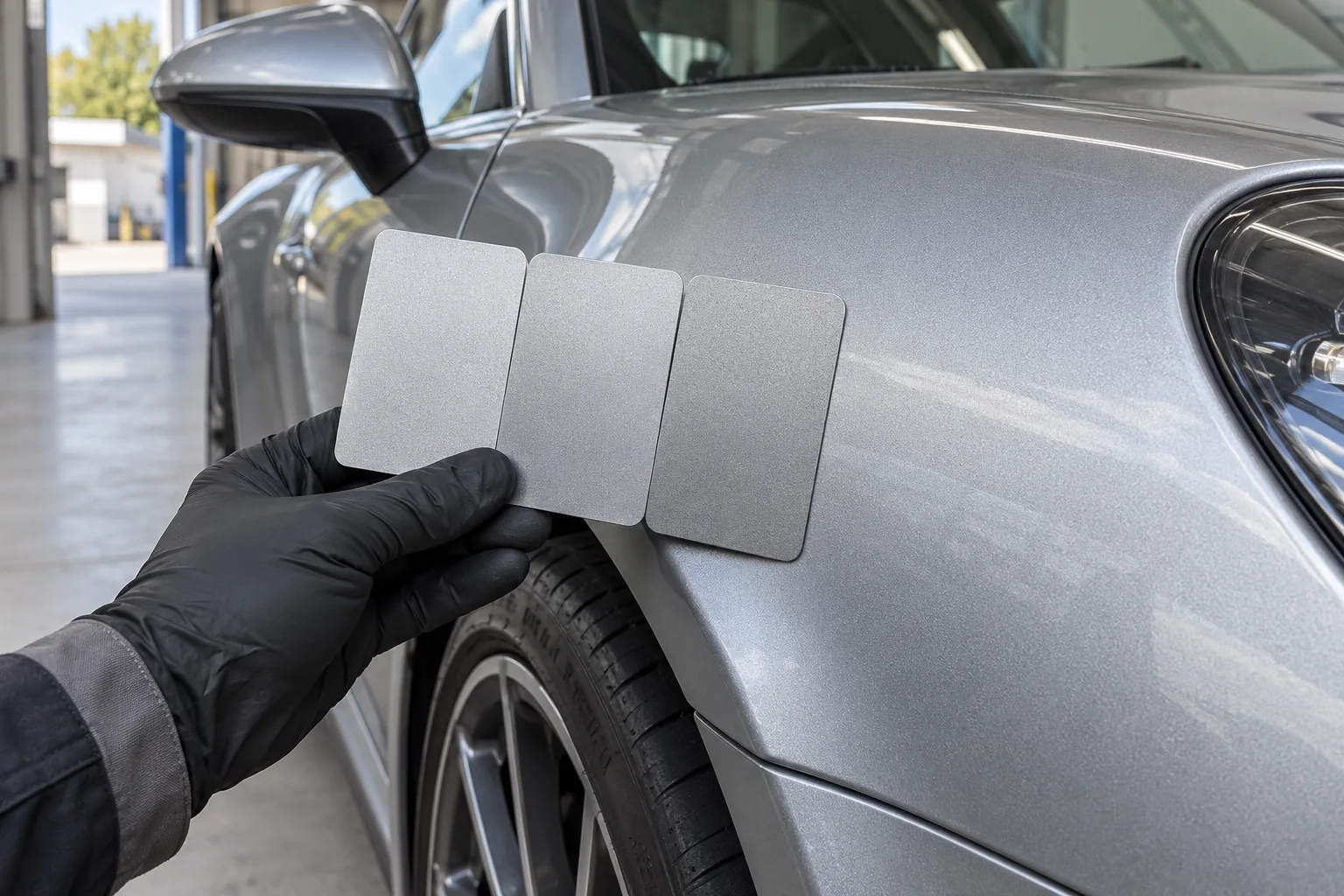
PPG, a major refinish paint maker, includes checking previous refinishing, comparing variants and using spray out cards in its colour identification procedure. A spectrophotometer reading helps, but it does not replace a visual check. Matte and satin finishes need their own repair approach, because normal polishing changes their sheen.
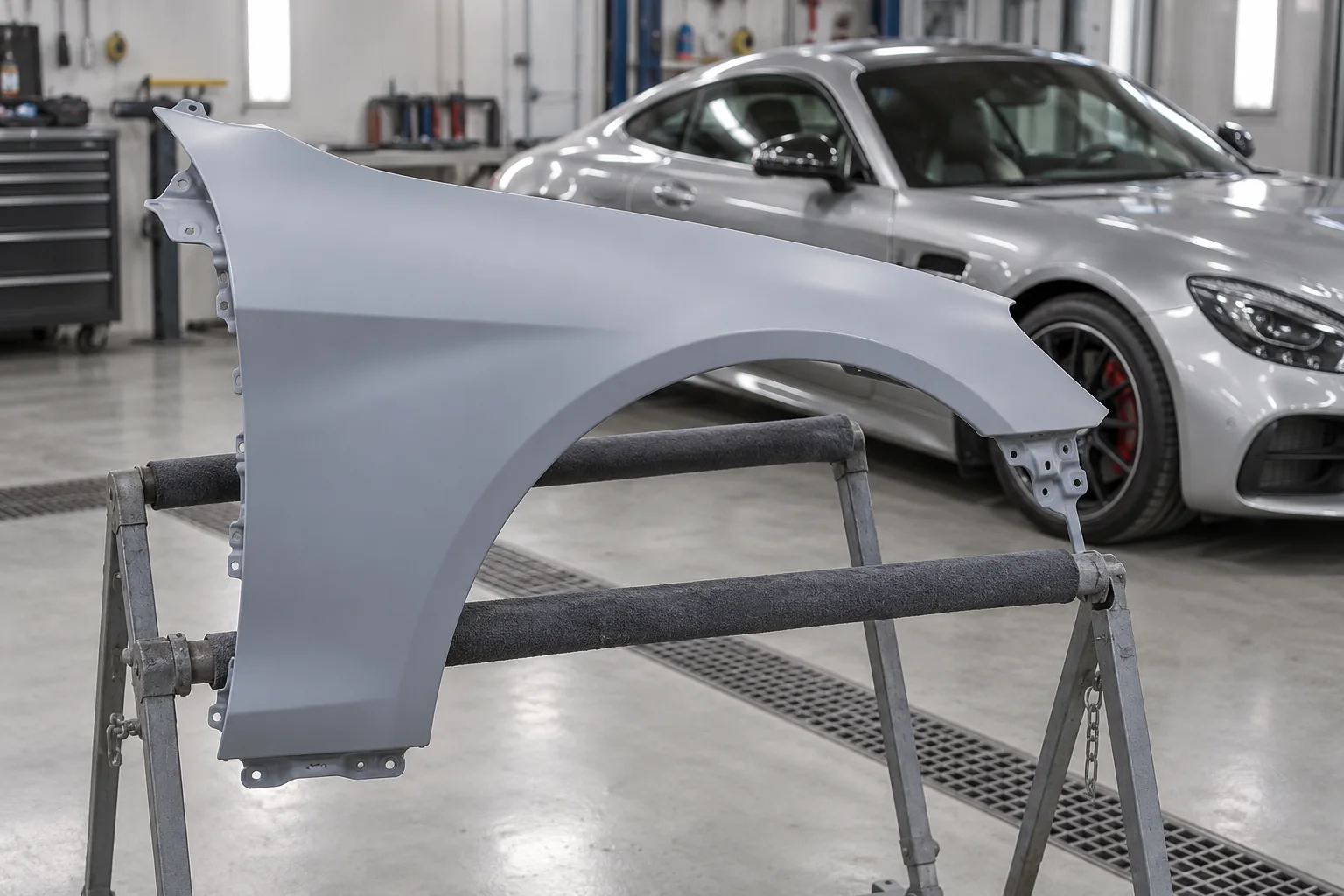
The metal is torn, split or stretched beyond what the repair method allows.
The damage sits in a bonded, riveted or structural area that needs the Porsche procedure.
A bumper repair would sit in a radar or sensor zone where Porsche does not permit it.
Repair time and paint work would cost more than a correctly fitted new part.
A replacement quote should list the part, fitting, corrosion protection, paint, trim and system checks. A new outer panel does not prove that supports or mounting points behind it were inspected.
Porsche has published a position statement restricting repairs to bumpers that affect sensors. It limits work in radar transmission areas, requires approved repair and painting instructions, and says the bumper must be replaced when a repair there is not authorised.
That does not mean every bumper scuff needs a new cover. It means the repairer should identify the fitted assistance systems, the exact repair location and the scan or calibration steps the procedure requires. A warning light going out after work is not proof that every system was checked.
Film can stretch or lift during pulling, and a glue tab cannot bond well through it. The repairer may need to remove the film from that panel first, so ask whether new film is part of the quote.
A coating does not stop a dent and does not prevent paintless repair. If the panel is refinished, the coating on that area is lost and needs reapplying after the paint has cured.
For an insurance claim in the UAE, a police report is usually needed before repair, and the insurer may want its own assessment. The insurer can approve paintless repair, refinishing or replacement, so share the written repair proposal with them before work starts. Keep the photos, the agreed method and the invoice together, because they also help when you sell the car.
Any dent smaller than a coin can be removed without paint.
Size alone does not decide it. A tiny sharp dent on a body line or edge can be harder than a large shallow one on a flat door.
Paintless repair always leaves the panel exactly like new.
Many dents can be fully corrected, but some can only be improved. A good repairer tells you before starting if a trace may remain.
A respray is the safer choice because it covers everything.
Refinishing replaces factory paint with repair paint. Where paintless repair is realistic, keeping the original finish is usually the better result.
A new panel means the car is fully repaired.
The visible part is only one step. Mounting points, supports, corrosion protection and sensors behind it still need checking.
From our paintless dent repair page, including VAT. Trim removal, paint and parts are extra.
From our painting and body shop pages, including VAT. Blending and replacement parts are quoted separately.
| Check | What the quote should say |
|---|---|
| Method for each defect | Paintless repair, refinish or replacement, named for each dent and chip |
| Expected result | Full correction, or improvement with a possible remaining trace |
| Access work | Trim, lamp or liner removal, new clips and checks of refitted parts |
| Paint scope | Which panels get colour, which get clear coat, and whether blending is included |
| System checks | Any scan, sensor or camera calibration required after bumper work |
| Stopping point | What happens and what is charged if the paintless attempt does not work |
| Terms | VAT, timing and written warranty for the work |
Look at the repaired area from several angles in daylight and under a reflection light.
Compare it with the before photos taken from the same angle.
Check colour, sheen and texture on refinished panels and their edges.
Open and close doors, lids and covers that were removed or refitted.
Ask how the protective coating behind the panel was restored, since dent tools can disturb it.
Get the aftercare and washing advice, and the written warranty, for the finish you received.
We only show before and after photos of real jobs with the owner permission, taken from the same angle and light. Ask us for examples on the same panel type as yours.
No. Glue pulling works from the outside on the painted surface, so restricted rear access is a reason to consider it, not a reason to rule out paintless repair.
Often yes, but aluminium is less forgiving than steel and work hardens. The repairer should confirm the panel material and use controlled methods suited to it.
No. Paint does not change the panel shape. The dent has to be repaired first, then the area is prepared and painted.
The dent can sometimes be reshaped without paint, but the chip still needs finish work. That is no longer an untouched original finish.
No. Replacement is right when the damage is beyond the permitted repair or in a restricted zone. A correctly repaired original panel can be the better result.
Not always. Blending depends on the colour, finish and paint system. The quote should name every panel that receives colour or clear coat.
A single suitable dent is often a short job, but access work, several dents or a crease take longer. Ask for the expected time for your specific panel.
A clear photo helps with a first opinion, but it can hide cracks, filler and access limits. The final proposal should state what was inspected.
If keeping the factory paint matters, have the dent assessed first. A home attempt can lift paint or create new high spots that make professional repair harder.
Most Porsche bumper covers are plastic, so they need a plastic repair, not metal paintless work. Sensors behind the cover can also limit what is allowed.
Porsche Repair Dubai is an independent workshop. We are not affiliated with or authorised by Porsche AG.
Send the model year, the damaged panel, a whole panel photo, a close photo and a low angle photo.