Usually refinish
Paint scuff only
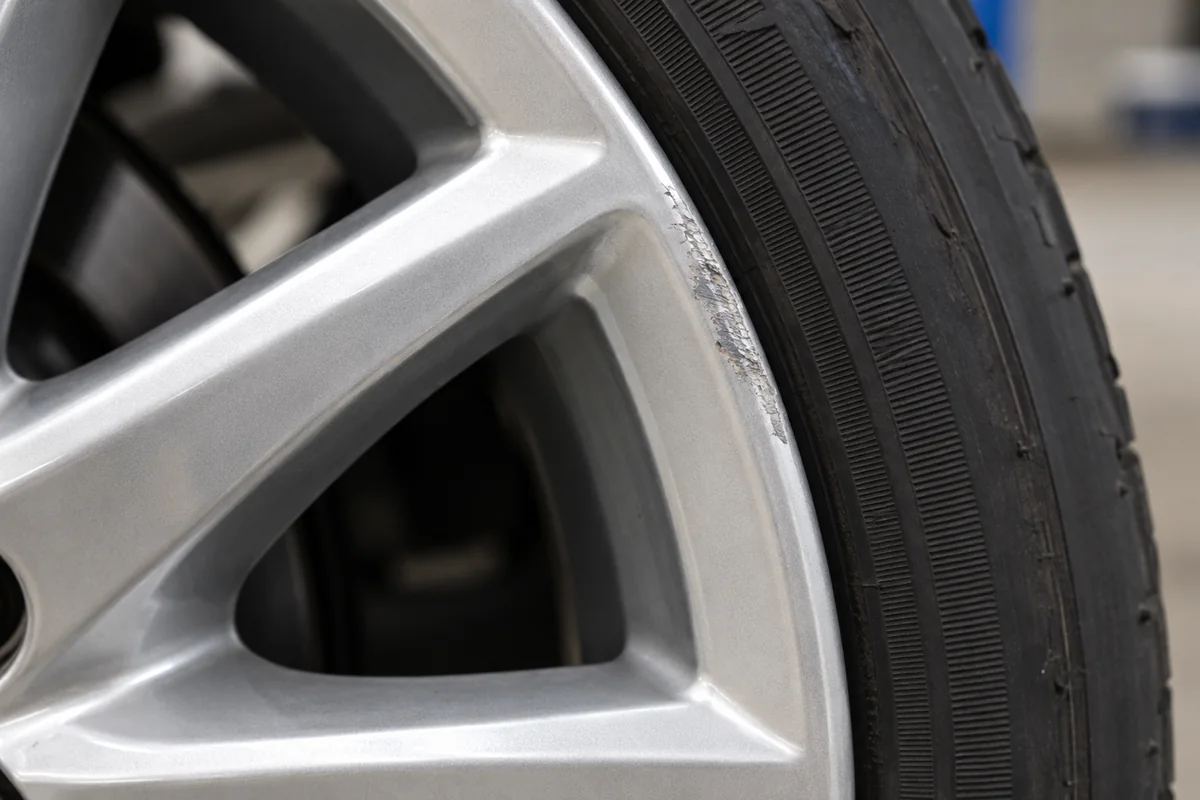
Kerb marks in the coating where no bare alloy shows and the rim edge keeps its shape.
Owner guide, wheels and tyres
A scuffed Porsche wheel can often be refinished. A cracked, bent or gouged one should be replaced. This guide shows how to tell the difference, what an honest inspection measures, and how to compare the real cost of each route.
By Porsche Repair Dubai. Last reviewed 30 October 2026.
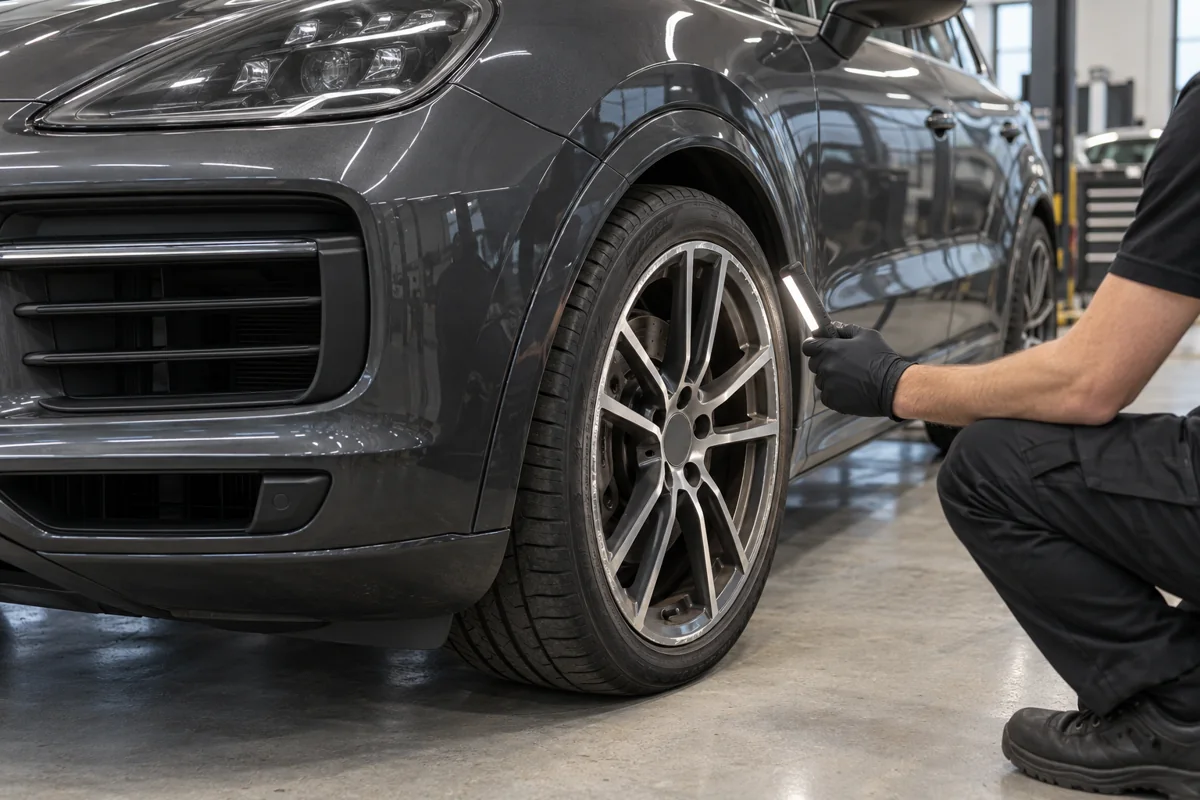
It depends on whether the damage stays in the paint or reaches the metal. Porsche allows paint damage to be repaired. When the alloy itself is cracked, bent or cut, Porsche says the wheel must be replaced.
Usually refinish
Kerb marks in the coating where no bare alloy shows and the rim edge keeps its shape.
Measure first
A wobble, a recent hard pothole hit or a mark you cannot judge. Runout and tyre checks decide.
Replace
Any crack, bent lip or spoke, missing metal or damaged bolt holes means a new wheel, not a weld.
Why Porsche is strict
Porsche designs its wheels to be as light as possible, because lower unsprung mass helps the suspension keep the tyre on the road. That means thin walls and thin rim flanges, so there is very little spare metal to remove or reshape.
In its position statement on rim repairs, Porsche says that damage to the base material requires a new wheel, and that repairs which heat, add or remove metal can affect safety. A Porsche spokesperson also explained that checking whether a third party repair is acceptable is beyond what the aftermarket can verify.
Read this from top to bottom. The lower the damage sits on the ladder, the more firmly it points to replacement.
The colour coat is marked but no silver alloy shows through. This is the classic candidate for a paint repair on an eligible painted wheel.
Common on older wheels and after harsh cleaning. It can be refinished once the extent is clear, but corrosion that has eaten into the metal needs a closer look.
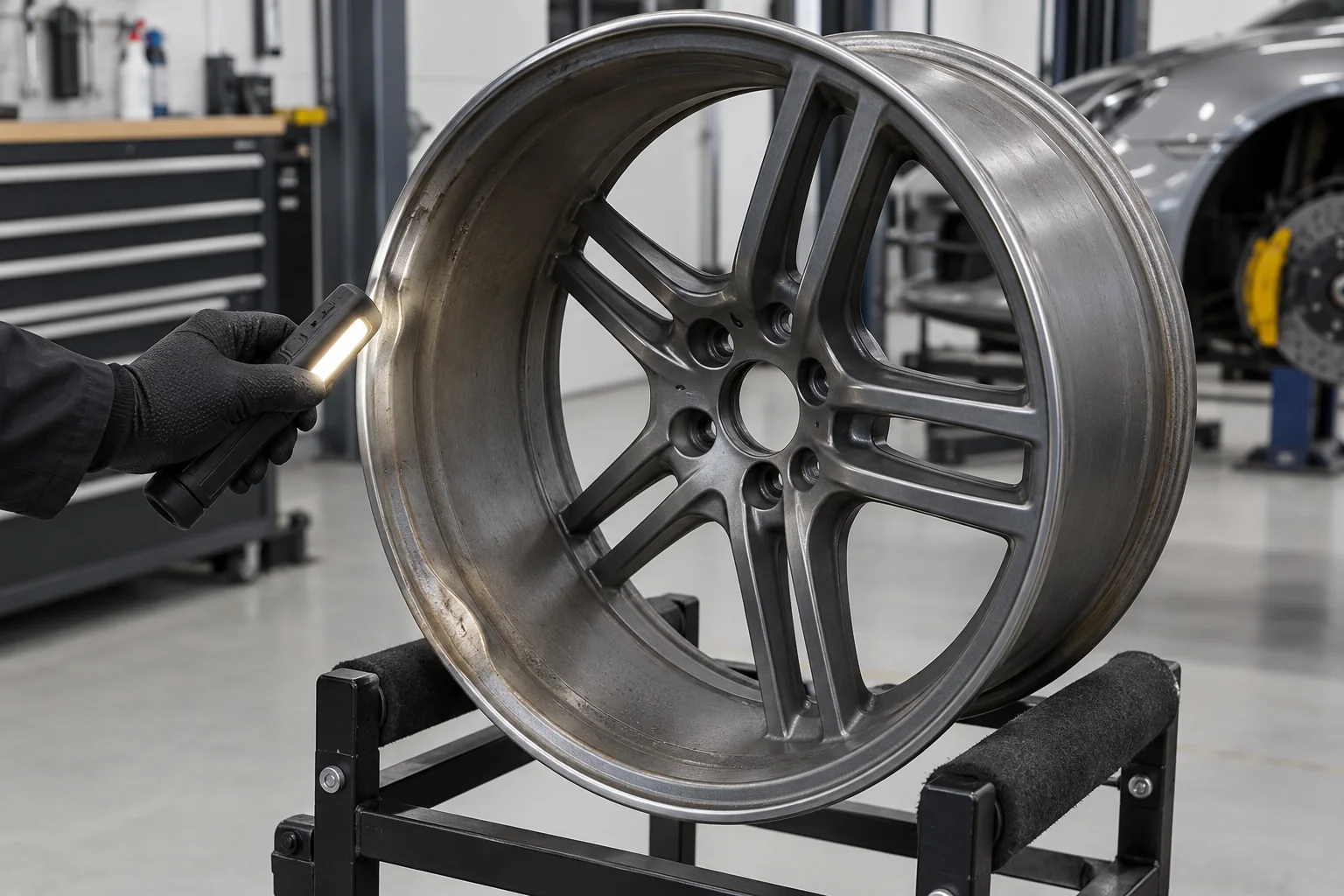
If you can see or feel cut metal, the damage has gone past the paint. Filling or machining it away removes metal the wheel was designed to keep.
Often caused by a pothole or a hard edge at speed. Straightening reshapes the alloy and is outside what Porsche allows on its wheels.
A crack can grow with every turn of the wheel. Welding it adds heat and new metal, which changes the strength of the alloy around the repair.
These areas locate the wheel on the hub and carry the clamping load. Any damage here is a safety issue, never a cosmetic one.
| Wheel type | How it is made | What it means for repair |
|---|---|---|
| Cast alloy | Molten aluminium poured into a mould. Common on many road wheels. | Paint damage may be refinished. Cracks and bends still mean replacement. |
| Flow formed | A cast centre with the barrel rolled thinner under pressure for strength and low weight. | Thin barrel walls leave almost no metal to spare, so material repairs are out. |
| Forged | Shaped from a solid billet under very high pressure. Used on many performance wheels. | Volkswagen workshop guidance says forged wheels should not even be repainted. Follow the exact wheel instructions. |
| Centre lock | One large central nut instead of five bolts, used on GT and some Turbo S models. | The seat and nut contact faces must be perfect. Fitting follows a strict Porsche torque procedure. |
| Machined or diamond cut face | A bright face cut on a lathe, usually sealed with clear coat. | Recutting removes metal each time. Some makers say clear coat only machined wheels should not be repaired. |
Most wheel repair adverts mix two very different jobs. Keep them apart when you read a quote.
Volkswagen workshop guidance on restoring alloy wheels, from the group Porsche belongs to, lists welding, heat treatment, adding or removing material and reforming as not allowed, and says rims with cracks at the edge must be replaced immediately.
A photo can start the conversation, but it cannot clear a wheel. These are the checks that turn a guess into a decision.
01
Part number, size, width, ET offset and whether it is genuine Porsche or aftermarket. The badge on the car does not tell you which wheel is fitted.
02
Brake dust and sand hide hairline cracks. Photos before any sanding keep a record of the original damage.
03
The inner barrel takes most pothole hits and is the part owners never see. Cracks there are easy to miss from outside.
04
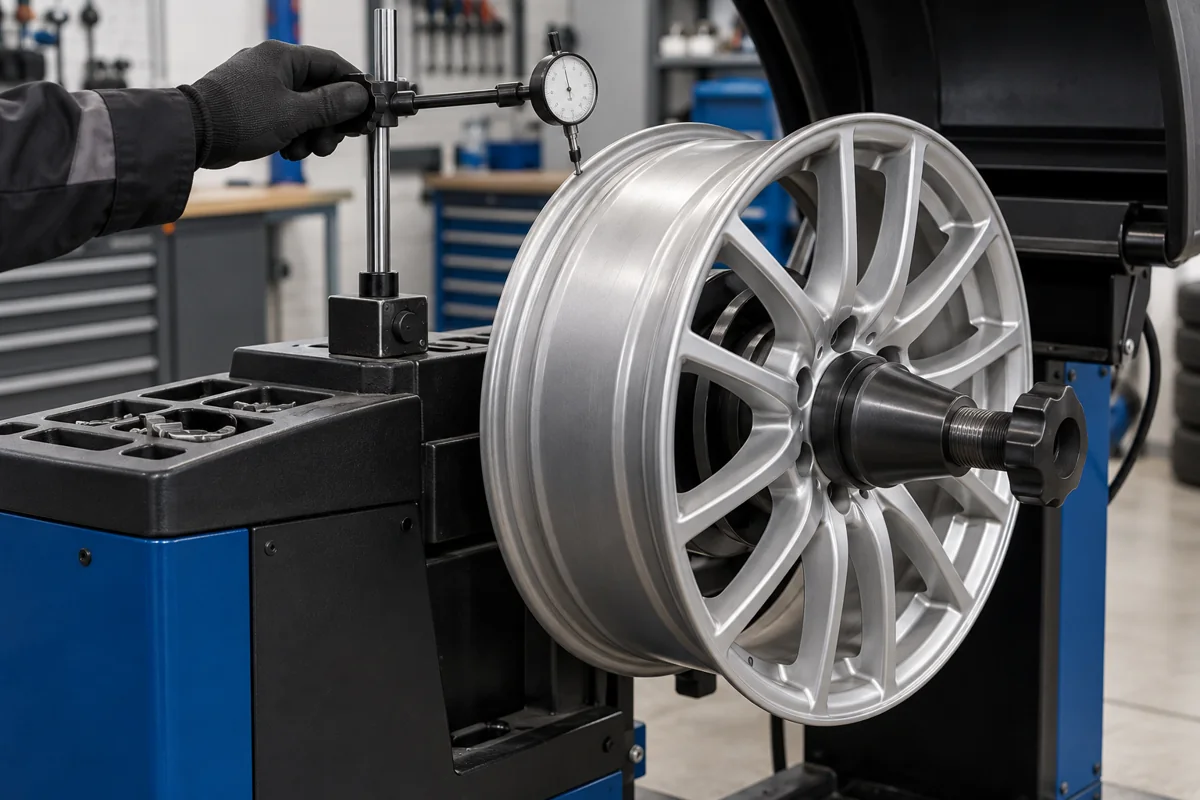
Lateral runout is side to side wobble. Radial runout is up and down. Measure the bare wheel as well as the tyre and wheel together.
05
Dye penetrant testing is a common way to make fine cracks visible in metal. If a crack is confirmed, the outcome is replacement.
06
The tyre is often demounted to check both sidewalls and the bead seat, where the tyre seals on the rim.
Spreads the weight of the tyre and wheel evenly so it spins smoothly. Balance weights cannot fix a bend or a crack.
Measures how far the wheel moves out of true as it turns. A high reading on the bare wheel points to the rim, not the tyre.
Sets the angles of the wheels on the car. After a hard impact it is worth checking, but it never repairs a damaged wheel.
Volkswagen workshop guidance sets a limit of 0.8 mm radial and lateral runout before a wheel can even be considered for cosmetic restoration. Your workshop should quote the limit for your exact wheel, not a figure copied from another model.
Do not forget the tyre
Yes. Michelin explains that a bulge on the sidewall means the internal structure has been damaged and the tyre can lose pressure suddenly. Bulges can sit on the inner sidewall where you cannot see them, and a deep sidewall cut cannot be repaired.
A tyre pressure warning, a slow leak, a new vibration or the car pulling after a hit.
A new wheel does not clear the old tyre, and a new tyre does not make a damaged wheel safe.
If the car was driven on a soft tyre, the tyre needs inspecting from the inside.
Looking the same is not enough. Give the supplier your VIN, the wheel part number and which corner it is for, because front and rear wheels often differ.
Porsche service information for centre lock wheels on the 911 and 918 says impact tools must never be used on the centre nut, torque multipliers are no longer approved, the wheel should be tightened to the final value in one smooth movement with a calibrated torque wrench, and new parts are tightened and released three times before the final pass. Ask any workshop how it follows this.
An aftermarket wheel follows its own maker rules, not Porsche ones. In North America, many aftermarket wheels are tested to SAE J2530, which covers radial fatigue, cornering fatigue and a kerb impact test. Ask the seller which standard a wheel meets and for its fitment approval for your model.
The BBS manual for its forged wheels, for example, says deformed or cracked wheels must not be repaired. That rule belongs to BBS products, but it shows how wheel makers think.
The cheapest quote is not the right answer if the wheel is not eligible for repair. Compare like with like.
Planning budget from our rim repair page, including VAT
Assessment confirms eligibility first. Colour match, tyre removal, balancing and TPMS parts are itemised separately.
A cheap weld or straightening job can look like a saving, but it leaves you with a wheel of unknown strength and a repair you may need to declare when you sell the car. A refinish on an eligible wheel, or a correctly fitted replacement, gives you a result you can document.
Replacement wheels are quoted by part number and availability, so there is no fixed price here.
If the damage came from an accident or a road hazard, ask your insurer before approving work whether wheel and tyre replacement is covered. Keep the photos taken before any work and the written findings, because they explain why a wheel was replaced rather than repaired.
A good workshop will answer these without hesitation. Vague answers are a warning sign, whatever the price.
Is the damage only in the paint?
Ask them to show you where the coating ends and the alloy begins. If bare metal is cut or the lip has moved, it is not a paint job.
Which wheel is it?
A clear answer names the part number, size and offset, and whether it is genuine Porsche or aftermarket.
Was the inner barrel checked?
Most pothole damage sits on the inside. A front face inspection alone cannot clear a wheel after a hard hit.
What were the runout readings?
If there is vibration, ask for the measured figure and the limit used, on the bare wheel and with the tyre fitted.
What happens to the tyre?
Ask whether the tyre was demounted and checked on both sidewalls, and why it is being kept or replaced.
What is the written warranty?
For an eligible refinish, ask what the warranty covers, such as colour match and peeling, and for how long.
It will not weld a crack, straighten a bent Porsche rim or machine out a gouge and call it cosmetic. It will not hide earlier repairs under fresh paint, and it will not tell you a wheel is safe because it holds air or balances well. If a shop offers any of these on a genuine Porsche wheel, ask which Porsche instruction allows it. The honest answer is that none does.
Two published documents show why a replacement wheel is confirmed by VIN and part number, not by diameter or spoke design.
It lists each approved wheel by axle position, size, offset and part number, with limits tied to particular equipment. It is a dated example for listed 992 models, not a fitment list for every 911.
It stresses identifying each component, matching the mounting interface and respecting the load rating of the whole wheel and tyre system. A tyre load index does not certify the wheel itself.
Ask whether the current pressure sensor can move to the new wheel or needs replacing, which learning steps your model uses, and whether the old tyre is still fit to transfer after the impact.
Porsche says damage to the base material requires a new wheel. A weld may hold air, but it adds heat and new metal and cannot be proven to restore the original strength. Replace a cracked wheel.
No. Kerb rash only describes how the mark happened. If the damage stays in the paint it can usually be refinished. If it has cut into the alloy or bent the lip, it is no longer cosmetic.
Straightening reshapes the alloy, which Porsche does not allow on its wheels. A bent lip or flat spot points to replacement, after checking the tyre as well.
For eligible paint only damage, our rim repair page gives a planning budget of AED 275 to 500 per wheel including VAT. Replacement wheels are quoted by part number.
It could be a bent wheel, a damaged tyre, lost balance or a suspension part. Runout, balance and a tyre check separate these causes. Do not drive faster to see if it clears.
Recutting removes metal every time, and some wheel makers say clear coat only machined wheels should not be repaired. Check the instructions for your exact wheel first.
Not always. The existing sensor can often be moved across if it is undamaged and its battery is healthy, but it must suit the new wheel and your car.
It can be, if the part number matches your car and the wheel passes a runout and crack check. Fresh paint can hide an old weld, so ask for its history.
Volkswagen workshop guidance notes that the maker guarantee no longer applies once a wheel has been restored. Keep records of what was done and by whom.
Send us
Your model and year, a photo of the whole wheel, a close up of the damage, and any vibration or pressure warning.
Porsche Repair Dubai is an independent workshop in Al Quoz. We are not affiliated with or authorised by Porsche AG.
