
Stone chips on the front
Film on the exposed panels
Motorway driving on the E11 and E311 throws grit at the bumper, bonnet leading edge and mirrors. A film absorbs much of that impact. A coating is far too thin to do so.
Owner guide, paint protection
Paint protection film is a physical layer that absorbs stone chips on the panels it covers. A ceramic coating is a thin cured layer that makes paint easier to clean. They solve different problems, so the right choice starts with what you want to stop, not with which product claims the longest warranty.
By Porsche Repair Dubai. Last reviewed 30 October 2026.
What sits on the paint
Film thickness from published XPEL and 3M data sheets. Coating figures vary by product.
1
If stone chips on the bonnet, bumper and mirrors worry you most, only a fitted film gives a physical barrier. A coating does not.
2
If you mainly want easier washing, more gloss and less sticking of dust and fallout, a coating answers that, and it costs less to cover the whole car.
3
Film on the exposed front plus a compatible coating elsewhere is common. Coating over film only helps if the film maker approves the pairing.
Match your main worry to the product that actually addresses it. The table is a starting point, not a quote.
Film on the exposed panels
Motorway driving on the E11 and E311 throws grit at the bumper, bonnet leading edge and mirrors. A film absorbs much of that impact. A coating is far too thin to do so.
Ceramic coating
Hydrophobic coatings shed water and make sand, dust and bird residue easier to lift. They reduce wash marring, they do not stop it.
Film where scuffs happen
Door edges, door cups and the rear wheel arch area on wide body cars pick up marks. Self healing film can recover from light surface marks with heat.
Neither, correct first
Neither product repairs damage. Chips need paint repair and swirls need correction before anything is applied, or they are sealed in.
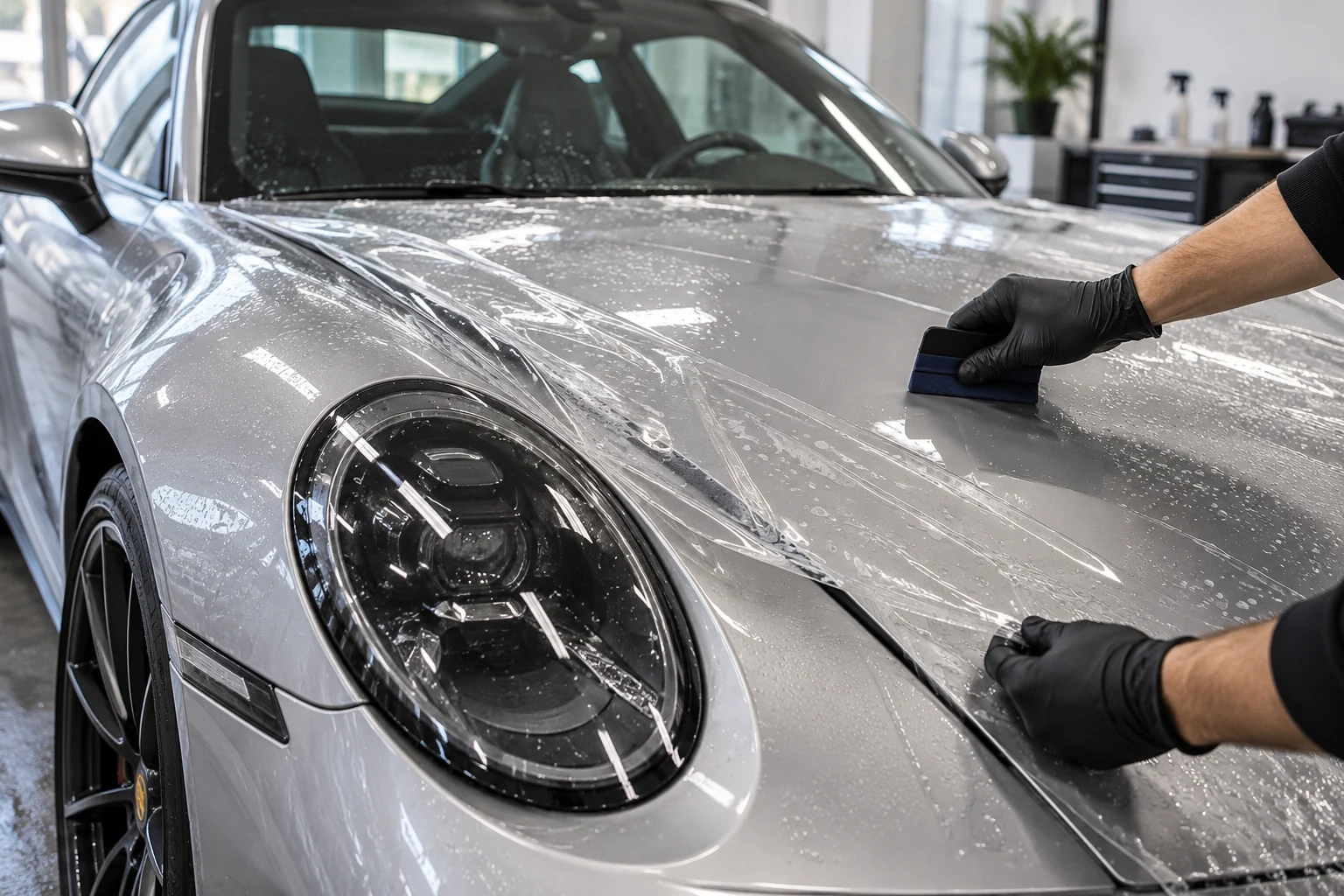
Modern PPF is a clear thermoplastic polyurethane sheet, usually called TPU, with a pressure sensitive adhesive on one side and a clear top coat on the other. 3M describes its Scotchgard Pro Series as an 8 mil, or 203 micron, thermoplastic polyurethane film with a self healing surface and a UV resistant clearcoat. The XPEL ULTIMATE PLUS data sheet lists a nominal 193 microns, about 7.6 mil, including a 12 micron clearcoat.
Porsche itself sells a body protection film through its own network in some markets, which tells you film is an accepted way to protect factory paint rather than an aftermarket gamble. What matters is the product, the installer and how carefully the panels are prepared.
A coating suits owners who wash often and want the car to stay cleaner between washes. Film suits owners who drive long distances, park on the street or keep the car for many years and want the original paint to stay chip free.
That thickness is the point. It is roughly fifty times thicker than a typical cured coating, which is why film can absorb a stone that would otherwise chip the paint.
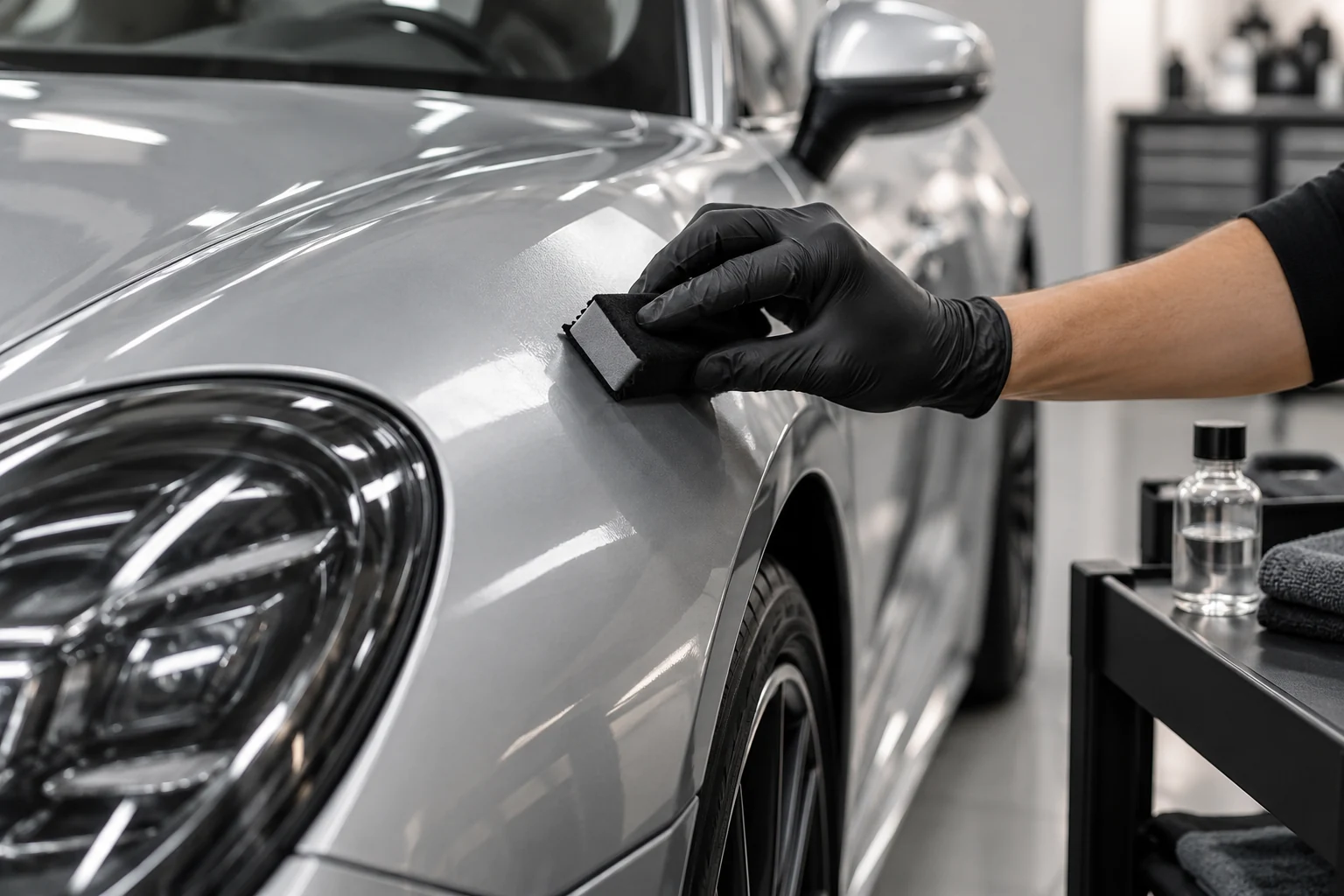
A ceramic coating is a liquid, usually based on silicon dioxide, written SiO2, or in some newer products silicon carbide, SiC. It is wiped on, levelled and left to cure into a thin hard layer that bonds to the clearcoat. Its strengths are chemical resistance, gloss and a slick hydrophobic surface that sheds water and dirt.
It is not armour. A coating is only microns thick, so a stone that would chip bare paint will usually chip coated paint too.
| Question | Ceramic coating | Protection film |
|---|---|---|
| Stone chips | Little real protection | Absorbs much of the impact on covered panels |
| Light wash marring | Reduces it by making the surface slicker | Top coat can self heal light marks |
| Chemical and bird residue | Good resistance on most products | Good, but remove promptly to avoid staining |
| Coverage | Usually the whole car, plus wheels and glass if chosen | Chosen panels, from front end to full body |
| Look | Extra gloss, no visible edges | Near invisible, edges can show up close |
| Removal | Wears away or is polished off | Peeled with heat, adhesive cleaned off |
| Matte paint | Only products approved for matte | Matte or satin film exists for matte paint |
Product warranties are useful, but they promise something narrower than most owners assume. These are published terms for named products, checked on 30 October 2026. They are examples, not the terms of any particular installation in the UAE.
XPEL ULTIMATE PLUS and STEALTH film
10 years
A limited product warranty against defects such as yellowing, cracking, blistering and delamination, with professional installation and listed exclusions.
SunTek Reaction film
12 years
A limited manufacturer warranty stated on the regional product page for professionally sold and installed film.
3M Scotchgard Pro Series film
7 or 10 years
The UK product page states both figures in different places, which shows why you should ask for the written warranty that applies to your car.
Gtechniq Crystal Serum Ultra coating
9 years
A guarantee against staining or discolouration, needing accredited application, registration and inspections every 12 months. It excludes scratches, abrasion and stone chips.
Porsche body protection film
10 years
Porsche China lists a 10 year warranty for the film sold through its own dealers, and refers coverage questions to authorised dealers.
Other well known brands such as STEK and Gyeon publish their own terms, which change between product lines. Read the exact product version, not the brand name.
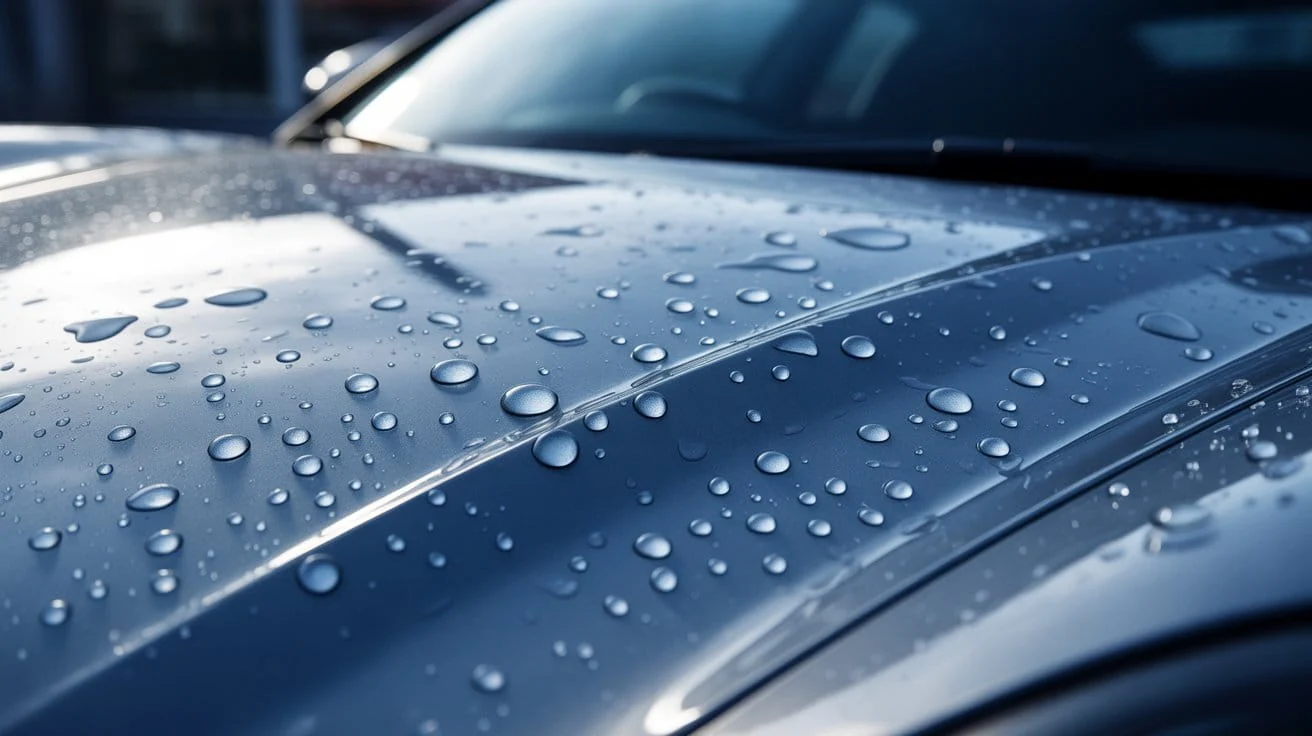
Not on its own. Beading is a surface behaviour, and it often drops because a film of road grime or wash residue is sitting on top. A proper decontamination wash frequently brings it back.
For film, the useful checks are lifted edges, cuts, yellowing and staining on the panels covered. For a coating, ask whether the surface has been cleaned correctly before anyone proposes stripping and reapplying it. Our guide on how to wash a Porsche safely covers the products and pressure limits that keep both working.
The UV index in the UAE reaches the extreme band through summer. Choose film and coatings with stated UV resistance, and park in shade where you can.
Fine sand on the road surface is a constant source of small chips on the nose. This is where film earns its cost.
Panels in the sun get hot enough to bake on bird residue and spray quickly. Wash in shade and remove residue the same day.
Water left to dry leaves mineral spots on both film and coating. Dry with a clean microfibre towel or a blower.
None of this sets a fixed replacement date. Film and coatings age with mileage, storage and care, so plan from the condition of your own car and the written instructions for the products fitted, not from a number in an advert.
Package names vary between installers, so always ask for a written panel list. These are the common levels.
Partial front
Front bumper, part of the bonnet, part of the wings, mirrors. Visible line across the bonnet.
Full front
Front bumper, complete bonnet, complete front wings, mirrors, often headlights.
Track and high impact
Full front plus rocker panels, rear wheel arch area and door edges.
Full body
Every painted panel. Highest cost, no visible line between protected and unprotected paint.
Keep film away from sensor zones
A Porsche technical bulletin from November 2025 lists protective film or stickers near driver assistance sensors as a possible cause of incorrect warnings, and tells technicians to keep those areas clear. Radar behind the bumper, parking sensors and cameras need to be checked against Porsche requirements for your model and equipment before bumper coverage is agreed.
Both products lock in whatever is underneath. A sound plan starts with a paint condition check and a written note of chips, scratches, swirls, thin clearcoat and any previous repaint.
Porsche published a bulletin in 2024 warning that the stress of applying protection film can lift factory clearcoat where it is weaker than its bond to the layer beneath, and asking for extra care on complex shapes. Film should never be sold as a safe way to cover paint of unknown condition.
If a panel has been repainted, the paint system and the film maker both need to approve the finish and the waiting time before film goes on. For chips and refinishing, see our Porsche painting and paint repair page.
Check the film
Many films already carry a hydrophobic top coat. Ask what the coating adds.
Check approval
Use a coating the film maker approves. XPEL, for example, discusses its own FUSION PLUS coating for film.
Check warranty
An unapproved coating or solvent can affect the film warranty. Get it in writing.
Coating the film makes it slicker and easier to clean. It does not widen the area the film covers or make it more resistant to impacts.

Film
Old film is warmed and peeled slowly, then any adhesive residue is cleaned off with a product safe for the paint. Sound factory paint usually comes through well. Weak clearcoat or poorly prepared repaint can lift, which is why removal needs care and a paint check first.
Coating
A coating does not peel. It wears gradually or is polished away during paint correction, which removes a little clearcoat each time. That is worth knowing before you plan repeated reapplications.
Two prices are only comparable if they describe the same product, the same panels and the same preparation. Ask every installer for these details in writing.
We do not publish coating or film prices on this site. Costs depend on the product version, coverage, preparation and how much trim is removed.
A 9H coating stops scratches
The pencil scale is not a scratch rating. Coatings reduce light marring, not chips or deep scratches.
A 10 year warranty means 10 years without chips
Warranties cover product defects. Chips and cuts are excluded on the terms we checked.
Self healing film repairs dents
It only recovers light surface marks in the film. A dent in the panel needs separate repair.
Protection guarantees higher resale
Clean, chip free paint helps a sale, but no product guarantees a price. Keep records so buyers can see what was done.
Insurance is separate too. Ask your insurer whether film on a damaged panel is covered when that panel is repaired.
It depends on the exact product, the coverage and the care. Published film warranties we checked run 10 to 12 years and one coating guarantee runs 9 years, but those terms cover defects, not wear or impacts.
If the car does regular motorway driving, film on the full front is the most practical way to avoid stone chips on the bonnet and bumper. A garage kept car used lightly may not need it.
No. A coating is only microns thick and does not absorb stone impacts. It is a cleaning and gloss product.
Quality gloss film is close to invisible on sound paint. Matte or satin film changes gloss paint to a satin look, so choose the finish on purpose.
Yes, using matte or satin film made for it. Use only coatings and cleaners approved for matte finishes, and never polish matte paint.
It can. Porsche guidance asks for film and stickers to be kept off defined sensor areas. Check the requirements for your model before bumper coverage is agreed.
Follow the curing time stated for the exact product. Times differ between coatings, so do not copy advice from another brand.
Sound factory paint usually survives careful removal. Weak clearcoat or poorly prepared repaint can lift, so have the paint checked before removal.
Only when the film maker approves the coating. It makes the film slicker and easier to clean, nothing more.
The invoice with product name and version, the panel list, the installation date, the warranty registration and any inspection stamps.
Send your model, year and a few photos of the bonnet, bumper and mirrors. We can check the paint condition, point out chips and repaint, and explain which protection route suits how you drive, before you spend money on either.
Talk to the workshop
Porsche Repair Dubai is an independent workshop in Al Quoz. It is not affiliated with, endorsed by or an authorised dealer of Porsche AG. Brand and product names belong to their owners.