Wind noise
- A thin whistle, hiss or rush of air.
- Changes with crosswind, window position and roof setting.
- Often stays the same on different road surfaces.
- Usually sits high on the body, near glass, mirror or roof.
Owner guide, body, glass and seals
A whistle at the top of the door glass, a rush of air by the mirror or a hum that grows with speed. These sounds feel alike from the driver seat, yet they come from very different places. This guide explains how to tell wind noise from tyre and wheel bearing noise, where air usually gets past a Porsche seal, what Porsche itself has documented, and how a workshop proves the source before anything is replaced.
By Porsche Repair Dubai, independent workshop in Al Quoz. Last reviewed 30 October 2026.
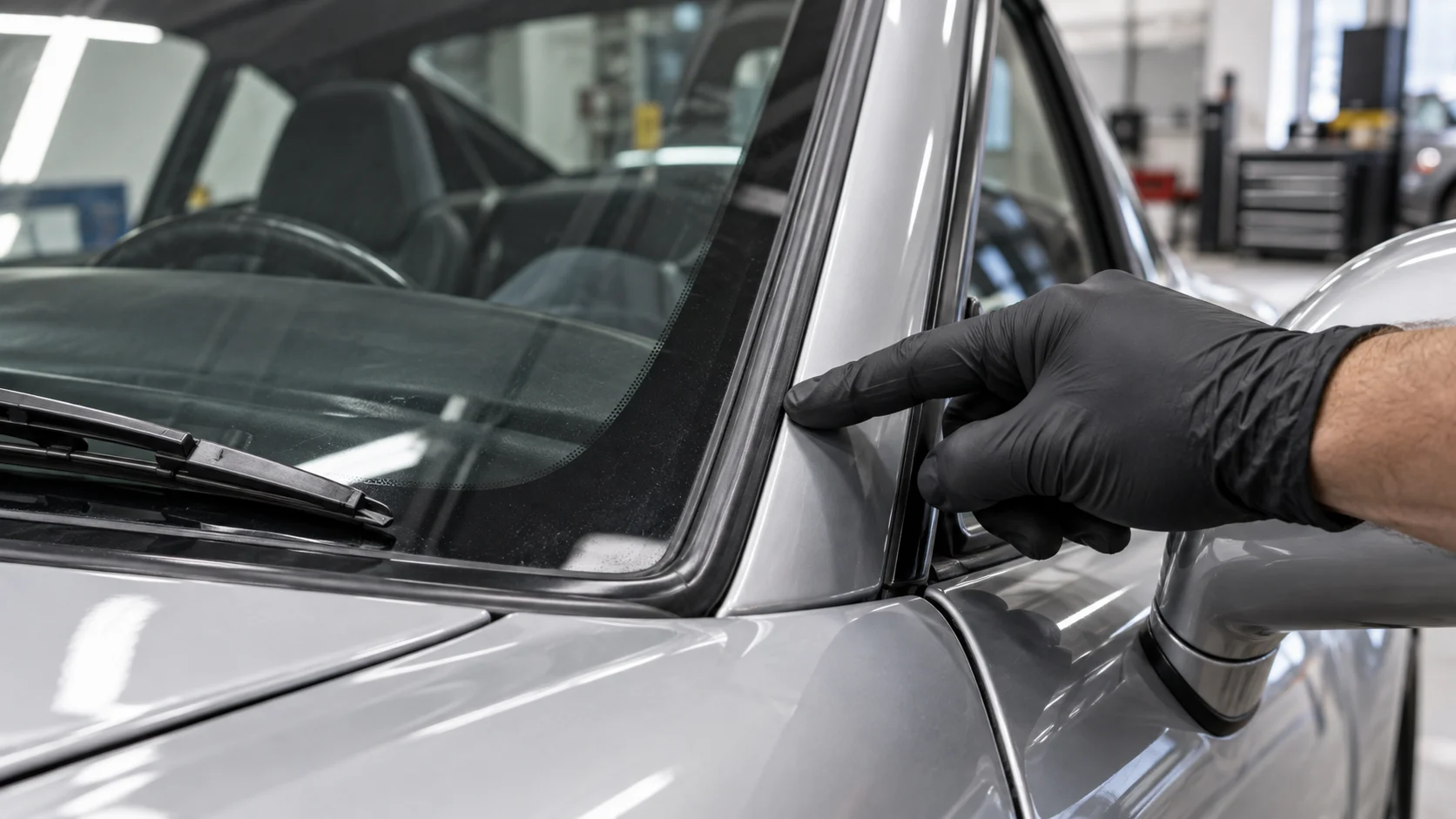
Most wind noise comes from air passing a gap or an edge that is not sealing as designed. Common points are the top edge of frameless door glass, the windscreen moulding near the roof, the mirror base and the seals around a sunroof, Targa or convertible roof. Glass that sits slightly out of position after a repair is a frequent trigger.
A deep hum or roar that follows road speed is usually not wind. It is more often tyre noise from the tread pattern or uneven wear, or a wheel bearing. A squeak when a door opens or closes is seal friction, not wind noise. Each needs a different test, so the source is proven before any seal or glass is replaced.
Step one
Listen for how the sound behaves, not only where it seems to come from. Sound travels through the body shell and trim, so the part nearest your ear is not always the source.
Tyre makers separate rolling noise, aerodynamic noise and powertrain noise as different sources, which is why a new set of tyres or a rougher surface can change what you hear without any new air leak. Bearing specialists also warn that the perceived position of a bearing noise can mislead. Sources are listed at the end of this guide.
Step two
The likely points depend on body style. A 911 coupe, a 911 Targa, a Cabriolet, a Boxster, a Macan and a Panamera all have different glass and roof interfaces. Use the model, year and body style before ordering any part.
Frameless glass
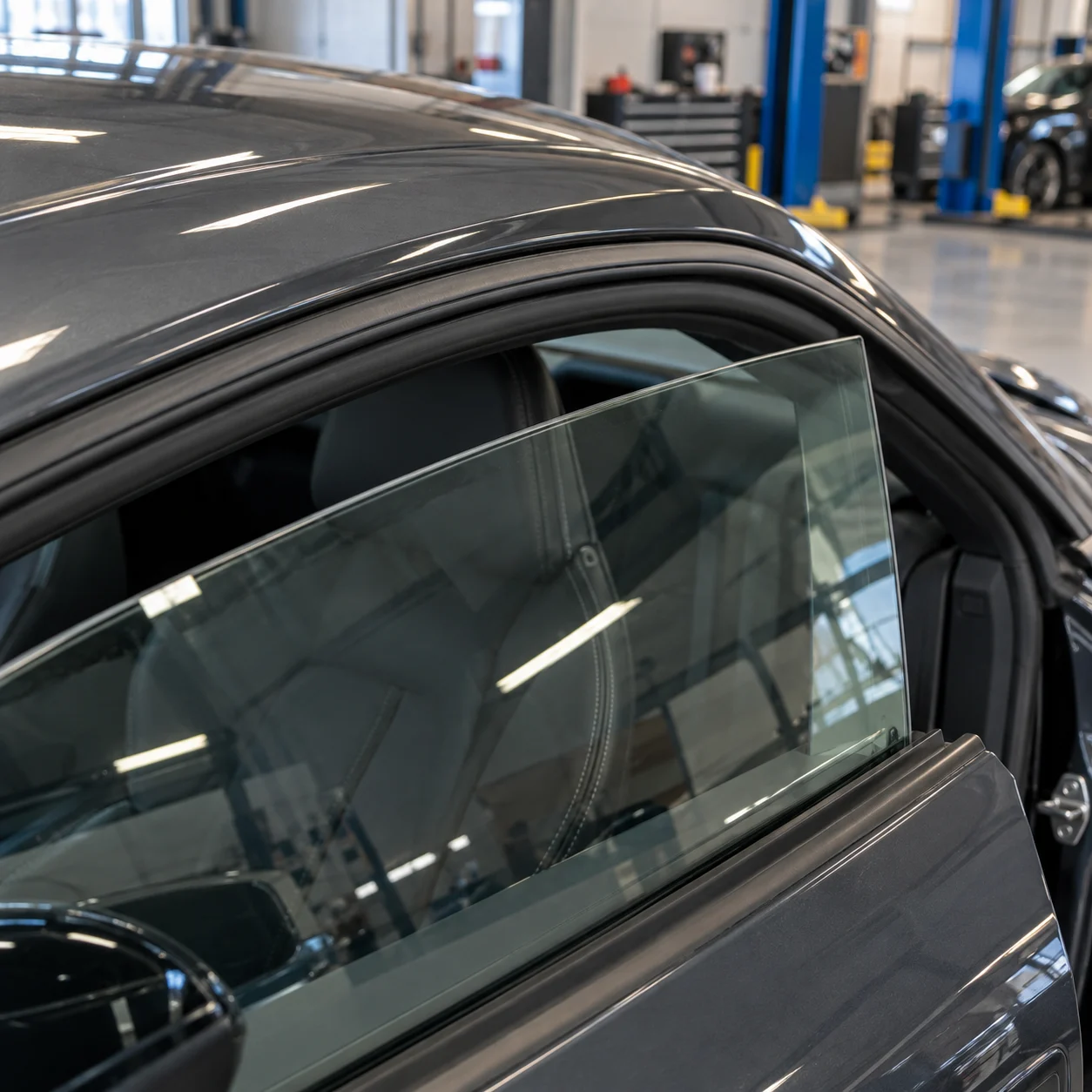
Many Porsche models use door glass with no frame around it. To protect the roof seal, the window lowers a few millimetres when the door opens and rises back into the seal after the door closes. Owners on Porsche forums describe this short drop on the 911 and other models, and it is the reason a small fault in the window system can show up as wind noise.
1
Door opens, glass drops slightly.
2
Door closes, glass rises into the seal.
3
If it stops short, air passes the top edge.
Tell the workshop if the glass did not rise fully, rose late, or behaves differently on one side. A flat 12 volt battery, a window that was forced, or work inside the door can upset the glass positions stored by the door control unit. Relearning those positions, adjusting the glass and repairing a mechanical fault are three different jobs, and the correct procedure depends on the model.
Body style decides which interfaces exist. Confirm the exact equipment by VIN before any part is ordered.
Frameless door glass against the roof seal, the windscreen moulding and A pillar, the mirror base, and the rear spoiler when it deploys at speed.
Roof frame alignment, side seals where the roof meets the door glass, and the rear seal. Each roof has its own adjustment and initialisation steps.
Frameless glass and the roof seal, the soft top side seals on the Boxster, and the rear lid area on the Cayman.
Frameless door glass and the windscreen top edge. Porsche campaign WNQ3 covered a windscreen gap on assigned 2021 cars.
Frameless glass on long doors, the panoramic roof, and on specified Taycan models the windscreen to roof joint.
Framed door glass, so the door frame seals, mirror base, roof rails and panoramic roof are the usual places to look.
Sun
Porsche technical information ATI 2401.1 from January 2024 covers specified 2020 to 2023 911 models where the windscreen seal can melt or turn sticky. Porsche links it to a reaction between the seal and the windscreen adhesive and says long sun exposure can make it worse.
Heat
Rubber seals age faster in high heat and strong ultraviolet light. A seal that has hardened or shrunk presses less firmly against the glass, which can turn a quiet cabin into a whistling one.
Sand
Fine sand collects on seal lips and in glass channels. It can stop a seal seating fully and scratch contact faces. Clean seals gently and never pull them away from the body to look behind them.
Manufacturer information
These documents show real causes Porsche has investigated. Each has a narrow scope. None of them proves that a different car has the same fault, and campaign eligibility needs a VIN check with an authorised Porsche Centre.
| Document | Cars covered | What it describes | What it does not mean |
|---|---|---|---|
| Campaign WNQ3, February 2023 | Assigned 2021 Macan 95B | A possible windscreen installation and adhesive curing issue that can leave a gap near the roof, with wind noise reported from about 60 km per hour. | It does not mean every Macan needs its windscreen rebonded. |
| Technical information 19 of 2024, March 2024 | Specified 2022 to 2024 Taycan | A whistle linked to the joint between windscreen and roof, with a measurement that decides the repair. | Its measurement limits do not apply to other models. |
| ATI 2401.1, January 2024 | 2020 to 2023 911 type 992, with stated exclusions | A windscreen seal that melts or deteriorates, linked to the adhesive, worsened by sun exposure. | It covers the seal material, not every 911 whistle. |
| Service 100 of 2024, July 2024 | 2024 Panamera | A squeak from the lower rear door seal as the door opens or closes, treated by cleaning and a seal care product. | A squeak is friction, not wind noise. |
The timing points to the area to inspect first. It does not prove the last repair caused the fault. Bring the invoice and the date the sound began.
How we isolate the source
1
Sound type, side, speed in km per hour, road surface, wind, window and roof positions, fan setting and recent repairs.
2
Seal lips, contact faces, glass height, mouldings, mirror fit and accessories, with the car parked and cool.
3
A light test or a thin powder on the seal face shows where a seal does not touch the glass or body when closed.
4
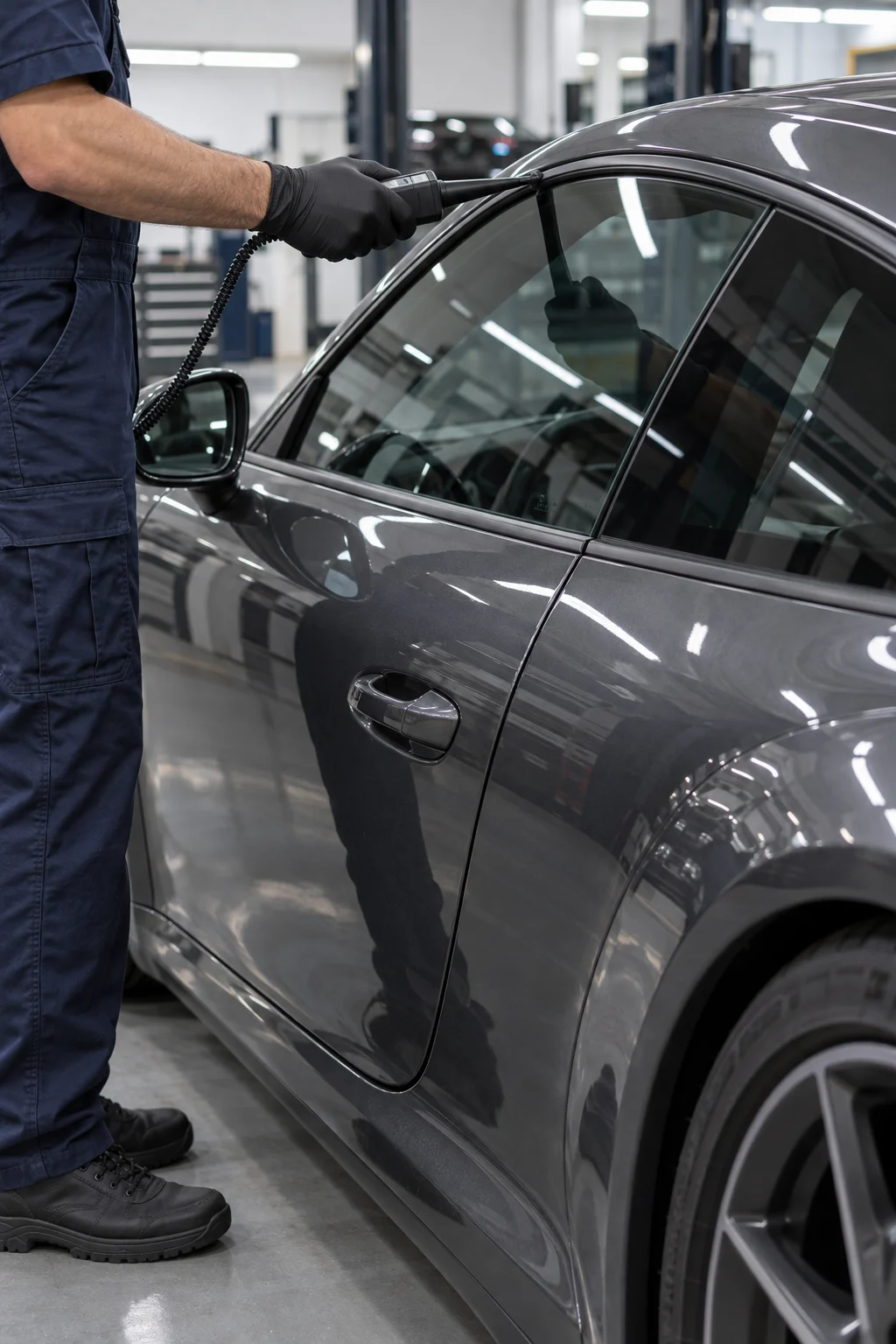
With doors and windows shut and the blower on high, a stethoscope, smoke or soapy water at the seals shows where air escapes. An ultrasonic tone inside the cabin with a detector outside can find small gaps.
5
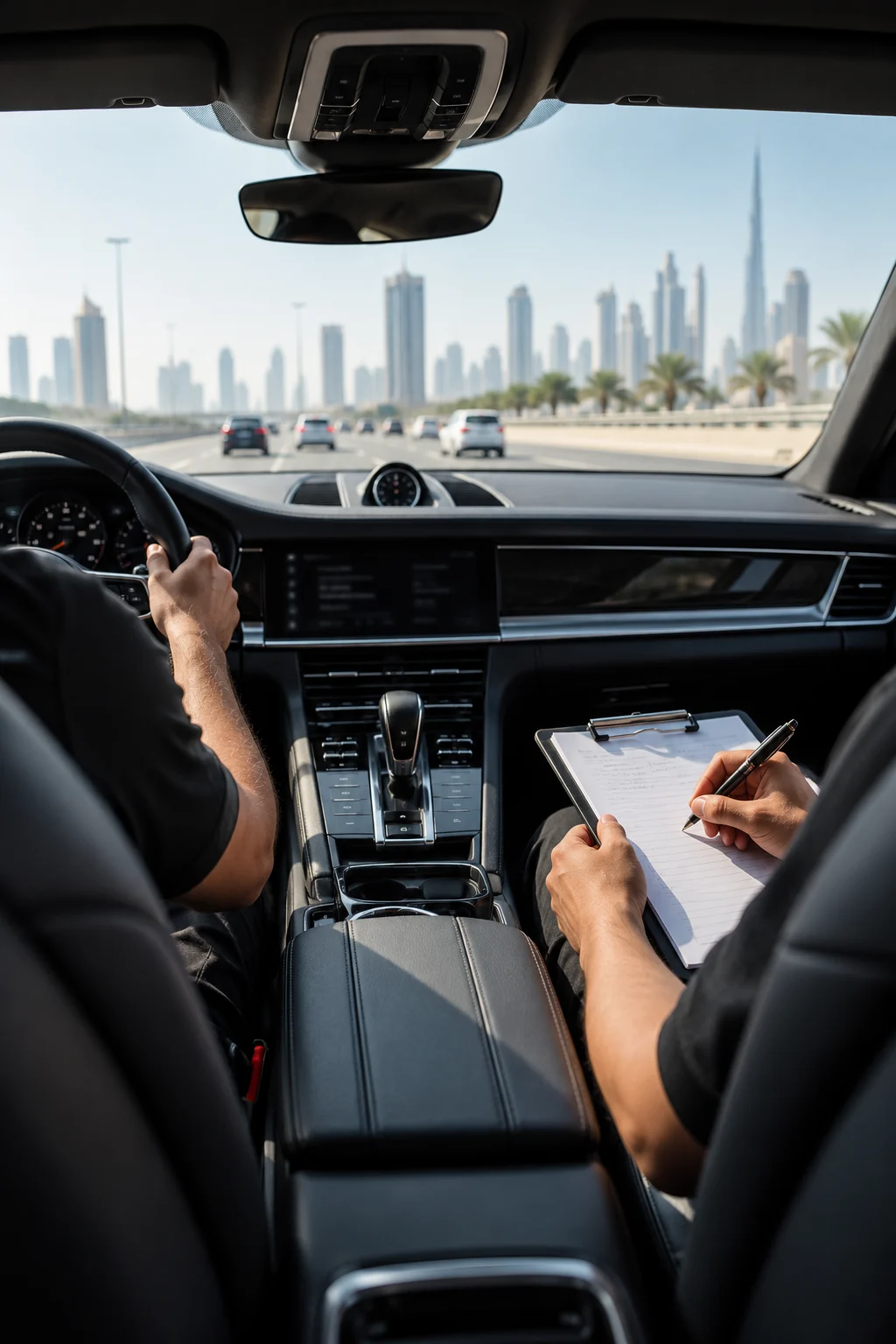
Two people, a planned route within posted limits, one variable changed at a time. Masking a suspect gap is done only under the workshop plan.
6
Repeat the same route and settings and record the result in writing.
A static leak test does not recreate airflow at speed. A quieter cabin after masking a gap shows where to look, not what is wrong with the part. A scan tool may find a window or roof control fault, but an aerodynamic whistle usually leaves no fault code. That is why several methods are combined before a repair is quoted.
Do not raise speed to make the sound louder, and do not tape gaps while driving. Stop safely and arrange help if glass is loose, trim is flapping, a door will not latch or the car vibrates or pulls.
| What was found | Usual repair | What will not fix it |
|---|---|---|
| Seal displaced but undamaged | Reseat and secure the seal, clean the contact face. | A new seal, extra foam or sealant. |
| Seal torn, hardened or melted | Replace with the part matched to the VIN and equipment. | Seal spray on a damaged seal. |
| Door glass low or tilted | Relearn positions, then adjust the glass to the procedure. | Replacing roof or door seals. |
| Windscreen gap or moulding fault | Correct the moulding, or rebond or replace the glass to the procedure, then calibrate cameras if fitted. | Filling the gap with sealant. |
| Mirror cap, glass or gasket | Refit or replace the affected part only. | A complete mirror assembly by default. |
| Tyre or bearing noise | Tyre check, rotation where the fitment allows, or bearing replacement after testing. | Any seal or glass work. |
There is no single price, because the cost depends on what the inspection finds. The figures here are planning ranges already published on our related service pages. Your written quote confirms the exact scope and whether VAT is included before any work starts.
Seal reseating, glass adjustment and trim refitting are quoted after inspection.
Tyre noise check
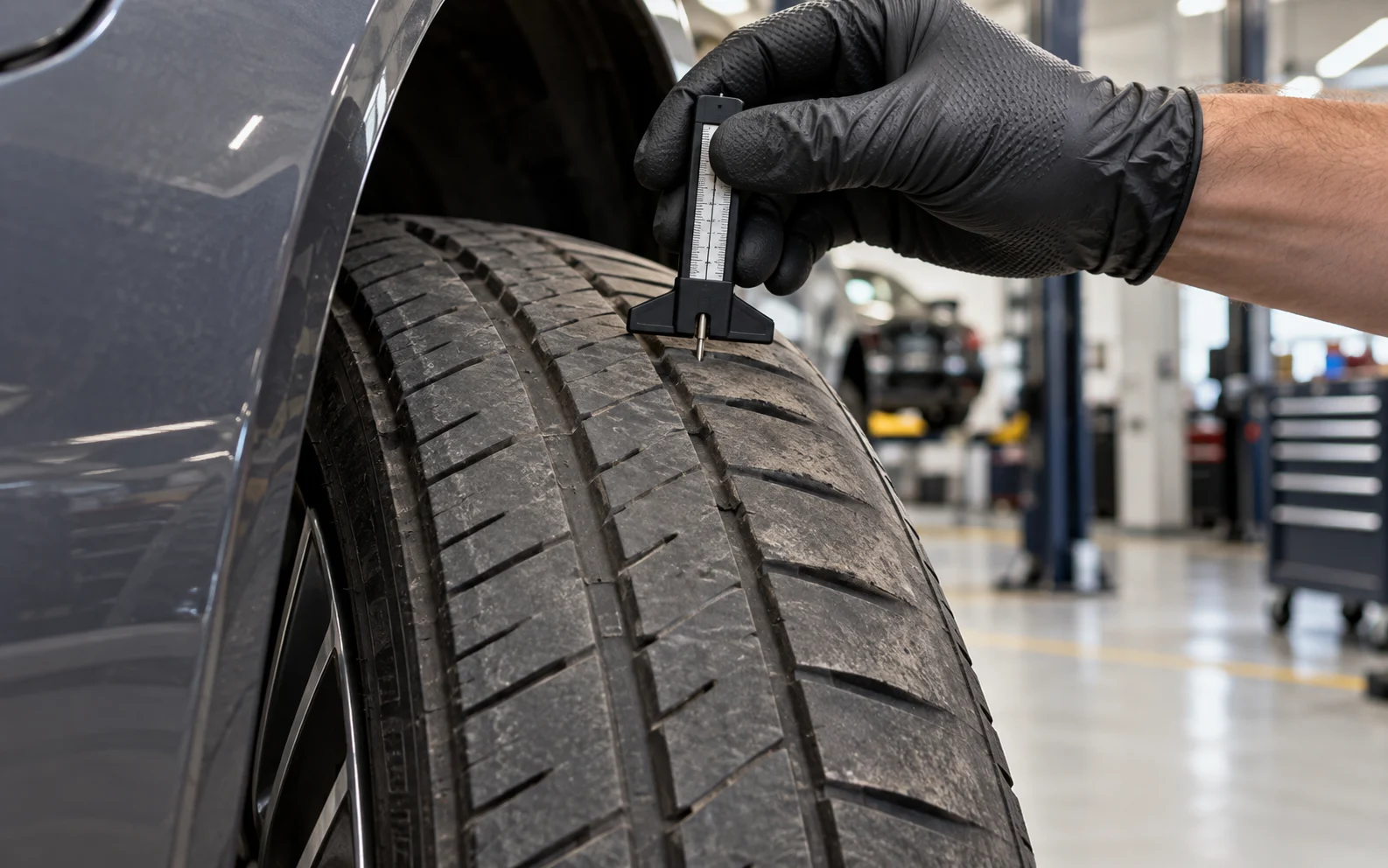
Uneven tread wear can create a hum or roar that changes with road speed and surface. A tread inspection helps separate tyre noise from an air leak. The image is an illustrative workshop scene, not a documented customer case.
No. Glass position, the mirror, the windscreen moulding and trim can all whistle. A seal is replaced only when it is damaged or cannot seat correctly.
The glass height, centring, moulding and bond are the first things to check, along with any trim removed for access. The timing points to the area but does not prove the cause.
Yes. Tyre roar rises with speed and changes with the road surface. Wind noise usually changes with crosswind and window position instead.
A bearing gives a low hum or growl that follows wheel speed and may change in a gentle curve. Wind noise is higher and follows airflow. A workshop confirms a bearing by testing, not by ear alone.
If the glass does not rise fully into the roof seal after the door closes, air passes the top edge. Relearning the window positions or adjusting the glass may be needed.
Heat and strong sun age rubber seals faster, and Porsche has documented a 911 windscreen seal that can deteriorate with long sun exposure. Sand can also stop a seal seating fully.
Not usually. A scan can show window or roof control faults, but an aerodynamic whistle normally stores no fault code. Physical tests are needed.
No. That is friction between a seal and the body or trim. Porsche has documented this on some 2024 Panamera rear doors, and the fix is different from a wind noise repair.
Only when the seal is sound and the noise comes from friction or a dry surface. It cannot fix a torn seal, a glass position fault or tyre noise.
A quiet electric drive makes other sounds easier to hear. That does not make a new whistle normal. Porsche has documented a windscreen to roof joint whistle on some Taycan models.
Porsche Repair Dubai is an independent workshop in Al Quoz. We are not affiliated with, authorised by or endorsed by Porsche AG, and campaign or warranty work is handled by authorised Porsche Centres.