Earlier water cooled models
PCM 2 and PCM 2.1
Late 996, 997.1, 987 and first generation Cayenne applications vary by year and equipment. Identify the unit and navigation hardware rather than relying on screen appearance.
A dark centre screen or a PCM that keeps restarting usually comes from one of four places. Low voltage, software, the network that links the audio modules, or the display hardware itself. This guide shows which PCM your Porsche has, how to tell the four causes apart and which restart steps Porsche actually publishes.
By Porsche Repair Dubai, independent workshop. Updated 29 October 2026.
The PCM, Porsche Communication Management, is the central computer behind the screen, radio, navigation and phone link. It shuts down or restarts when its supply voltage drops, when its software crashes, when it loses contact with the modules it talks to, or when the screen or the unit itself fails.
Porsche has issued software fixes for repeated restarts and black screens on several recent models, so the first question is always which PCM you have and which software it runs. The VIN identifies the original specification. The installed unit, any retrofit, its software version and diagnostic findings determine the next step.
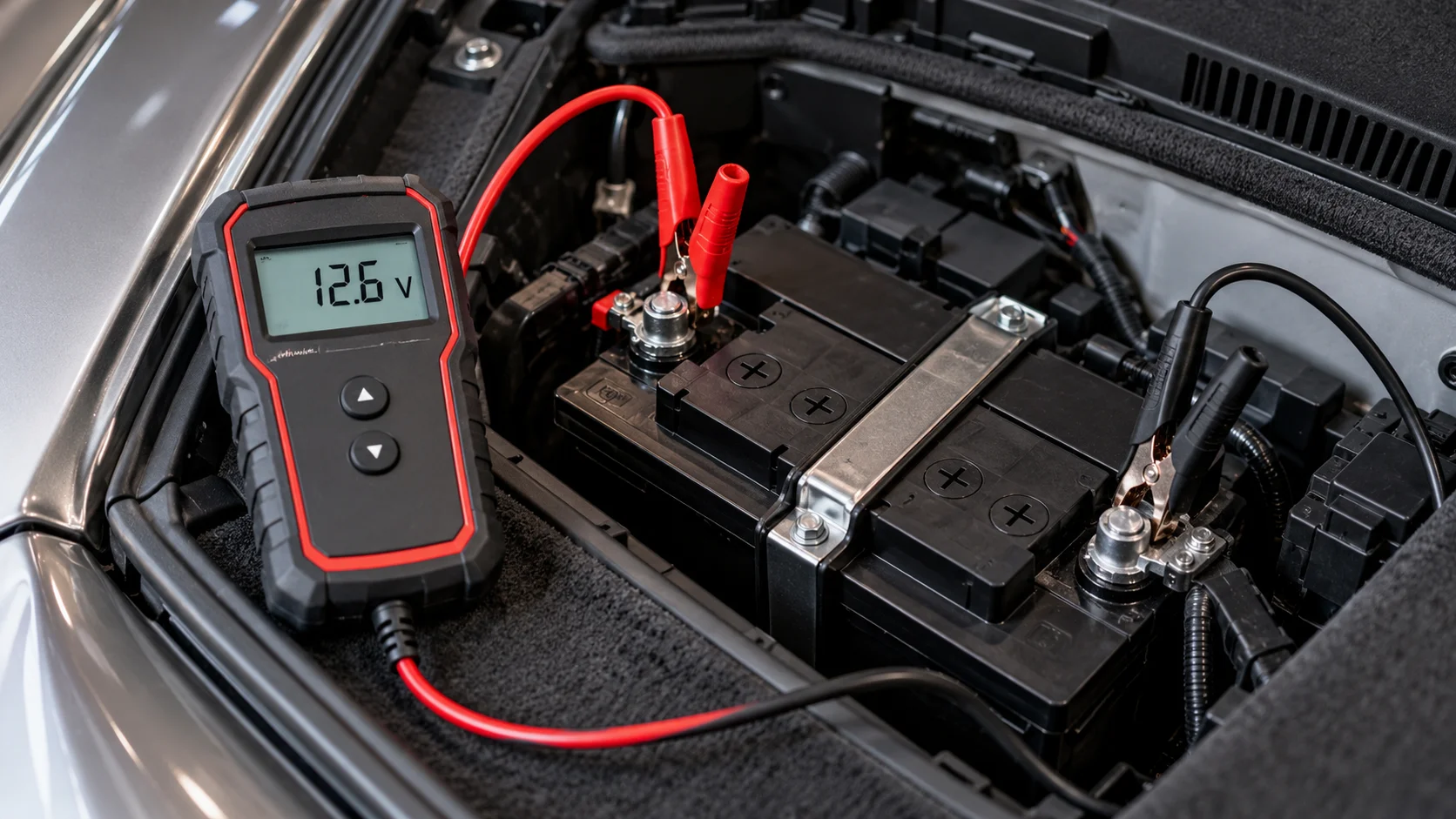
Check the low voltage supply before condemning the PCM. A battery or connection fault may be repairable without replacing the unit.
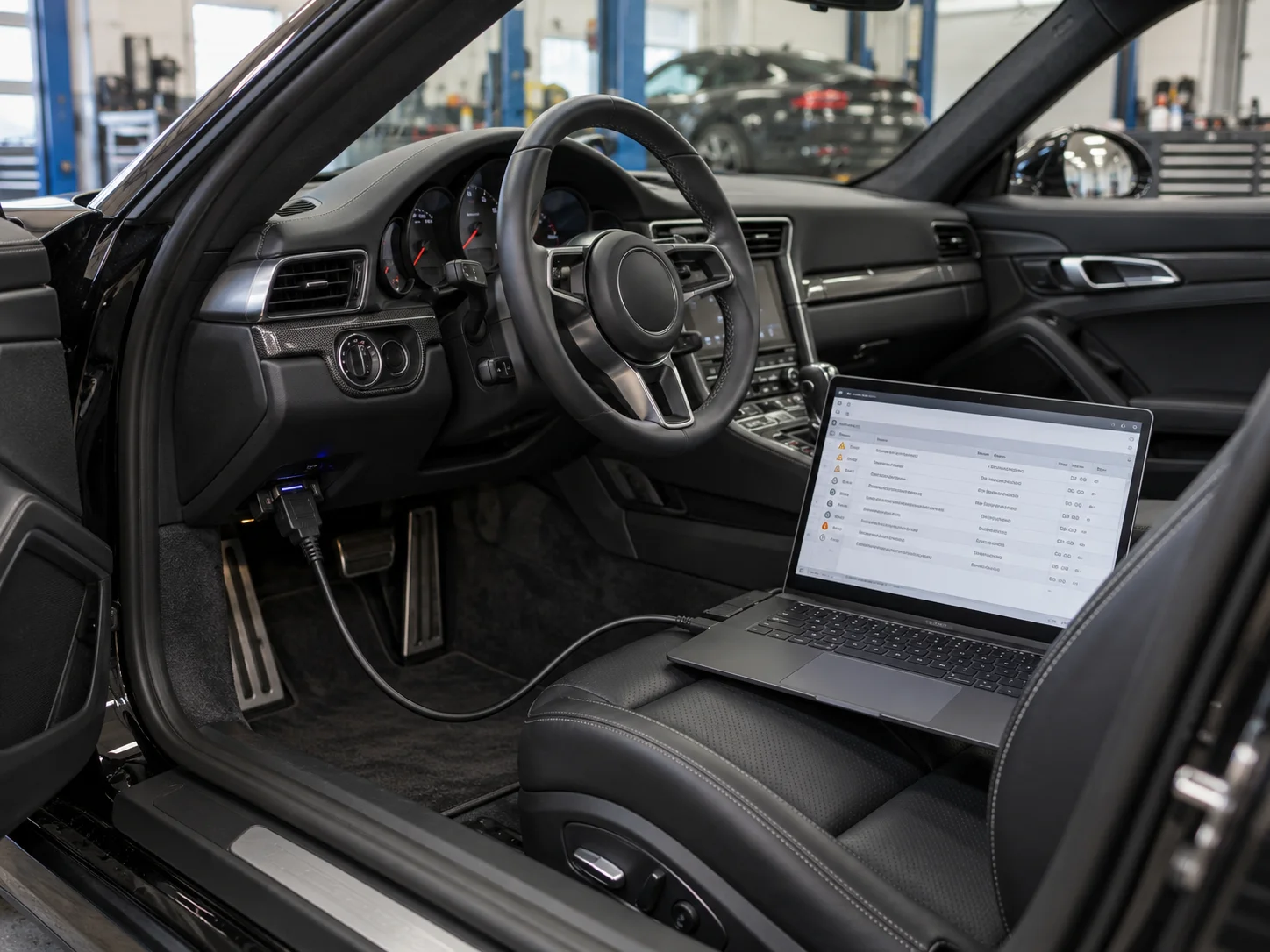
Fault records show whether the PCM, the network or another module reported first.
Compare the installed version with the campaigns and bulletins for that VIN.
Model year, factory equipment, retrofits and software all matter. Record the VIN and version screen if accessible. If the screen is black, the workshop can identify the installed unit through diagnostic information and its part number.
Late 996, 997.1, 987 and first generation Cayenne applications vary by year and equipment. Identify the unit and navigation hardware rather than relying on screen appearance.
Touchscreen systems appear across 997.2, 987.2, 991.1, 981, 958 and 970 applications. Factory CarPlay is not a PCM 3.1 feature. Document any aftermarket interface.
The 991.2 introduced a 7 inch touchscreen PCM. Check the actual hardware and software before choosing a reset or update. Similar-looking screens can have different equipment.
The second generation Panamera introduced a 12.3 inch PCM in 2016. The third generation Cayenne followed with a 12.3 inch screen in 2017. Display size is not a software-version identifier.
The 992 and Macan introduced in 2018 use 10.9 inch centre displays in the relevant versions. Confirm model year and installed software rather than treating all wide screens as one family.
These electric models do not share one universal reset or diagnostic procedure. Identify the model and affected display, then use its current instructions. Low voltage supply checks differ from combustion-engine starting tests.
See Porsche’s descriptions of the Panamera PCM, Cayenne display and Macan display. These examples do not establish fault or update eligibility.
| What you see | Most likely group | First check |
|---|---|---|
| Screen black, audio still playing | Display or software | Display operation and installed software against applicable bulletins |
| Restarts every few minutes | SoftwareNetwork | Fault memory, then the restart pattern while driving |
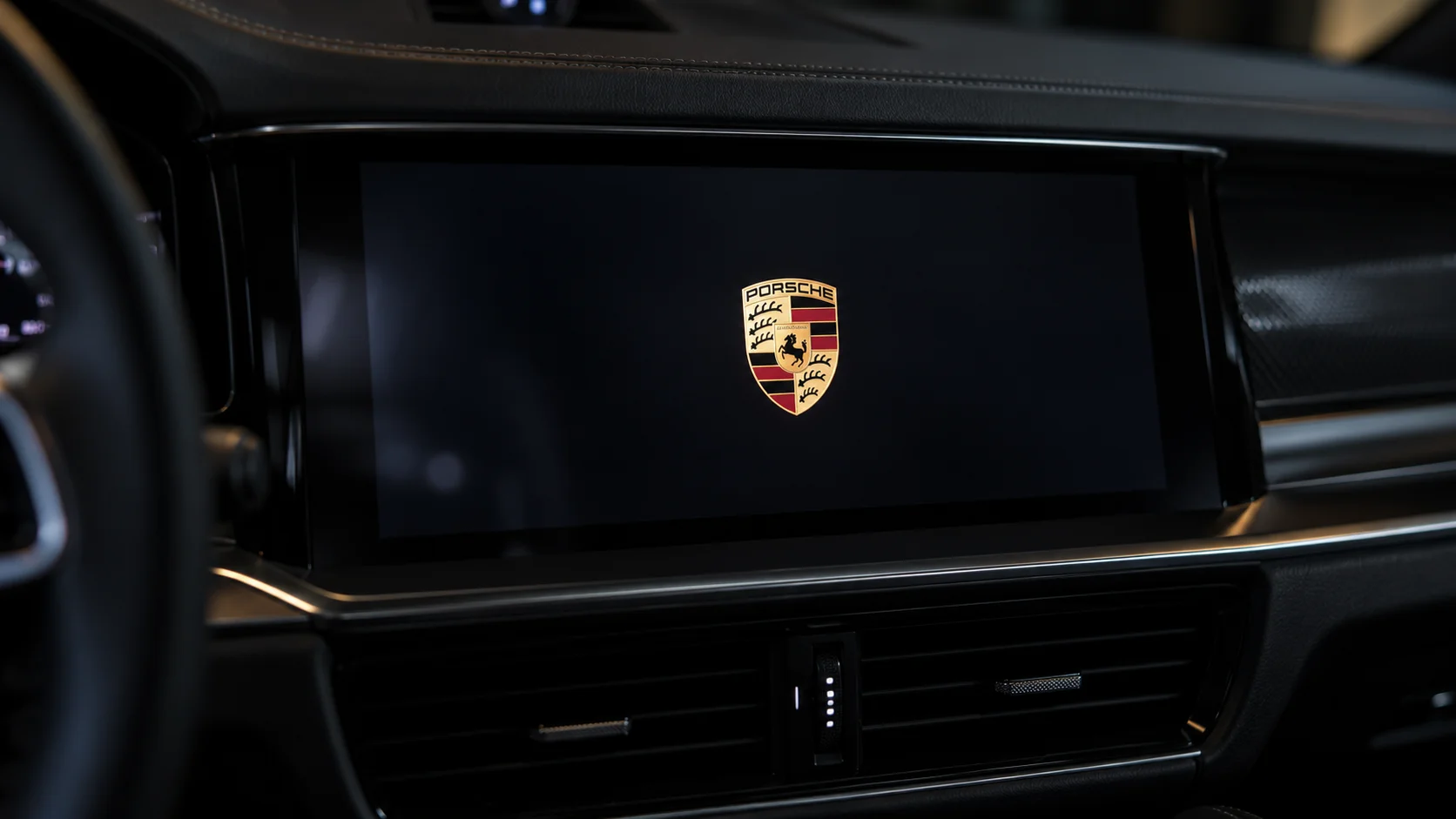
| Stuck on the Porsche crest at start up | PowerSoftware | Vehicle-specific low voltage supply test |
| Black only after a cold or weak start | Power | Battery and appropriate charging-system test |
| No sound, screen fine | Network | Amplifier and optical ring on older systems |
| Touch works partly or not at all | DisplaySoftware | Touch input test, then software and bulletins |
| Lines, flicker or dark patches | Display | Display panel and connector inspection |
| CarPlay or Android Auto drops out | Software | Phone, cable and USB port before the PCM |
| Reversing camera blank on the screen | NetworkDisplay | Camera signal and calibration, then the PCM |
Each group has its own tests. Guessing between them is how owners end up paying for a new unit that was never faulty.
The PCM is sensitive to supply voltage. A tired battery, poor charging, a voltage dip while cranking or a drain while parked can leave it dark or stuck at start up.
Porsche has published reprogramming fixes for restarts, black screens and frozen touch input on recent models. Navigation memory use is one documented trigger.
On older systems the audio modules sit on an optical ring. One failed module or a damaged fibre can stop the whole ring and silence the system.
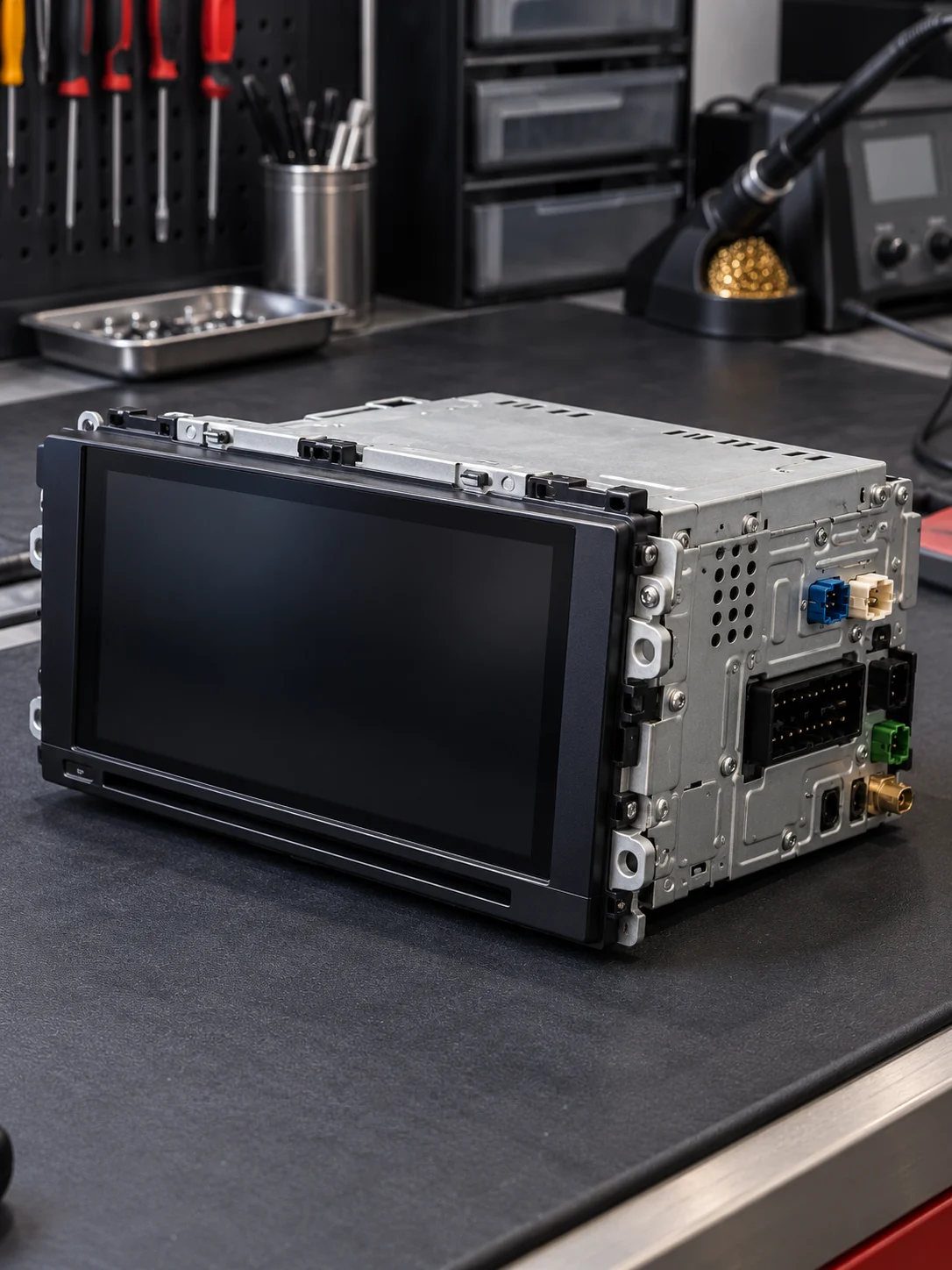
The screen, the touch layer, the connectors or the unit itself can fail. Older units with hard drives can also fail internally.
Programming requires the regulated power supply and connection procedure specified for that vehicle and operation. A supply rating in one technical bulletin is not a universal PCM requirement. Low voltage diagnosis checks the battery, connections and charging system appropriate to the car.
These checks depend on the vehicle. Cranking tests apply to combustion-engine starting systems. Electric models use the applicable low voltage and DC/DC supply checks. Targets depend on the fitted battery and current workshop procedure.
An AGM or lithium battery must match the specification and be registered where required.
A module that stays awake can discharge the battery. Measure sleep current when the complaint and battery test indicate a parked drain.
A loose terminal or a corroded ground gives the same symptoms as a weak battery.
See our battery replacement page and the guide on a discharged or failing battery.
These bulletins are public through the US safety regulator. They show the pattern on recent cars. Eligibility in the UAE and the exact software for your car must be confirmed by VIN with an official Porsche Centre.
Symptom. The PCM restarts again and again, sometimes with a frozen screen while audio keeps playing.
Cause stated. The navigation system used more memory than allowed.
Fix. The August 2022 bulletin identifies Cluster 26 software and version 2865 as the remedy for that specific memory-allocation fault. Its replacement-unit instruction reflected software availability at that time. Check current Porsche instructions before quoting an update or replacement. Read bulletin 2226 and its exact applicability.
Symptom. The PCM restarts by itself, shows a black screen or switches off.
Cause stated. No root cause given. Optimised central computer software is available.
Fix. Follow the applicable central-computer programming procedure and required power support. Read the Panamera technical information.
Symptom. Touch inputs on the PCM and the centre console are detected but not carried out.
Cause stated. Transport mode left some modules not fully shut down.
Fix. The bulletin describes a workshop-tester reset for its specified condition and an escalation procedure if unsuccessful. It is not a general instruction to replace any Taycan screen after repeated owner resets. Read the Taycan procedure and applicability.
Symptom. A message that activation was completed keeps appearing at every start.
Cause stated. A communication error between the screen and the central computer.
Fix. The bulletin describes a workshop gateway procedure for that activation message. It is not a general black-screen remedy. Read the 992 bulletin.
A bulletin is evidence for the listed condition, not proof that every similar symptom has the same cause. Check its current revision and applicability before work.
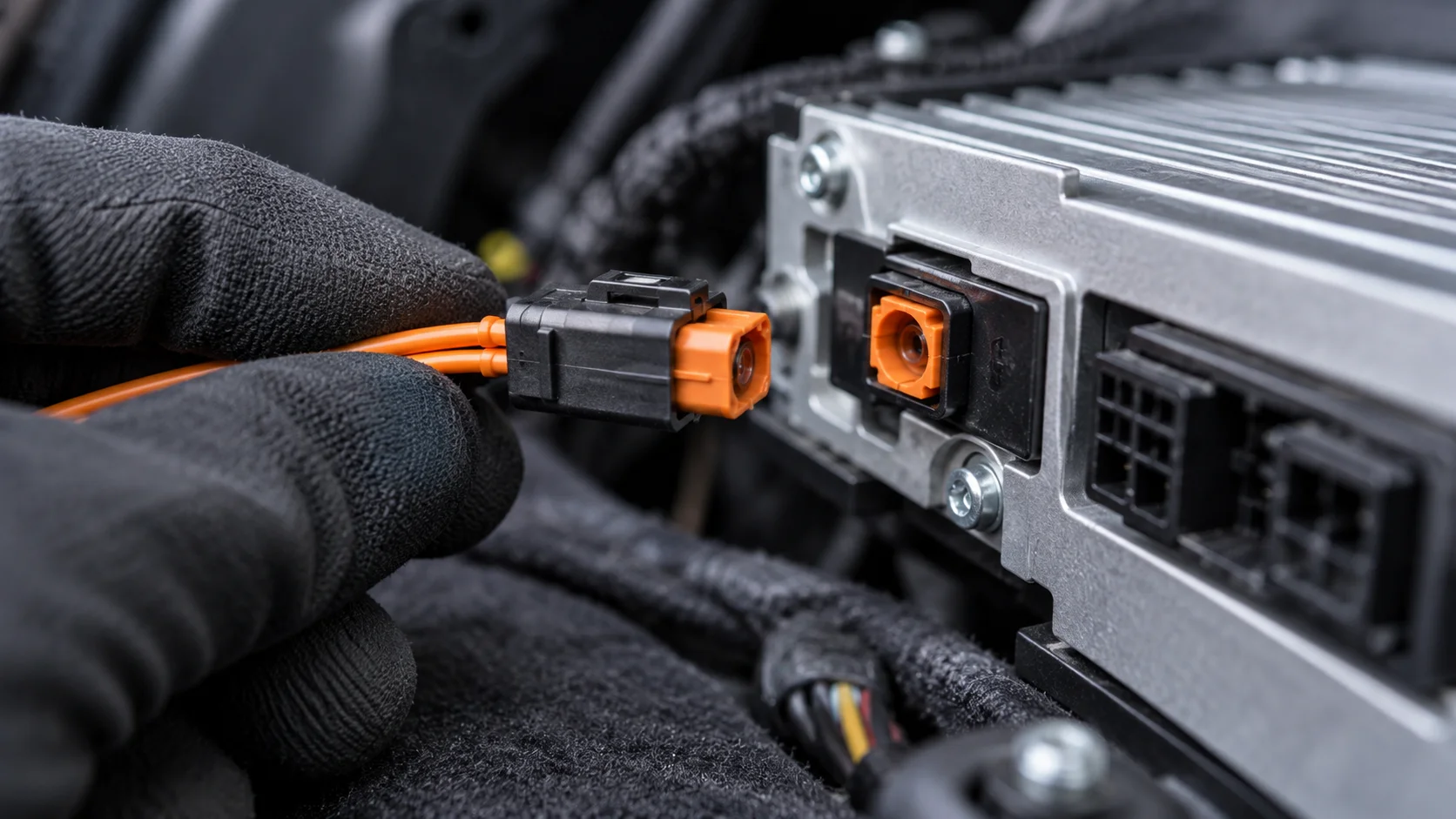
Older PCM systems pass audio and data around a ring of fibre optic cable. Each module receives light from the one before it and sends it on to the next. If one module loses power, fails inside or has a damaged fibre, the ring breaks and the head unit reports modules as missing.
No sound, a source that is not available, a boot loop or restarts at start up.
The workshop tester runs a network test and reads error counters for each module. Porsche documents bridging a suspect module with an optical test lead and retesting.
An amplifier, CD changer, tuner, phone module or an aftermarket interface added to the ring.
Porsche noted on one early PCM2 bulletin that some ring faults appear only at cold component temperatures and vanish once the system warms up, so timing of the test matters.
When the supply is stable, the software is current and the network is complete, a fault that stays usually sits in the hardware.
Lines, dark patches or a backlight that fails while the system still responds to the knobs.
Dead areas or ghost touches. Some touch faults on recent cars are software, so the bulletins come first.
A loose or corroded plug behind the unit can mimic a failed screen.
Older units with hard drives can fail internally and loop at start up.
If the fault appears only after the car has stood in the sun, we record cabin temperature and timing when it happens. That helps separate a heat related hardware fault from a software crash.
A PCM that drops CarPlay or Android Auto is not always faulty. Check these before blaming the unit.
Try a short, good quality cable. A damaged or incompatible cable can interrupt a wired connection. Wireless faults need separate phone, pairing and system checks.
Use the port marked for phone projection. Some ports charge only.
A phone update can change behaviour overnight. Test with a second phone.
PCM 3.1 had no factory CarPlay. Added interfaces can affect stability.
For setup and supported systems see our Apple CarPlay service and Android Auto service.
Park safely before using reset controls. Record warning messages and when the fault occurs. A centre screen fault is different from losing the driver instrument display. If essential driving information is unavailable or other warnings appear, stop safely and seek assistance. Do not rely on a reversing camera that is not working.
Porsche Monmouth describes holding INFO for about ten seconds on applicable PCM units. This is not a universal button sequence. Follow your installed system’s owner instructions.
Porsche’s factory-reset instructions list different paths by model and year. A menu reset cannot be carried out when the screen or controls are inaccessible.
A factory reset can delete settings and personal data. Some systems offer separate settings-only and vehicle-handover choices. Confirm exactly what the selected option removes before accepting it and ensure you can restore account connections.
Repeated resets do not repair a failed supply, connector, network module or display. Save a photo or short video while parked and arrange diagnosis. Workshop programming and transport-mode procedures are not owner reset instructions.
Pulling fuses at random. Use the vehicle-specific fuse information and diagnostic procedure rather than interrupting unrelated circuits.
Disconnecting the battery as a reset without care. Some settings and adaptations may need relearning, and a battery may need registration after replacement.
Buying a used PCM before diagnosis. A unit from another car may need coding, may be locked to that car and may carry the same fault.
Running a software update on a weak battery. Porsche procedures require a charger connected during programming.
Each step either clears a cause group or points to the next test. You approve any work beyond the agreed assessment.
When it happens, how often, cold or hot, which screen and which source. Photos or a short video help.
Battery condition and connections, then the vehicle-specific supply test. Combustion models may need cranking voltage and alternator checks. Electric models require appropriate low voltage and DC/DC checks. Test parked drain when indicated.
Records from the PCM, gateway and connected modules, with times and counts.
On ring based systems, a network check and error counters per module. On newer cars, gateway and communication records.
Installed version compared with the bulletins and campaigns that apply to the VIN.
Connectors, display and touch tests, and unit checks once the rest are cleared.
Fixes the cause when voltage is the problem. Registration where the car requires it.
Reseat or repair a plug, ground or fibre once the fault is located.
Porsche software is loaded with Porsche systems. Where we cannot do it, we refer the car to an official Porsche Centre and say so in writing.
Repair or replacement of the failed amplifier, changer or tuner that breaks the ring.
Specialist repair of the unit or display where a repair route exists for that model.
A new or exchange unit, coded and matched to the car. Used units carry coding and history risks.
These are planning figures from our own service pages, including VAT. Your written quote confirms the tests and total before work starts. These are separate assessment options, not fees automatically added together. Ask whether any initial fee is credited and whether removal, coding, account activation and parts are included.
That pattern matches the screen or software side rather than the whole unit. Porsche bulletin 2226 covers a specific software fault on 2020 to 2021 911 models and 2019 to 2021 Cayenne and Macan models. Hardware can produce a similar symptom, so confirm the software and fault before selecting a repair.
Common causes are low voltage, a software crash, a module missing from the network or an internal fault. A battery test and fault memory read usually narrow it down quickly.
Use the restart procedure for your installed system while parked. Porsche Monmouth describes holding INFO for about ten seconds on applicable units. A factory reset is different and may delete personal data. Read the model-specific instructions and confirmation screen before proceeding.
Yes. The PCM depends on a stable supply, and Porsche requires a charger during any PCM programming. A battery that is weak at start up can leave the screen dark or stuck on the crest.
It is the optical network that links audio modules on older PCM systems, such as PCM 2 and PCM 3 cars. One failed module can silence the whole system. Network architecture depends on the installed system. Confirm the vehicle wiring and equipment before selecting the test.
Only after diagnosis proves the unit has failed. A used unit may need coding, may be tied to another car and may carry the same fault.
Official Porsche software is loaded with Porsche systems. If an update is the fix and we cannot load it, we tell you and refer the car to an official Porsche Centre.
We do not assume it does. If a fault appears only after parking in the sun, we record the cabin temperature and timing to see whether heat plays a part.
For a wired connection, test a suitable cable, the correct USB port and another compatible phone. Wireless connections need separate pairing and software checks. A dropout alone does not prove the PCM is faulty.
Our initial diagnostic assessment is AED 200 to 500 including VAT, as published on our diagnostics page. Repairs are quoted after the cause is found.
Porsche Repair Dubai is an independent workshop. We are not an authorised Porsche dealer and have no affiliation with Porsche AG. Porsche, PCM and model names are used only to describe the vehicles we work on.